

Uncovering the Secrets Between Galaxies Through Mysterious Radio Signals
Dark Matter vs. Ordinary Matter
Most of the universe’s matter is invisible, detectable only through its gravitational pull. This unseen substance is called dark matter. In contrast, the matter we interact with every day—atoms, planets, stars, and people—makes up just 16 percent of all matter. Known as ordinary or baryonic matter, it emits light, which makes it observable. Yet, much of it exists in extremely thin, diffuse amounts, either spread across the halos of galaxies or floating in the vast spaces between them.
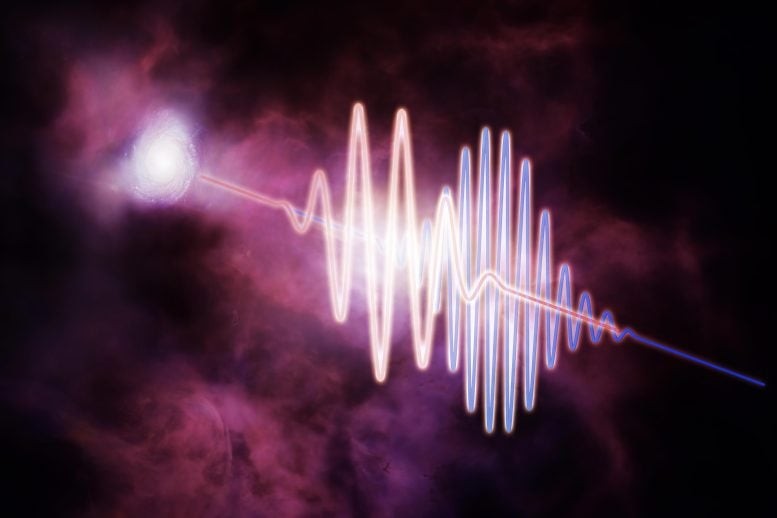
Figure 1. Mysterious Radio Signals Expose Hidden Matter Between Galaxies.
For decades, about half of this ordinary matter remained elusive, hidden from detection. Scientists referred to it as the universe’s “missing” matter—until now. Figure 1 shows Mysterious Radio Signals Expose Hidden Matter Between Galaxies.
“Fast radio bursts pierce through the thin fog of the intergalactic medium, and by measuring exactly how their signals slow down, we can ‘weigh’ that fog—even when it’s far too faint to observe directly,” explains Liam Connor, assistant professor at Harvard and lead author of the study. Connor carried out much of this work while at Caltech, collaborating with astronomy professor Vikram Ravi.
Record-Breaking FRBs Reveal Hidden Structures
The researchers analyzed 69 fast radio bursts (FRBs) located at distances ranging from 11.7 million to 9.1 billion light-years away. The most distant, FRB 20230521B, now holds the record as the farthest FRB ever detected. While astronomers have discovered more than a thousand FRBs to date, only about 100 have been traced back to their host galaxies. This smaller group—where both the origin and distance are known—was crucial for making precise measurements.
Of the 69 FRBs studied, 39 were discovered using the Deep Synoptic Array-110 (DSA-110), a network of 110 radio dishes at Caltech’s Owen Valley Radio Observatory in California, funded by the National Science Foundation. Purpose-built for spotting and localizing FRBs, the DSA-110 provided pinpoint positions. Once detected, follow-up measurements from the W. M. Keck Observatory in Hawaii and the Palomar Observatory near San Diego helped determine the distances. The remaining 30 FRBs came from other international facilities, most notably the Australian Square Kilometre
Seeing the Universe Through Radio Shadows
While FRBs are remarkable cosmic phenomena on their own, this study used them as tools to track down the universe’s long-missing ordinary matter. As FRB signals travel to Earth, their radio waves spread into different wavelengths—much like a prism splitting sunlight into a rainbow. The amount of spreading, known as dispersion, depends directly on how much matter the signal passes through.
“It’s like we’re seeing the shadow of all the baryons, with FRBs as the backlight,” explains Caltech astronomer Vikram Ravi. “If you see a person directly, you can learn a lot about them. But even if you only see their shadow, you still know they’re there—and you get a sense of their size.”
Most Ordinary Matter Lies Between Galaxies
The study found that 76 percent of the universe’s ordinary matter—the baryonic matter that makes up stars, planets, and people—actually resides in the intergalactic medium, the vast space between galaxies. About 15 percent is contained in galaxy halos, while the remainder is concentrated inside galaxies themselves, either in stars or in cold galactic gas. This distribution matches long-standing predictions from cosmological simulations but has now been observationally confirmed for the first time.
These results not only shed light on how galaxies grow and evolve but also highlight how FRBs can help tackle fundamental questions in physics. For example, FRBs may assist in constraining the mass of neutrinos—tiny subatomic particles once thought to be massless. Since neutrino mass influences how baryons cluster together, precise FRB-based measurements could push physics beyond the Standard Model, offering insights into unexplored territory.
A Bright Future for FRB Cosmology
According to Ravi, this breakthrough marks only the beginning for FRB-based cosmology. Caltech’s upcoming DSA-2000 radio telescope, planned for the Nevada desert, is designed to detect and localize up to 10,000 FRBs per year. This next-generation array will supercharge the ability of astronomers to use FRBs as cosmic probes, dramatically expanding our knowledge of the universe’s hidden matter—and the extreme bursts themselves.
Source: SciTECHDaily
Cite this article:
Priyadharshini S (2025), Uncovering the Secrets Between Galaxies Through Mysterious Radio Signals, AnaTechMaz, pp.486
Recent Post
-
Space Clues: How an Explosive Prebiotic Molecule Could Unlock Life’s Origins
This is essentially a prebiotic concentrate — a seed-of-life...
-
“Strange ‘Infinity’ Galaxy Baffles Scientists: How Do We Make Sense of It?”
Everything about this galaxy is unusual,” said the researcher....
-
Martian Rock’s Strange Spots Could Hold Clues to Ancient Life
Researchers tested O-PTIR on a basalt rock containing dark inclusions, similar in size.....
-
Webb Telescope Detects Most Ancient Black Hole Yet, Breaking Cosmic Record
Astronomers use spectroscopy to split light into its component...
-
Black Holes Could Act as Cosmic Supercolliders in the Search for Dark Matter
Instead of waiting decades and spending billions on massive particle...
-
Uncovering the Secrets Between Galaxies Through Mysterious Radio Signals
Most of the universe’s matter is invisible, detectable...
-
Earth Targeted by the ‘Eye of Sauron’ in Stunning Astronomical Capture
Billions of light-years away, the blazar PKS 1424+240 has long....
-
Hubble Spots a Rare Interstellar Comet Speeding at 130,000 MPH Through the Solar System
Hubble has captured striking details of comet 3I/ATLAS, including a...
-
Pink Nebulae Radiate Brilliantly in a Spiral Galaxy 35 million Light-Years Away
Pink Nebulae Radiate Brilliantly in a Spiral Galaxy 35 million...
AI Spots Rare Supernova That Flared Twice in a Lifetime
Astronomers have captured the violent death of a massive star locked in a deadly...
-
James Webb Reveals Planet-Forming Regions Under Intense Ultraviolet Radiation
Ultraviolet (UV) radiation is a form of light invisible to the human...
-
Webb Spots Mysterious “Little Red Dots” — Possible Birthplaces of the Universe’s First Black Holes
Astronomers at the Center for Astrophysics...
-
Next Solar Superstorm May Pose Greater Threat to Satellites
New research from the U.S. National Science Foundation’s National Center for ...
-
Rare Supernova Challenges Expectations, Unveiling the Hidden Layers of a Dying Star
Astrophysicists at Northwestern University, working...
-
Tiny Star, Giant Rule-Breaking Planet: A Cosmic Oddity
An international team of astronomers, including researchers from the University of Liège.....