

Hubble Spots a Rare Interstellar Comet Speeding at 130,000 MPH Through the Solar System
Dust Plumes and Record-Breaking Speed
Hubble has captured striking details of comet 3I/ATLAS, including a bright plume of dust erupting from its sunlit side and a faint tail streaming behind. The rate of dust loss closely matches that of comets formed within our own solar system, even though this visitor hails from far beyond.
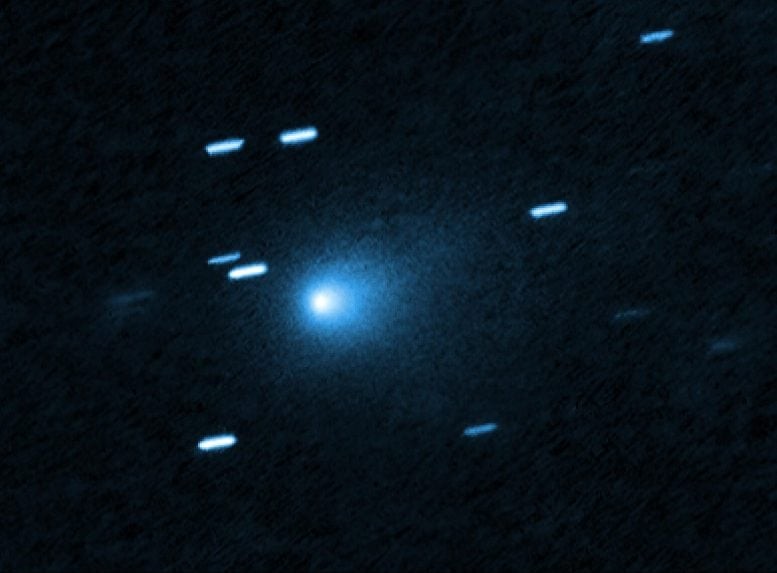
Figure 1. Rare Interstellar Comet Caught by Hubble Racing at 130,000 MPH.
What makes 3I/ATLAS truly unique is its origin. This icy wanderer set out from another solar system somewhere in the Milky Way before venturing into ours. Figure 1 shows Rare Interstellar Comet Caught by Hubble Racing at 130,000 MPH.
Today, it races through the solar system at a breathtaking 130,000 miles (209,000 kilometers) per hour—the fastest speed ever recorded for an object of its kind. Astronomers believe this extraordinary velocity is the result of countless gravitational nudges from stars and nebulae over billions of years, each encounter accelerating the comet until it reached its current record-shattering pace.
Tracing the Origins—If Possible
“The comet’s birthplace remains a mystery,” explained David Jewitt of the University of California, Los Angeles, who leads the Hubble observation team. “It’s like catching sight of a rifle bullet for just a thousandth of a second—you can’t trace its trajectory back with any real accuracy to pinpoint where it began its journey.”
A New Class of Interstellar Visitors
“This latest interstellar traveler belongs to a hidden population of objects that we’re only now beginning to uncover,” said David Jewitt. “Thanks to powerful new sky surveys, we’ve crossed a threshold that makes these discoveries possible.”
Comet 3I/ATLAS was first detected on July 1, 2025, by the NASA-funded Asteroid Terrestrial-impact Last Alert System (ATLAS), located 420 million miles from the Sun at the time. Developed by the University of Hawai‘i, ATLAS serves as an asteroid impact early warning system, but in this case, it revealed something far more extraordinary—a visitor from another star system.
Other NASA missions are now joining the effort to study this third known interstellar interloper, offering fresh insights into its makeup and behavior. Astronomers expect 3I/ATLAS to remain visible to ground-based telescopes through September before it slips behind the Sun, reemerging in early December for another brief appearance.
A Visitor from Beyond the Stars
Astronomers using the Hubble Space Telescope have identified Comet 3I/ATLAS, only the third known interstellar object ever spotted in our solar system. Unlike comets native to our planetary neighborhood, 3I/ATLAS originated in another star system within the Milky Way and wandered across interstellar space for billions of years before entering ours.
Record-Breaking Speed and Activity
Hubble revealed plumes of dust erupting from the comet’s sunlit side and a faint tail trailing behind, mirroring the behavior of local comets. But what sets it apart is speed—130,000 miles (209,000 kilometers) per hour, the fastest ever recorded for an interstellar object. This extraordinary pace is thought to be the result of repeated gravitational nudges from stars and nebulae during its long journey.
A Glimpse into a Hidden Population
Scientists believe 3I/ATLAS is part of a much larger, previously unseen population of interstellar wanderers. With advanced sky surveys like NASA’s ATLAS system, astronomers are crossing a new threshold in detecting these cosmic visitors. For now, 3I/ATLAS will remain visible to telescopes until September before vanishing behind the Sun, reappearing briefly in December—offering a rare window into the mysteries of interstellar space.
Source: SciTECHDaily
Cite this article:
Priyadharshini S (2025), Hubble Spots a Rare Interstellar Comet Speeding at 130,000 MPH Through the Solar System, AnaTechMaz, pp.488
Recent Post
-
Space Clues: How an Explosive Prebiotic Molecule Could Unlock Life’s Origins
This is essentially a prebiotic concentrate — a seed-of-life...
-
“Strange ‘Infinity’ Galaxy Baffles Scientists: How Do We Make Sense of It?”
Everything about this galaxy is unusual,” said the researcher....
-

Martian Rock’s Strange Spots Could Hold Clues to Ancient Life
Researchers tested O-PTIR on a basalt rock containing dark inclusions, similar in size.....
-
Webb Telescope Detects Most Ancient Black Hole Yet, Breaking Cosmic Record
Astronomers use spectroscopy to split light into its component...
-
Black Holes Could Act as Cosmic Supercolliders in the Search for Dark Matter
Instead of waiting decades and spending billions on massive particle...
-
Uncovering the Secrets Between Galaxies Through Mysterious Radio Signals
Most of the universe’s matter is invisible, detectable...
-
Earth Targeted by the ‘Eye of Sauron’ in Stunning Astronomical Capture
Billions of light-years away, the blazar PKS 1424+240 has long....
-
Hubble Spots a Rare Interstellar Comet Speeding at 130,000 MPH Through the Solar System
Hubble has captured striking details of comet 3I/ATLAS, including a...
-
Pink Nebulae Radiate Brilliantly in a Spiral Galaxy 35 million Light-Years Away
Pink Nebulae Radiate Brilliantly in a Spiral Galaxy 35 million...
AI Spots Rare Supernova That Flared Twice in a Lifetime
Astronomers have captured the violent death of a massive star locked in a deadly...
-
James Webb Reveals Planet-Forming Regions Under Intense Ultraviolet Radiation
Ultraviolet (UV) radiation is a form of light invisible to the human...
-
Webb Spots Mysterious “Little Red Dots” — Possible Birthplaces of the Universe’s First Black Holes
Astronomers at the Center for Astrophysics...
-
Next Solar Superstorm May Pose Greater Threat to Satellites
New research from the U.S. National Science Foundation’s National Center for ...
-
Rare Supernova Challenges Expectations, Unveiling the Hidden Layers of a Dying Star
Astrophysicists at Northwestern University, working...
-
Tiny Star, Giant Rule-Breaking Planet: A Cosmic Oddity
An international team of astronomers, including researchers from the University of Liège.....