

Scientists Break Records by Precisely Steering Light at the Nanoscale
A Two-Step Strategy for Momentum Boosting
To overcome this challenge, researchers from Shanghai Jiao Tong University and China’s National Center for Nanoscience and Technology, in collaboration with teams at CIC nanoGUNE and ICFO–The Institute of Photonic Sciences in Spain, developed a two-stage excitation approach.
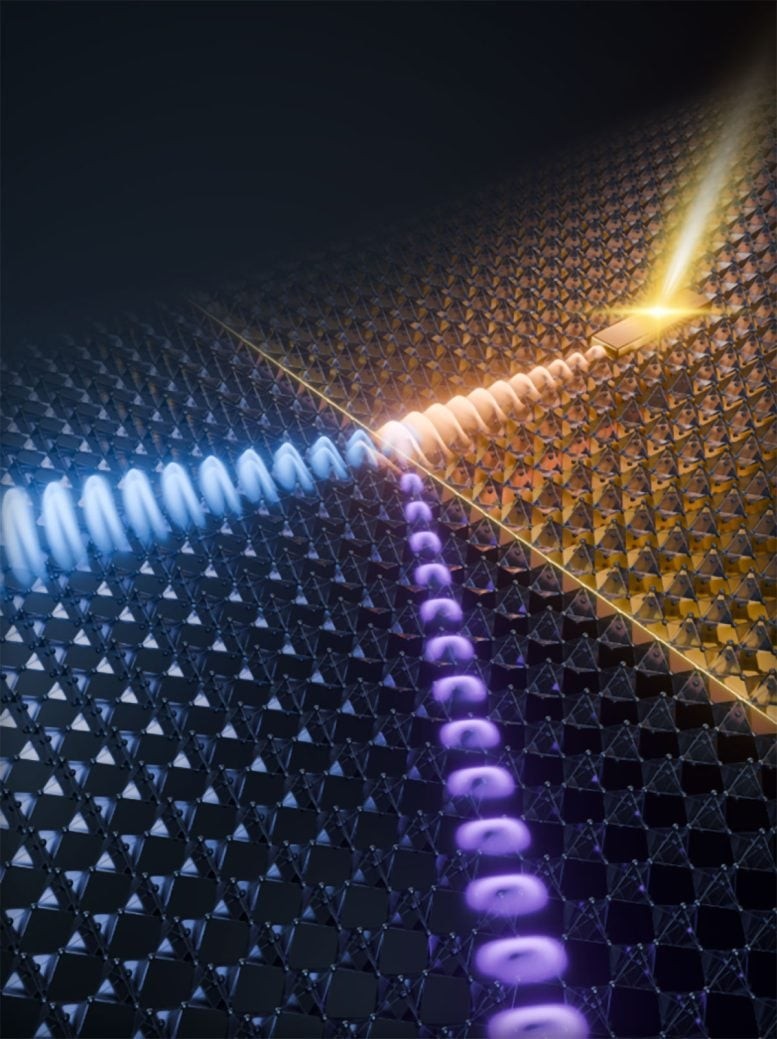
Figure 1. Record-Breaking Control of Light at the Nanoscale.
First, light illuminates a nanoscale gold antenna, delivering an initial burst of momentum that generates a fundamental (zero-order) hyperbolic phonon polariton within a smooth, biaxial MoO₃ crystal slab placed on a single-crystal gold substrate. As the polariton travels toward the edge of the gold layer—where the substrate abruptly terminates and the crystal extends into air—it encounters a sharp boundary. This sudden transition causes the wave to scatter, transforming it into higher-order phonon polariton modes. Figure 1 shows Record-Breaking Control of Light at the Nanoscale.
“Scattering the zero-order polariton at the boundary delivers the substantial momentum boost required to excite higher-order modes,” explains Prof. Rainer Hillenbrand, a lead author of the study. “We found that this two-step approach dramatically improves excitation efficiency compared with conventional single-step techniques.”
This enhanced efficiency, combined with an ultra-smooth, low-loss, air-suspended MoO₃ slab, enabled the researchers to observe higher-order polaritons with unprecedented performance. The resulting waves exhibited a record-high quality factor of approximately 45 and propagated over long distances, underscoring their promise for next-generation photonic technologies.
A New Way to Steer Light at the Nanoscale
The most remarkable outcome of this polariton excitation strategy is a phenomenon the team terms “pseudo-birefringence.” At the sharp gold–air interface, different polariton modes become spatially separated while retaining the same polarization. Fundamental and higher-order modes refract at distinct angles, causing them to travel in completely different directions.
“We have essentially built a traffic controller for light at the nanoscale,” says Prof. Qing Dai, another lead author. “This capability to sort different orders of hyperbolic polaritons opens a new pathway for designing ultra-compact photonic circuits. While it resembles birefringence in certain crystals, it occurs without altering polarization and is more than ten times stronger.”
This strong mode-sorting effect could be exploited for mode-division multiplexing, in which multiple data streams are carried simultaneously by different waveforms along a single nanowaveguide, significantly boosting information capacity. Additional potential applications include advanced optical filters, waveplates, and highly sensitive on-chip biosensors.
Overall, the study establishes a powerful new platform for controlling light at the nanoscale, with broad implications for nanophotonics, integrated optical communication, and future information-processing technologies.
Source:SciTECHDaily
Cite this article:
Priyadharshini S (2025), Scientists Break Records by Precisely Steering Light at the Nanoscale, AnaTechMaz, pp. 336
Recent Post
-
High-Energy Vortex Lasers Poised to Revolutionize Manufacturing and Imaging
Optical vortices—light beams carrying orbital angular momentum—...
-

Breakthrough Microscope Makes Hidden 2D Material Visible
Two-dimensional (2D) materials are crystalline substances made of a single layer of atoms. Their extreme...
-
Eco-Friendly Scientific Breakthrough Promises to Eliminate “Forever Chemicals”
PFAS, or per- and polyfluoroalkyl substances, are a large group of...
-
Physicists Outline the First Experimental Plan to Control Gravitational Waves
“Gravity influences everything, including light,” explains Schützhold. When...
-

Researchers Uncover Hidden Battery Flaw Behind Short Lifespan and Fire Hazards
“Until now, attempts to transition to single-crystal cathodes largely,...
-
Scientists Break Records by Precisely Steering Light at the Nanoscale
To overcome this challenge, researchers from Shanghai Jiao ,....
-
MIT Engineers Develop 3D-Printable Aluminum Five Times Stronger Than Standard Alloys
As a challenge, Olson asked the class to create an aluminum alloy...