

MIT Study Sheds New Light on Proton Dynamics Inside Metal Oxides
As renewable energy technologies such as fuel cells and electrolyzers continue to advance, scientists are searching for safer and more affordable alternatives to lithium for carrying electric charge. A new physical model developed by researchers at the Massachusetts Institute of Technology (MIT) offers a major step forward by improving predictions of how protons move through metal oxides.
The breakthrough could accelerate the development of energy technologies that rely on protons as charge carriers, rather than lithium ions, which dominate today’s batteries. Demand for lithium has surged with the growth of electric vehicles and renewable energy storage, driving up costs and raising concerns over safety and environmental impact.

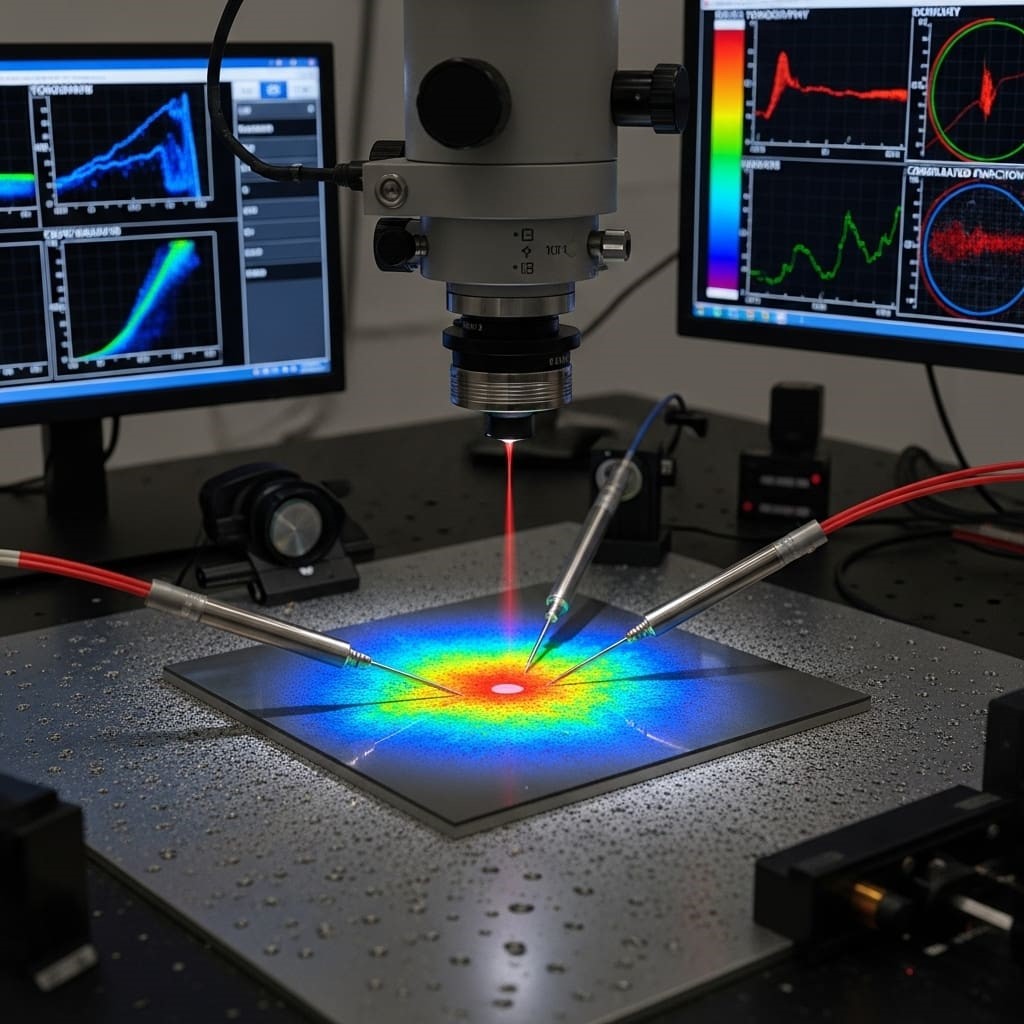
Figure 1. New Light on Proton Dynamics.
Protons—essentially hydrogen nuclei with no electrons—offer an appealing alternative. They are the simplest possible charge carriers and are central to technologies such as fuel cells and electrolyzers. The challenge lies in mobility: for protons to be useful, materials must allow them to move easily and efficiently.
Until now, protons have only been able to conduct charge through metal oxides at very high temperatures—above about 400 °C (752 °F). Replicating that performance at lower, more practical temperatures has remained out of reach, making MIT’s new model particularly significant. Figure 1 shows New Light on Proton Dynamics.
How protons move through metal oxides
Unlike other ions, protons lack electrons and instead embed themselves within the electron clouds of nearby atoms. In metal oxides, they bond with oxygen ions, forming a covalent hydrogen–oxygen bond.
To move, a proton hops from one oxygen ion to the next using a hydrogen bond. During this process, the original covalent bond rotates, preventing the proton from simply slipping back to where it started. This subtle dance of bonding and rebonding governs how easily protons can travel through a material.
“Proton conductors are critical for a wide range of energy conversion technologies, from clean electricity and fuels to sustainable industrial chemistry,” said Bilge Yildiz, a professor in MIT’s Department of Materials Science and Engineering. “Scalable, inorganic proton conductors that work at room temperature are also important for energy-efficient, brain-inspired computing.”
A new way to predict proton mobility
Led by Yildiz, the MIT team focused on the flexibility of the oxygen-ion sublattice within metal oxides, suspecting it plays a crucial role in proton transport [1]. To quantify this effect, they introduced a new metric called oxygen–oxygen (O…O) fluctuation, which measures how the spacing between oxygen ions changes due to lattice vibrations, or phonons, at finite temperatures.
The researchers also identified seven key material features that influence proton mobility and compiled them into a comprehensive dataset. Using this information, they trained an artificial intelligence model capable of predicting how different metal oxides would respond to proton conduction.
Guiding the search for new materials
The model revealed that two factors dominate proton mobility: hydrogen bond length and oxygen sublattice flexibility. Shorter hydrogen bonds enable faster proton transfer, while more flexible oxygen networks make it easier for protons to move through the material.
Beyond improving predictions, the researchers believe their dataset could be used to screen massive materials databases—and even guide generative AI systems to design entirely new compounds optimized for proton transport.
“Large materials databases generated by organizations like Google and Microsoft could be searched using the relationships we’ve identified,” Yildiz said. “And if suitable compounds don’t already exist, these parameters could help generate new ones.”
Such advances could boost the efficiency and practicality of clean energy conversion technologies and pave the way for low-power computing systems that rely on protons rather than electrons.
References:
- https://interestingengineering.com/science/mit-model-help-advance-proton-movement
Cite this article:
Keerthana S (2025), MIT Study Sheds New Light on Proton Dynamics Inside Metal Oxides, AnaTechMaz, pp.312
Recent Post
-
Gigapascal Plasma Reached as FuZE3 Marks Major Fusion Milestone
Using its newest Fusion Z-pinch Experiment (FuZE-3), Zap Energy...
-
Compact Laser Technology Could Redefine Medical and Manufacturing Applications
Researchers have created a groundbreaking and adaptable ...
-

Chaotic Bubbles Validate a 100-Year-Old Physics Prediction
Researchers have discovered experimental proof that a fundamental theory of turbulence applies...
-
Ultra-Light, Ultra-Strong Material Survives 932°F — A Game-Changer for Aerospace
Researchers have created an exceptionally lightweight yet ....
-
Lithium Has Been Extracted from Discarded Batteries Using a Cost-Effective, Electrochemically Driven Recovery Process
Researchers in the United States...
-

Chinese Solid-State EV Battery Giant Wins Eight Patents for Future Battery Tech
Tinci’s newest patents signal rapid progress in solid-state....
-

1950s Material Is Making a Major Comeback—and Could Redefine Modern Computing
Researchers are exploring hole mobility in compressively strained ....
-
INL Marks a Milestone as First TRISO Fuel Shipment Arrives for Upcoming Demonstration Reactor
The United States has taken a significant step toward deploying its...
-

A Breakthrough Material for Buildings Can Store Carbon Instead of Emitting it
A new carbon-negative building material developed at...
-

Explained: Small Modular Reactors and Their Role in Supporting Rising Global Power Demand
Small modular reactors (SMRs) are quickly moving from ...
-
Scientists Trace Atoms in Real Time as They Melt, Uncovering A Never-Before-Seen Transitional Phase
Scientists have directly ....
-
MIT Study Sheds New Light on Proton Dynamics Inside Metal Oxides
As renewable energy technologies such as fuel cells and electrolyzers ...
-
Game-Changing Flexible Battery Material Promises 45% Boost in Drone and EV Range
A new battery manufacturing approach that avoids the use of explosive...
-
Nuclear Breakthrough: UK Converts First Can of Radioactive Plutonium into Stable Waste
The UK holds around 140 tonnes of plutonium, accumulated since...
-
Exciton Tomography Maps Electron-Hole Correlations in 2D Materials
Excitons—quasiparticles formed by bound electron-hole pairs—are key to understanding a material’s optical....