

Eco-Friendly Scientific Breakthrough Promises to Eliminate “Forever Chemicals”
PFAS, or per- and polyfluoroalkyl substances, are a large group of man-made chemicals that have been in use since the 1940s. They are commonly found in everyday products such as non-stick cookware (like Teflon), waterproof and stain-resistant clothing, food packaging, firefighting foams, and some cosmetics.
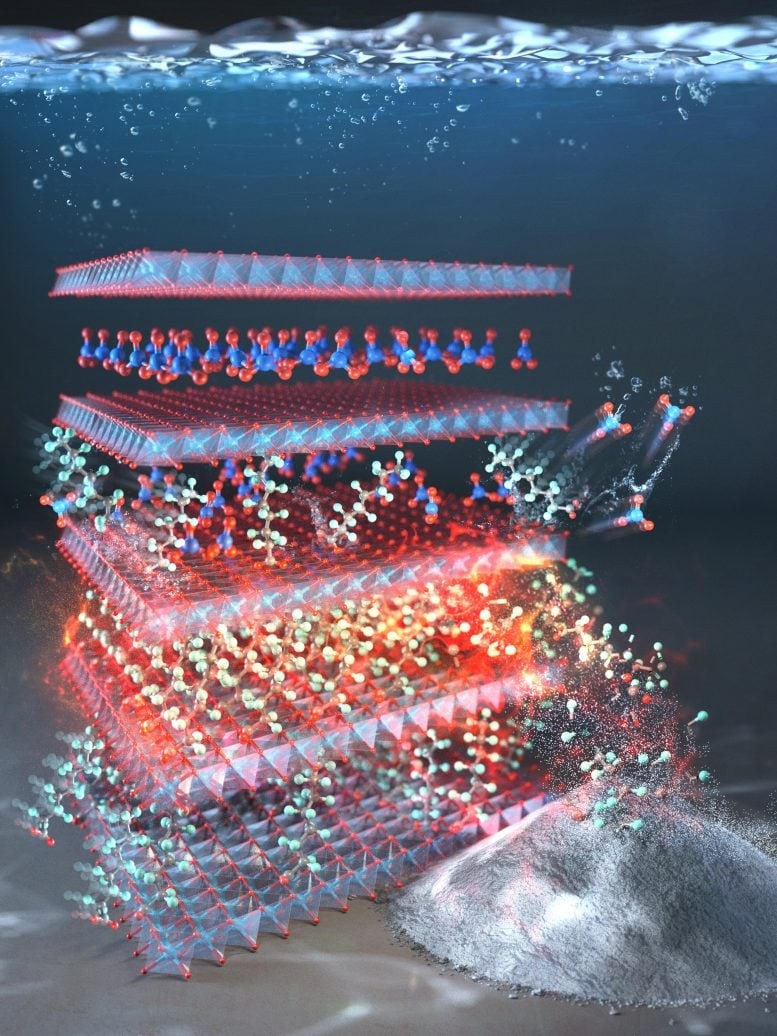
Figure 1. Eco-Friendly Technology Takes on “Forever Chemicals”.
PFAS are valued because they repel heat, grease, water, and oil, making products more durable and effective. However, these same properties make PFAS extremely persistent. They do not break down easily in the environment or the human body, earning them the nickname “forever chemicals.” Figure 1 shows Eco-Friendly Technology Takes on “Forever Chemicals”.
PFAS have become pervasive pollutants, now detected in water, soil, and even the air worldwide. Research has linked exposure to these chemicals to liver damage, reproductive and developmental problems, immune system disruption, and increased risks of certain cancers. Cleaning them up is especially challenging because PFAS are extremely stable, making them difficult to remove and nearly impossible to permanently destroy once they enter the environment.
Most current PFAS treatment methods rely on adsorption, where the chemicals bind to materials such as activated carbon or ion-exchange resins. While widely used, these techniques suffer from major drawbacks. They often have limited efficiency, operate slowly, and have restricted capacity. In addition, they generate secondary waste streams that still contain PFAS and require further treatment or disposal, rather than truly eliminating the chemicals.
“Current methods for PFAS removal are too slow, inefficient, and generate secondary waste,” said Wong, the Tina and Sunit Patel Professor of Molecular Nanotechnology and professor of chemical and biomolecular engineering, chemistry, and civil and environmental engineering. “Our new approach offers a sustainable and highly effective alternative.”
A breakthrough material with real-world promise
The Rice University–led team’s breakthrough centers on a layered double hydroxide (LDH) material made from copper and aluminum, first identified by Kim during graduate research at KAIST in 2021. While further investigating these materials, Chung discovered that a nitrate-based version of the LDH could capture PFAS with record-setting efficiency.
“To my astonishment, this LDH compound removed PFAS more than 1,000 times more effectively than existing materials,” said Chung, a lead author of the study and now a fellow at Rice’s WaTER (Water Technologies, Entrepreneurship and Research) Institute and Sustainability Institute. “It also worked extremely fast, eliminating large amounts of PFAS within minutes—about 100 times faster than commercial carbon filters.”
The material’s exceptional performance comes from its unique internal structure. Precisely arranged copper–aluminum layers, combined with subtle charge imbalances, create an ideal environment for PFAS molecules to bind quickly and tightly.
To assess real-world applicability, the researchers tested the LDH material in river water, tap water, and wastewater. In every case, it demonstrated high effectiveness, performing well in both batch and continuous-flow systems. These results highlight its strong potential for large-scale municipal water treatment and industrial PFAS cleanup.
Source:SciTECHDaily
Cite this article:
Priyadharshini S (2025), Eco-Friendly Scientific Breakthrough Promises to Eliminate “Forever Chemicals”, AnaTechMaz, pp. 333
Recent Post
-
High-Energy Vortex Lasers Poised to Revolutionize Manufacturing and Imaging
Optical vortices—light beams carrying orbital angular momentum—...
-

Breakthrough Microscope Makes Hidden 2D Material Visible
Two-dimensional (2D) materials are crystalline substances made of a single layer of atoms. Their extreme...
-
Eco-Friendly Scientific Breakthrough Promises to Eliminate “Forever Chemicals”
PFAS, or per- and polyfluoroalkyl substances, are a large group of...
-

Physicists Outline the First Experimental Plan to Control Gravitational Waves
“Gravity influences everything, including light,” explains Schützhold. When...
-

Researchers Uncover Hidden Battery Flaw Behind Short Lifespan and Fire Hazards
“Until now, attempts to transition to single-crystal cathodes largely,...
-
Scientists Break Records by Precisely Steering Light at the Nanoscale
To overcome this challenge, researchers from Shanghai Jiao ,....
-
MIT Engineers Develop 3D-Printable Aluminum Five Times Stronger Than Standard Alloys
As a challenge, Olson asked the class to create an aluminum alloy...