

Exciton Tomography Maps Electron-Hole Correlations in 2D Materials
Excitons—quasiparticles formed by bound electron-hole pairs—are key to understanding a material’s optical and electronic properties. Researchers Siegfried Kaidisch, Amir Kleiner, Sivan Refaely-Abramson, and colleagues have developed exciton photoemission orbital tomography (exPOT), a computational framework that simulates and interprets experimental observations of excitons in complex materials. By bridging theoretical models with photoemission tomography, exPOT accurately captures exciton behavior, including electron-hole interactions. Applying the method to hexagonal boron nitride, the team demonstrates how exciton responses depend on light polarization and enables the study of excitons normally hidden from conventional techniques, providing new insights into these fundamental quasiparticles.
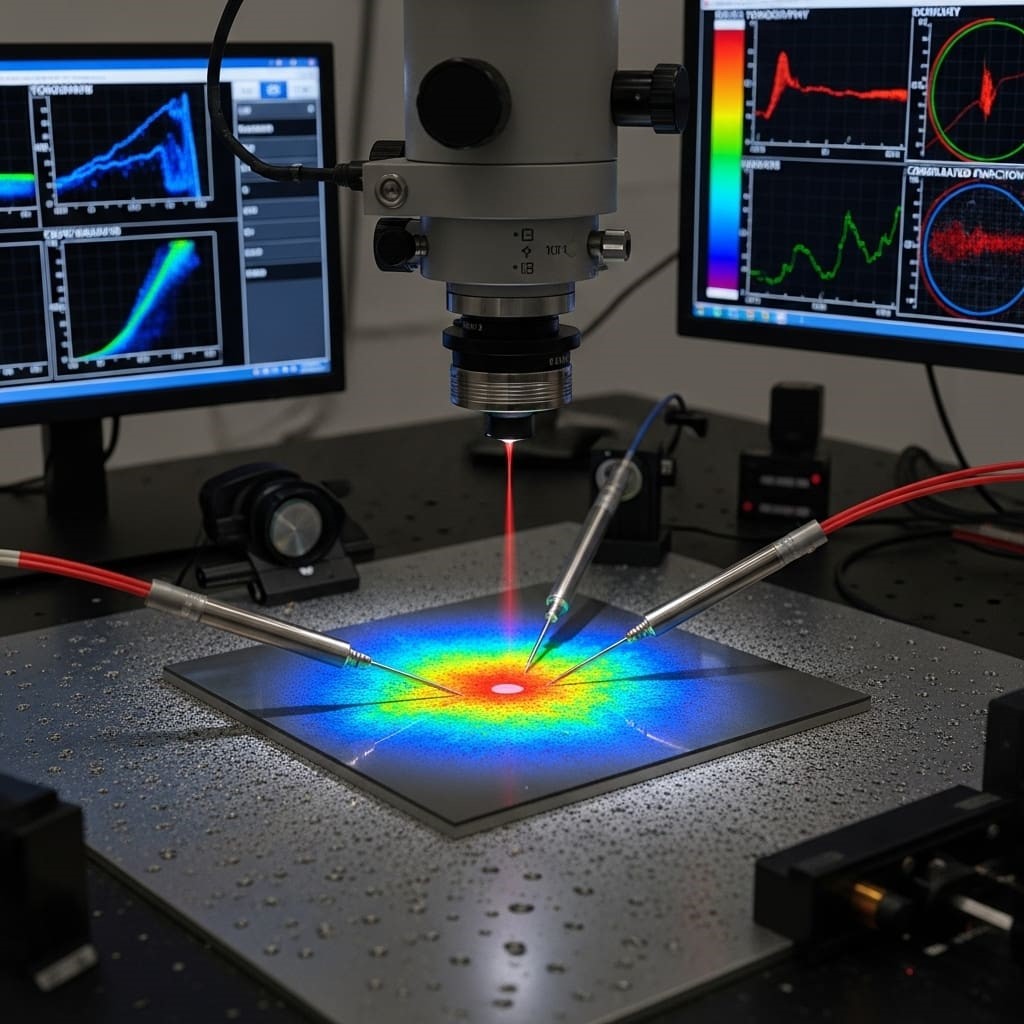
Figure 1. Exciton Photoemission Maps Electron-Hole Correlations in 2D Materials
First-Principles DFT and GW Analysis of 2D Materials
Researchers employ density functional theory (DFT) and many-body perturbation theory (GW) to probe the electronic structure, optical responses, and quasiparticle energies of two-dimensional (2D) materials such as graphene and transition metal dichalcogenides. Accurate modeling demands careful selection of basis sets and pseudopotentials to capture complex electron interactions. Studies examine the effects of stacking (heterostructures), defects, doping, and external stimuli like strain or electric fields on material properties. Investigated materials include graphene, MoS₂, WS₂, and hexagonal boron nitride. Methodological improvements focus on enhancing GW convergence, optimizing algorithms, and using real-space approaches for dielectric calculations. These efforts highlight that precise 2D material characterization requires moving beyond standard DFT to account for strong excitonic effects and challenges arising from reduced dimensionality. Figure 1 shows Exciton Photoemission Maps Electron-Hole Correlations in 2D Materials.
Exciton Photoemission Mapping Using Many-Body Perturbation Theory
Researchers have developed exciton photoemission orbital tomography (exPOT), a theoretical framework for analyzing how excitons—bound electron-hole pairs—emit photoelectrons in materials. The key innovation connects the Bethe-Salpeter Equation, which describes correlated electron-hole interactions, with photoemission tomography, enabling a detailed mapping of electronic structure. The study demonstrates that electron-hole correlations strongly influence exciton photoemission and that the resulting signals depend on the polarization of the pump pulse. Using hexagonal boron nitride as a model system, the framework also captures excitons with finite center-of-mass momentum, allowing the study of “momentum-dark” excitons.
By formulating the photoemission process within many-body perturbation theory, the approach provides an accurate description of electronic structure and photoelectron spectra. The method employs a Dyson orbital-like construction for Bloch functions, effectively reducing the many-electron problem to an effective one-electron picture. Measurements confirm that calculated photoelectron angular distributions reflect both intrinsic exciton properties and pump polarization, offering deeper insight into excitonic behavior and opening new avenues for studying complex materials.
Exciton Photoemission Orbital Mapping
Researchers have developed a computational framework, exciton photoemission orbital tomography (exPOT), to simulate and interpret exciton behavior in periodic systems. By linking the Bethe-Salpeter Equation with photoemission tomography, exPOT accurately models exciton photoemission while accounting for the effects of the probe pulse on matrix elements [1]. The framework reveals that electron-hole correlations strongly influence excitonic photoemission and introduce a dependence on the polarization of the pump pulse. Applied to hexagonal boron nitride, the method successfully captures excitons with finite center-of-mass momentum, including typically hard-to-observe momentum-dark excitons. The study also highlights how the exciton’s initial state affects the measured photoemission intensity, emphasizing the role of exciton superposition in interpreting experimental results.
References:
- https://quantumzeitgeist.com/systems-exciton-photoemission-tomography-reveals-correlated-electron-hole-wave/
Cite this article:
Janani R (2025), Exciton Tomography Maps Electron-Hole Correlations in 2D Materials, AnaTechMaz, pp. 315
Recent Post
-
Gigapascal Plasma Reached as FuZE3 Marks Major Fusion Milestone
Using its newest Fusion Z-pinch Experiment (FuZE-3), Zap Energy...
-

Compact Laser Technology Could Redefine Medical and Manufacturing Applications
Researchers have created a groundbreaking and adaptable ...
-

Chaotic Bubbles Validate a 100-Year-Old Physics Prediction
Researchers have discovered experimental proof that a fundamental theory of turbulence applies...
-
Ultra-Light, Ultra-Strong Material Survives 932°F — A Game-Changer for Aerospace
Researchers have created an exceptionally lightweight yet ....
-

Lithium Has Been Extracted from Discarded Batteries Using a Cost-Effective, Electrochemically Driven Recovery Process
Researchers in the United States...
-

Chinese Solid-State EV Battery Giant Wins Eight Patents for Future Battery Tech
Tinci’s newest patents signal rapid progress in solid-state....
-

1950s Material Is Making a Major Comeback—and Could Redefine Modern Computing
Researchers are exploring hole mobility in compressively strained ....
-

INL Marks a Milestone as First TRISO Fuel Shipment Arrives for Upcoming Demonstration Reactor
The United States has taken a significant step toward deploying its...
-

A Breakthrough Material for Buildings Can Store Carbon Instead of Emitting it
A new carbon-negative building material developed at...
-

Explained: Small Modular Reactors and Their Role in Supporting Rising Global Power Demand
Small modular reactors (SMRs) are quickly moving from ...
-
Scientists Trace Atoms in Real Time as They Melt, Uncovering A Never-Before-Seen Transitional Phase
Scientists have directly ....
-

MIT Study Sheds New Light on Proton Dynamics Inside Metal Oxides
As renewable energy technologies such as fuel cells and electrolyzers ...
-

Game-Changing Flexible Battery Material Promises 45% Boost in Drone and EV Range
A new battery manufacturing approach that avoids the use of explosive...
-

Nuclear Breakthrough: UK Converts First Can of Radioactive Plutonium into Stable Waste
The UK holds around 140 tonnes of plutonium, accumulated since...
-
Exciton Tomography Maps Electron-Hole Correlations in 2D Materials
Excitons—quasiparticles formed by bound electron-hole pairs—are key to understanding a material’s optical....