

quasicrystals: When Matter Plays by Its Own Rules
quasicrystals: When Matter Breaks the Rules
For decades, quasicrystals—mysterious solids that seem to straddle the line between crystal and glass—have baffled scientists. Their atomic arrangements are highly ordered, yet they never repeat, defying the symmetry rules of conventional crystals.
Now, a breakthrough study using the first-ever quantum-mechanical simulations of quasicrystals has revealed their secret: they are fundamentally stable structures, not fleeting byproducts of rapid cooling. The discovery resolves a 40-year-old puzzle and paves the way for designing materials with unconventional, rule-defying properties.
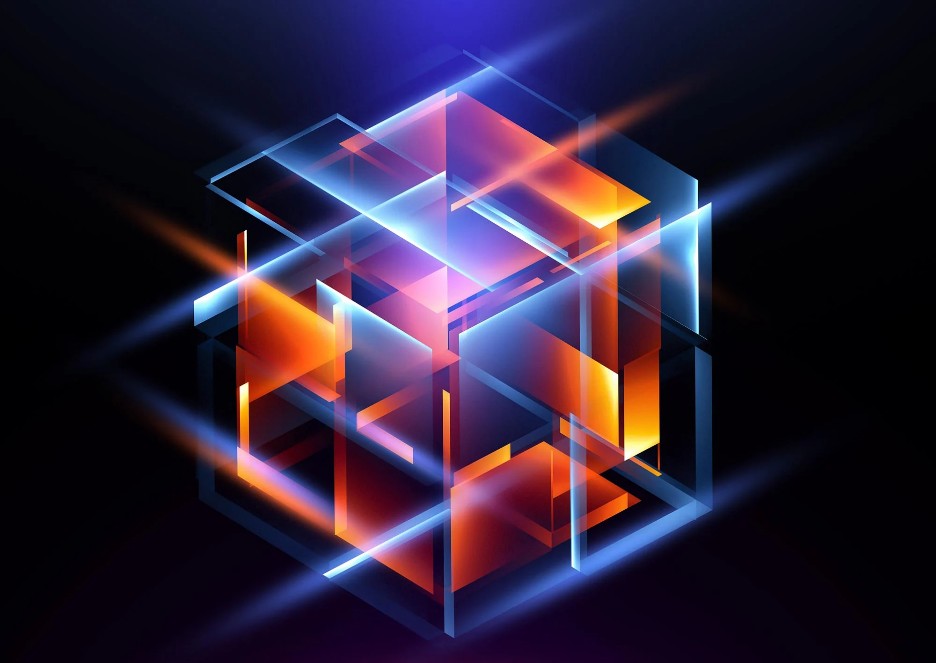
Figure 1. Quasicrystals.
The Curious State Between Crystal and Glass
A research team from the University of Michigan has found that, for certain combinations of atoms, quasicrystals can actually be the most stable form of matter. These findings challenge the long-standing belief that such structures were only accidental formations. Figure 1 shows Quasicrystals.
Like crystals, quasicrystals arrange atoms in a lattice. But unlike crystals, their patterns never repeat. This makes them resemble glass in some ways—glass is also non-repeating but forms through rapid cooling of molten material. The new simulations show that quasicrystals, like crystals, can be energetically favored and inherently stable.
The Big Question: Why Do They Exist?
“If we want to design materials with specific properties, we need to know how to arrange atoms into precise structures,” explained Wenhao Sun, Dow Early Career Assistant Professor of Materials Science and Engineering and lead author of the study, published in Nature Physics. “Quasicrystals have forced us to rethink how and why materials form. Until now, we didn’t truly understand why they existed.”
A Discovery That Shook Science
Quasicrystals first stunned researchers in 1984, when Israeli scientist Daniel Shechtman observed them while studying aluminum–manganese alloys. He discovered that some atoms formed an icosahedral structure—shaped like a cluster of 20-sided dice joined at their faces [1]. This arrangement exhibited five-fold symmetry, meaning the structure looked identical from five different angles—something once believed impossible in solid matter.
This new work confirms that such “rule-breaking” atomic arrangements are not just oddities—they can be the most stable option nature chooses. And that insight could open new frontiers in materials science, from novel coatings to ultra-durable composites.
quasicrystals: Order Without Repetition
Glass is an example of an entropy-stabilized solid. It forms when molten silica cools so quickly that its atoms are “flash-frozen” into a random, patternless arrangement. If cooling occurs more slowly—or if certain additives are introduced—the atoms can instead arrange themselves into quartz crystals, the stable, low-energy form of silica at room temperature.
Quasicrystals occupy a curious middle ground between glass and crystal. Like crystals, they have well-ordered local atomic arrangements, but like glass, they lack long-range, repeating patterns.
To uncover whether quasicrystals are stabilized by enthalpy (energy) or entropy (disorder), researchers developed a novel simulation method. They extracted nanoscale particles from a larger block of simulated quasicrystal and calculated the total energy of each particle. Because nanoparticles have clear boundaries, the calculations didn’t require modeling an infinite structure.
Revealing the Hidden Energies of Quasicrystals
Since a nanoparticle’s energy depends on both its volume and surface area, the researchers repeated the calculations for progressively larger nanoparticles. This allowed them to extrapolate the energy of a much larger quasicrystal. The results revealed that two well-known quasicrystals—one made from scandium and zinc, the other from ytterbium and cadmium—are enthalpy-stabilized.
Determining energy with high precision requires simulating the largest possible nanoparticles, but scaling up is computationally expensive. For example, doubling the number of atoms in a simulation can increase computing time by a factor of eight.
Accelerating Materials Discovery
“In conventional simulations, every processor communicates with all others,” explained study co-author Vikram Gavini, professor of mechanical engineering and materials science at the University of Michigan. “Our algorithm is up to 100 times faster because only neighboring processors exchange information, and we make full use of GPU acceleration on supercomputers.”
This leap in efficiency enables large-scale simulations not only of quasicrystals, but also of glass and amorphous solids, interfaces between different crystals, and crystal defects—features that could one day help create stable quantum computing bits.
References:
- https://scitechdaily.com/what-happens-when-matter-refuses-to-follow-the-rules-quasicrystals/
Cite this article:
Keerthana S (2025), Quasicrystals: When Matter Plays by Its Own Rules, AnaTechMaz, pp.249
Recent Post
-

Researchers Turn Carbon Waste Into High-Value Construction Material
Researchers have developed a low-lead process to convert carbon....
-
AI Hardware Breakthrough: Scientists Build Largest-Ever Spin Waveguide Network
Researchers from the Universities of Münster and Heidelberg, led by....
-

Tiny Structure Defies a Core Principle of Optics
Scientists have overcome a fundamental limitation in optics by using innovative bilayer metagratings...
-
One New Alloy Could Revolutionize Phones, Laptops, and Data Centers
Researchers at the University of Minnesota have introduced a groundbreaking new alloy....
-
X-ray Scans Uncover Buddhist Prayers Hidden Within Tiny Tibetan Scrolls
A delicate antique Buddhist scroll, once part of a traditional Mongolian...
-
AI Unlocks the Future of Batteries — And It’s Not Lithium
Recent discoveries suggest that the future of energy storage may lie in more affordable, safer, and...
-

Salt Additive Solves Hidden Water Problem, Boosts Battery Lifespan by 10x
ater was quietly undermining battery performance—until...
-
New 3D Printing Innovation Paves the Way for Affordable, High-Strength Titanium
Brooke, who was recently awarded a Research Translation Fellowship...
-
quasicrystals: When Matter Plays by Its Own Rules
For decades, quasicrystals—mysterious solids that seem to straddle the line between crystal and...
-

UK to Produce Nuclear Reactor Graphite from Recycled Materials to Reduce Waste
The University of Manchester has secured funding to lead a...
-

Scientists Capture First-Ever Real-Time Look at Electrolytes in Lithium-Sulfur Batteries
For the first time, researchers at Helmholtz-Zentrum Berlin (HZB) ...
-

Slime-Inspired Electrolyte May Improve Lithium-Ion Battery Safety and Recyclability
In a bid to make lithium-ion batteries safer, cleaner, and easier to...
-

New AI Approach Accelerates Calculations to Shield Fusion Reactors from Plasma Heat
A team of US researchers has introduced a groundbreaking...
-
Reinventing Solar: “Black Metal” Device Boosts Power Output 15-Fold
As the world looks for cleaner and more independent energy solutions, researchers have long studied...
-
Flat Band Discovery in Superconductors May Pave the Way for Next-Gen Computing
Kagome metals—materials with distinctive two-dimensional...