

Physicists Outline the First Experimental Plan to Control Gravitational Waves
Manipulating Gravitational Waves with Light
“Gravity influences everything, including light,” explains Schützhold. When light waves interact with gravitational waves, this connection becomes apparent. Schützhold proposes transferring minuscule amounts of energy from a light wave to a gravitational wave. As a result, the light loses a small fraction of its energy, while the gravitational wave gains an equal amount.
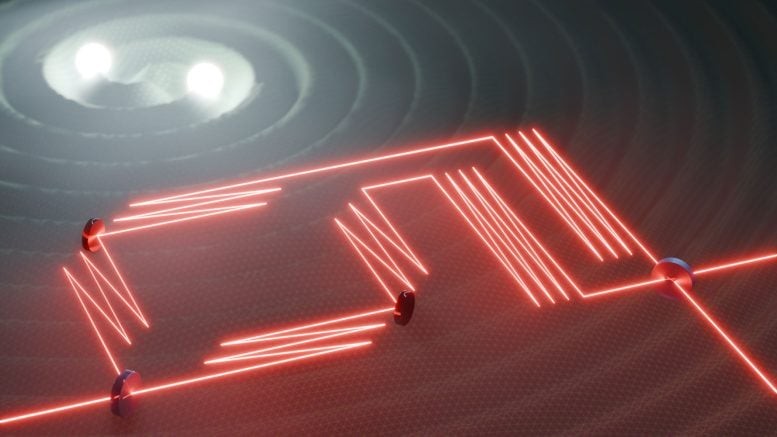
Figure 1. Scientists Propose the First Experiment to Control Gravitational Waves.
The transferred energy would correspond to one or more gravitons—the hypothetical quantum particles believed to mediate gravity, though they have yet to be directly detected. Figure 1 shows Scientists Propose the First Experiment to Control Gravitational Waves.
“This exchange would slightly intensify the gravitational wave,” the physicist explains. At the same time, the light wave would lose an equal amount of energy, producing an extremely small shift in its frequency.
“The interaction can also occur in reverse,” Schützhold adds. In that scenario, the gravitational wave transfers a packet of energy to the light wave. In principle, both processes—stimulated graviton emission and absorption—should be measurable, although observing them would require exceptionally demanding experimental conditions.
An Experiment on an Extreme Scale
Schützhold has outlined the immense scale such an experiment would require. In principle, laser pulses in the visible or near-infrared range could be reflected back and forth between two mirrors as many as a million times. In an experimental setup roughly one kilometer in length, this would create an effective optical path of about one million kilometers. Such a scale would be sufficient to detect the subtle energy exchange that occurs when light and gravitational waves interact through the absorption and emission of gravitons.
Even so, the resulting change in the light wave’s frequency—caused by the gain or loss of the energy carried by one or more gravitons—would be extraordinarily small. However, Schützhold argues that a carefully designed interferometer could still reveal these minute frequency shifts.
In this setup, two light waves would undergo different frequency changes depending on whether they absorb or emit gravitons. After traveling along the extended optical path, the waves would recombine, producing an interference pattern. By analyzing this pattern, researchers could determine the frequency shift and thereby infer the transfer of gravitons.
Probing the Quantum Nature of Gravity
“It can take decades for an idea to progress from theory to experiment,” Schützhold notes. Yet this proposal may advance more quickly, given its similarities to the Laser Interferometer Gravitational-Wave Observatory (LIGO), which is designed to detect gravitational waves. LIGO consists of two L-shaped vacuum tunnels, each about four kilometers long.
A beam splitter sends a laser beam down both arms of the detector. As gravitational waves pass through, they slightly warp space-time, causing differences of just a few attometers (10⁻¹⁸ meters) in the lengths of the two arms. These tiny distortions alter the interference pattern of the laser light, producing a measurable signal.
An interferometer based on Schützhold’s concept could go a step further—not only detecting gravitational waves, but actively manipulating them through the stimulated emission and absorption of gravitons. He suggests that using quantum-entangled photons could dramatically enhance the interferometer’s sensitivity.
“With that, we might even be able to draw conclusions about the quantum state of the gravitational field itself,” Schützhold explains. While such results would not constitute direct proof of gravitons—a topic of ongoing debate—they would provide compelling indirect evidence for their existence.
After all, if light waves failed to show the predicted interference effects when interacting with gravitational waves, current graviton-based theories would be challenged. It is therefore unsurprising that Schützhold’s proposal for manipulating gravitational waves has attracted significant interest within the physics community.
Source:SciTECHDaily
Cite this article:
Priyadharshini S (2025), Physicists Outline the First Experimental Plan to Control Gravitational Waves, AnaTechMaz, pp. 334
Recent Post
-
High-Energy Vortex Lasers Poised to Revolutionize Manufacturing and Imaging
Optical vortices—light beams carrying orbital angular momentum—...
-

Breakthrough Microscope Makes Hidden 2D Material Visible
Two-dimensional (2D) materials are crystalline substances made of a single layer of atoms. Their extreme...
-
Eco-Friendly Scientific Breakthrough Promises to Eliminate “Forever Chemicals”
PFAS, or per- and polyfluoroalkyl substances, are a large group of...
-
Physicists Outline the First Experimental Plan to Control Gravitational Waves
“Gravity influences everything, including light,” explains Schützhold. When...
-

Researchers Uncover Hidden Battery Flaw Behind Short Lifespan and Fire Hazards
“Until now, attempts to transition to single-crystal cathodes largely,...
-
Scientists Break Records by Precisely Steering Light at the Nanoscale
To overcome this challenge, researchers from Shanghai Jiao ,....
-
MIT Engineers Develop 3D-Printable Aluminum Five Times Stronger Than Standard Alloys
As a challenge, Olson asked the class to create an aluminum alloy...