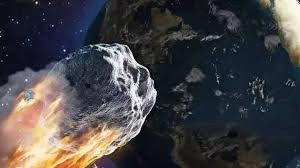

NASA Discovers Potential Ingredients for Life on Saturn’s Moon Titan
An introduction to Titan’s unique environment — thick atmosphere, methane lakes, and icy surface — and why scientists consider it one of the most Earth-like bodies in the solar system.
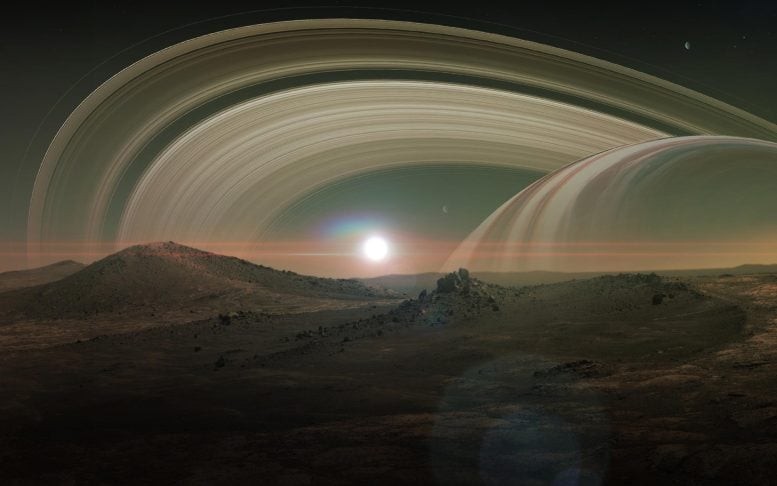
Figure 1. Possible Building Blocks of Life Found on Saturn’s Moon Titan.
A recent NASA study, featured in the International Journal of Astrobiology, outlines a potential process for how stable vesicles might form on Titan, based on what scientists know about the moon’s atmosphere and chemical composition. The formation of these enclosed, bubble-like structures is thought to be a crucial step toward generating the basic components of living cells, or protocells. Figure 1 shows Possible Building Blocks of Life Found on Saturn’s Moon Titan.
The proposed mechanism focuses on molecules called amphiphiles, which can spontaneously organize into vesicles under the right conditions. On Earth, these polar molecules have two distinct ends: a hydrophobic (water-repelling) tail and a hydrophilic (water-attracting) head. In watery environments, they naturally cluster into spherical formations resembling soap bubbles, with the hydrophilic heads facing outward toward the water and the hydrophobic tails tucked safely inside. When two layers of these molecules align, they form a bilayer membrane — a cell-like sphere capable of trapping a droplet of water within.
For Titan, scientists needed to adapt this concept to an environment vastly unlike early Earth. Saturn’s largest moon — and the second-largest in the solar system — is the only moon known to have a dense, substantial atmosphere. For centuries, Titan’s thick, golden haze concealed its surface, leaving much of it a mystery. That changed in 2004, when NASA’s Cassini spacecraft arrived in Saturn’s system, revolutionizing our understanding of the moon.
Cassini revealed a world shaped by complex weather and organic chemistry. Titan’s atmosphere is dominated by nitrogen, with a significant amount of methane (CH₄). This methane forms clouds, falls as rain, and flows across the surface, carving river channels and eroding terrain before pooling into lakes and seas. Sunlight then drives evaporation, returning methane to the atmosphere and sustaining this dynamic cycle.
This weather cycle also fuels complex chemical reactions. Sunlight breaks apart molecules like methane, and the resulting fragments combine to form more complex organic compounds. Many astrobiologists believe these processes could shed light on how the fundamental molecules of life first formed and evolved on the early Earth.
Implications for Understanding Life’s Origins
If this proposed vesicle-forming process is indeed occurring on Titan, it could greatly expand our knowledge of the kinds of environments where life might emerge.
“The presence of any vesicles on Titan would indicate a rise in order and complexity — both essential conditions for the origin of life,” says Conor Nixon of NASA’s Goddard Space Flight Center in Greenbelt, Maryland. “We’re excited about these new ideas because they can open up fresh directions for Titan research and may even reshape how we search for life there in the future.”
NASA’s first dedicated mission to Titan will be the Dragonfly rotorcraft, designed to explore the moon’s surface. Although Dragonfly won’t visit Titan’s lakes and seas — and will lack the light-scattering instrument needed to detect vesicles — it will traverse multiple locations, analyzing surface composition, collecting atmospheric and geophysical data, and assessing the overall habitability of Titan’s environment.
Source: SciTECHDaily
Cite this article:
Priyadharshini S (2025), NASA Discovers Potential Ingredients for Life on Saturn’s Moon Titan, AnaTechMaz, pp.480
Recent Post
-
China Successfully Tests Domestically Developed Operating System In Space to Cut Reliance on Foreign Software
China Successfully Tests...
-
World’s Largest Space Camera Captures Stunning First Images of the Universe
The Vera C. Rubin Observatory has unveiled its first breathtaking...
-
Most Detailed Image of the Sun Yet Uncovers Hidden Magnetic Stripes
In a groundbreaking achievement, scientists from the U.S. National Science Foundation’s National Solar ...
-
European Space Agency Partners with Blue Origin to Secure Future Access to Low-Earth Orbit
For decades, the International Space Station (ISS) has served as...
-
NASA’s Lunar Rover to Search for Ice, Chart Minerals, and Explore the Subsurface
NASA is launching a new chapter in lunar exploration, equipping....
-
NASA Just Entered the Sun’s Atmosphere — and the Views Are Stunning
NASA’s Parker Solar Probe is transforming our understanding...
-
Shubhanshu Shukla Returns to Earth After Spending 20 Days in Space
Indian Air Force Group Captain Shubhanshu Shukla has returned...
-

US Company’s Maglev Launches Ramp Aims to Hurl Rockets into Orbit Using Minimal Fuel
Several companies are exploring ways to send spacecraft into orbit...
-

Did a Cosmic Impact Block the Grand Canyon? Unraveling A 56,000-Year-Old Enigma
Around 56,000 years ago, an extraordinary coincidence unfolded:...
NASA Finally Unveils the True Source of These Mysterious Cosmic X-Rays
Astronomers have finally unraveled a long-standing puzzle surrounding...
-
Strange Space Object Circles the Sun Once for Every Ten Neptune Orbits — What’s Behind It?
Astronomers have uncovered a mysterious object lurking far...
-
Astronomers Uncover Previously Unknown River of Gas Streaming Toward the Milky Way’s Core
Natalie Butterfield, NSF National Radio Astronomy Observatory scientist...
-
Interstellar Comet, Possibly as Ancient as the Galaxy, Pays a Visit to our Solar System
“This is exactly what we’re here for—finding objects like this, sharing...
-
NASA Discovers Potential Ingredients for Life on Saturn’s Moon Titan
An introduction to Titan’s unique environment — thick...