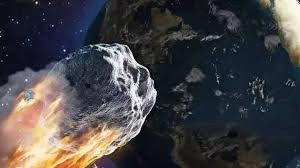
Strange Space Object Circles the Sun Once for Every Ten Neptune Orbits — What’s Behind It?
Astronomers have uncovered a mysterious object lurking far beyond Neptune that completes one orbit around the Sun for every ten orbits made by Neptune—a resonance never documented before.
Named 2020 VN40, this distant body’s orbit is steeply tilted relative to the plane of the solar system, yet it remains locked in a precise gravitational rhythm with Neptune. Although its closest approach to the Sun visually aligns with Neptune’s, the two objects never come near each other in three-dimensional space. This surprising orbital pattern raises fresh questions about the early evolution of the outer solar system and what other secrets might lie hidden in its farthest reaches.

Figure 1. Object Orbits the Sun.
Researchers from the Center for Astrophysics | Harvard & Smithsonian identified this unusual object, part of a category known as trans-Neptunian objects (TNOs). 2020 VN40 is the first confirmed case of an object caught in a 1:10 orbital resonance with Neptune, meaning it circles the Sun once for every ten Neptune orbits.
This discovery sheds light on how Neptune’s gravity can temporarily trap and guide distant objects, offering a glimpse into the dynamic processes shaping the solar system’s outer frontier. Figure 1 shows Object Orbits the Sun.
Tracing the Solar System’s History
“This is a significant step forward in understanding the distant edges of our solar system,” explained Rosemary Pike, lead author of the study, recently published in The Planetary Science Journal [1]. “It shows that even remote regions influenced by Neptune can host such objects, giving us new clues about the solar system’s formation and evolution.”
The team’s work is part of the Large inclination Distant Objects (LiDO) survey, which focuses on finding objects with unusual orbits that rise far above or dip far below the plane in which most planets orbit. Observations were made using the Canada-France-Hawaii Telescope, complemented by data from the Gemini Observatory and the Magellan Baade Telescope.
Charting a Tilted Path
2020 VN40’s average distance from the Sun is roughly 140 times that of Earth’s. Its orbit is highly inclined, setting it apart from many other known distant objects.
“It’s fascinating to see how many small bodies follow these extreme, tilted paths,” noted Dr. Samantha Lawler from the University of Regina, a core member of the LiDO team.
An Orbital Curiosity
Most objects in resonance with Neptune reach their closest point to the Sun when Neptune is far away. But in the case of 2020 VN40, its closest approach coincides—at least in a flat, top-down view—with Neptune’s position. Because of its steep orbital tilt, the two objects aren’t actually near each other in three-dimensional space; they only appear close when mapped onto a two-dimensional plane. This alignment is unlike anything previously seen among resonant TNOs, which typically avoid such overlap even in projection.
A Hidden Rhythm in the Solar System
“This discovery is like uncovering a new beat in a song we thought we fully understood,” said study co-author Ruth Murray-Clay from the University of California, Santa Cruz. “It reshapes how we think about the movement of distant solar system objects.”
The team’s findings suggest that steeply tilted orbits can produce unexpected and previously unknown orbital behaviors. With the LiDO survey already identifying over 140 distant objects, scientists anticipate many more discoveries in the years ahead—especially with powerful telescopes like the upcoming Vera C. Rubin Observatory.
“This is just the beginning,” added Kathryn Volk of the Planetary Science Institute. “We’re opening a fresh window into the solar system’s ancient past.”
Reference:
- https://scitechdaily.com/mysterious-object-orbits-the-sun-once-for-every-10-neptune-orbits-but-why/
Cite this article:
Keerthana S (2025), Strange Space Object Circles the Sun Once for Every Ten Neptune Orbits — What’s Behind It?, AnaTechMaz, pp.476
Recent Post
-
China Successfully Tests Domestically Developed Operating System In Space to Cut Reliance on Foreign Software
China Successfully Tests...
-
World’s Largest Space Camera Captures Stunning First Images of the Universe
The Vera C. Rubin Observatory has unveiled its first breathtaking...
-
Most Detailed Image of the Sun Yet Uncovers Hidden Magnetic Stripes
In a groundbreaking achievement, scientists from the U.S. National Science Foundation’s National Solar ...
-
European Space Agency Partners with Blue Origin to Secure Future Access to Low-Earth Orbit
For decades, the International Space Station (ISS) has served as...
-

NASA’s Lunar Rover to Search for Ice, Chart Minerals, and Explore the Subsurface
NASA is launching a new chapter in lunar exploration, equipping....
-
NASA Just Entered the Sun’s Atmosphere — and the Views Are Stunning
NASA’s Parker Solar Probe is transforming our understanding...
-

Shubhanshu Shukla Returns to Earth After Spending 20 Days in Space
Indian Air Force Group Captain Shubhanshu Shukla has returned...
-

US Company’s Maglev Launches Ramp Aims to Hurl Rockets into Orbit Using Minimal Fuel
Several companies are exploring ways to send spacecraft into orbit...
-

Did a Cosmic Impact Block the Grand Canyon? Unraveling A 56,000-Year-Old Enigma
Around 56,000 years ago, an extraordinary coincidence unfolded:...
NASA Finally Unveils the True Source of These Mysterious Cosmic X-Rays
Astronomers have finally unraveled a long-standing puzzle surrounding...
-
Strange Space Object Circles the Sun Once for Every Ten Neptune Orbits — What’s Behind It?
Astronomers have uncovered a mysterious object lurking far...
-

Astronomers Uncover Previously Unknown River of Gas Streaming Toward the Milky Way’s Core
Natalie Butterfield, NSF National Radio Astronomy Observatory scientist...
-
Interstellar Comet, Possibly as Ancient as the Galaxy, Pays a Visit to our Solar System
“This is exactly what we’re here for—finding objects like this, sharing...
-
NASA Discovers Potential Ingredients for Life on Saturn’s Moon Titan
An introduction to Titan’s unique environment — thick...