
Interstellar Comet, Possibly as Ancient as the Galaxy, Pays a Visit to our Solar System
Public Interest and Future Discoveries
“This is exactly what we’re here for—finding objects like this, sharing them with the public, and sparking excitement,” said Aster Taylor, a Fannie and John Hertz Fellow in the University of Michigan’s Department of Astronomy.
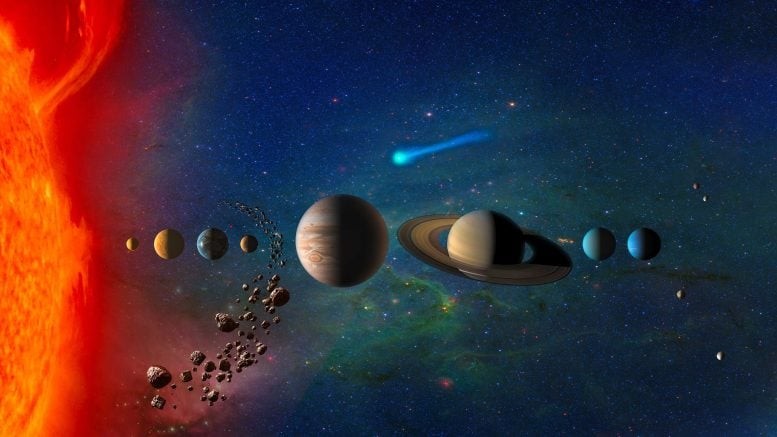
Figure 1. Ancient Interstellar Comet Makes Rare Passage Through Our Solar System.
Public enthusiasm is crucial for sustaining funding and driving the development of advanced technologies that enable future discoveries. A notable example is the Vera C. Rubin Observatory, which began operations this summer with support from the U.S. National Science Foundation and the Department of Energy. Although it did not discover 3I/ATLAS, Taylor noted that the observatory is expected to detect one or two interstellar objects each year. Figure 1 shows Ancient Interstellar Comet Makes Rare Passage Through Our Solar System.
“It’s a great time to discover fascinating objects,” Taylor said. “Three is exciting—but if we can find 10 or more, we’ll have a solid sample, and that would be truly thrilling.”
The Telescope That Spotted 3I/ATLAS
NASA’s Asteroid Terrestrial-impact Last Alert System (ATLAS) was responsible for the discovery of 3I/ATLAS. The system consists of four automated telescopes—two in Hawaii, one in Chile, and one in South Africa—that scan the entire sky several times each night, searching for moving objects.
Although ATLAS is primarily designed to detect potential threats to Earth, this object poses no danger. It will pass at a distance greater than that between Earth and the sun.
According to Aster Taylor, 3I/ATLAS is most likely a comet, surrounded by a coma—a cloud of gas and dust that forms around its solid core. As it draws closer to the sun, this coma is expected to change, revealing clues about the comet’s composition.
“3I/ATLAS likely contains ices beneath its surface,” said Darryl Seligman, a postdoctoral fellow at Michigan State University. “As it approaches the sun, those ices may start to activate—but until we detect specific gases like H₂O, CO, or CO₂, we can’t be certain of their type or quantity.”
Awaiting Answers from Space Telescopes
In the months ahead, observatories such as Hubble and the James Webb Space Telescope will take closer looks at 3I/ATLAS to determine its size, spin, and how it responds to solar heating.
“We have images of 3I/ATLAS where it looks fuzzier than the surrounding stars,” said James Wray, a professor at the Georgia Institute of Technology involved in the discovery. “It’s still far away, so there’s a lot we don’t yet know.”
Even so, early measurements reveal that 3I/ATLAS is faster, larger, and older than its interstellar predecessors—1I/‘Oumuamua and 2I/Borisov.
Size, Speed, and Age of 3I/ATLAS
3I/ATLAS is moving at a hyperbolic velocity of just under 60 kilometers per second—about 130,000 miles per hour—compared to 26 km/s for 1I/‘Oumuamua and 32 km/s for 2I/Borisov. Early estimates suggest it could be up to 10 kilometers (6 miles) in diameter, making it roughly 100 times larger than ‘Oumuamua and 10 times larger than Borisov.
Taylor cautions that these figures will likely shrink as better observations come in, since a size that large would imply galaxies produce such objects far more efficiently than physics allows.
Age estimates put 3I/ATLAS between 3 billion and 11 billion years old. By comparison, both ‘Oumuamua and Borisov are measured in the millions of years. “It’s a wide range,” Taylor said. “But 11 billion years is pretty old—it’s about as old as the galaxy.” Even if the true number is at the lower end, it could still reveal valuable insights into how the Milky Way formed stars, planets, and other bodies in its early history.
Racing to Confirm the Discovery
Taylor joined the project while en route to confirm 3I/ATLAS’s interstellar origin and gather early data. Time was critical: if ATLAS had spotted it, other astronomers might have too, and the team wanted to confirm and announce the find first.
“I was fully on vacation in Fiji with my family when this was announced,” Taylor recalled. “When I heard, I just thought, ‘All right. Well, that’s my next two days.’ It’s very exciting, but also more stressful than you might think.”
Seligman had slightly more warning. On July 1, word of the discovery began circulating within the group. “I heard something about the object before I went to bed, but we didn’t have much information yet,” he said. “By the time I woke up around 1 a.m., my colleagues Marco Micheli from the European Southern Observatory and Davide Farnocchia from NASA’s Jet Propulsion Laboratory were emailing me that this was likely for real. I started sending messages telling everyone to turn their telescopes to look at this object.”
Final Confirmation and Follow-Up
Larry Denneau of the ATLAS team reviewed and submitted discovery observations from the European Southern Observatory’s Very Large Telescope in Chile soon after it was spotted.
“We’ve had false alarms before about interesting objects, so we know not to get too excited on day one,” Denneau said. “But the incoming data was consistent, and by late that night it looked like we had the real thing.”
John Tonry, another ATLAS team member and professor at the University of Hawaii, played a key role in designing and building the survey system that found 3I/ATLAS. “It’s really gratifying every time our hard work surveying the sky discovers something new,” he said. “And this comet—having traveled for millions of years from another star system—is particularly exciting.”
Source: SciTECHDaily
Cite this article:
Priyadharshini S (2025), Interstellar Comet, Possibly as Ancient as the Galaxy, Pays a Visit to our Solar System, AnaTechMaz, pp.479
Recent Post
-
China Successfully Tests Domestically Developed Operating System In Space to Cut Reliance on Foreign Software
China Successfully Tests...
-
World’s Largest Space Camera Captures Stunning First Images of the Universe
The Vera C. Rubin Observatory has unveiled its first breathtaking...
-
Most Detailed Image of the Sun Yet Uncovers Hidden Magnetic Stripes
In a groundbreaking achievement, scientists from the U.S. National Science Foundation’s National Solar ...
-
European Space Agency Partners with Blue Origin to Secure Future Access to Low-Earth Orbit
For decades, the International Space Station (ISS) has served as...
-

NASA’s Lunar Rover to Search for Ice, Chart Minerals, and Explore the Subsurface
NASA is launching a new chapter in lunar exploration, equipping....
-
NASA Just Entered the Sun’s Atmosphere — and the Views Are Stunning
NASA’s Parker Solar Probe is transforming our understanding...
-

Shubhanshu Shukla Returns to Earth After Spending 20 Days in Space
Indian Air Force Group Captain Shubhanshu Shukla has returned...
-
US Company’s Maglev Launches Ramp Aims to Hurl Rockets into Orbit Using Minimal Fuel
Several companies are exploring ways to send spacecraft into orbit...
-

Did a Cosmic Impact Block the Grand Canyon? Unraveling A 56,000-Year-Old Enigma
Around 56,000 years ago, an extraordinary coincidence unfolded:...
NASA Finally Unveils the True Source of These Mysterious Cosmic X-Rays
Astronomers have finally unraveled a long-standing puzzle surrounding...
-
Strange Space Object Circles the Sun Once for Every Ten Neptune Orbits — What’s Behind It?
Astronomers have uncovered a mysterious object lurking far...
-
Astronomers Uncover Previously Unknown River of Gas Streaming Toward the Milky Way’s Core
Natalie Butterfield, NSF National Radio Astronomy Observatory scientist...
-
Interstellar Comet, Possibly as Ancient as the Galaxy, Pays a Visit to our Solar System
“This is exactly what we’re here for—finding objects like this, sharing...
-
NASA Discovers Potential Ingredients for Life on Saturn’s Moon Titan
An introduction to Titan’s unique environment — thick...