Astronomers Uncover Previously Unknown River of Gas Streaming Toward the Milky Way’s Core
Confirming a Massive Structure
Natalie Butterfield, NSF National Radio Astronomy Observatory scientist and lead author, explained that one of the study’s biggest findings was the giant molecular cloud (GMC) itself — a structure no one knew existed until they examined that region of the sky and detected its dense gas. By measuring its size, mass, and density, they confirmed its true scale.
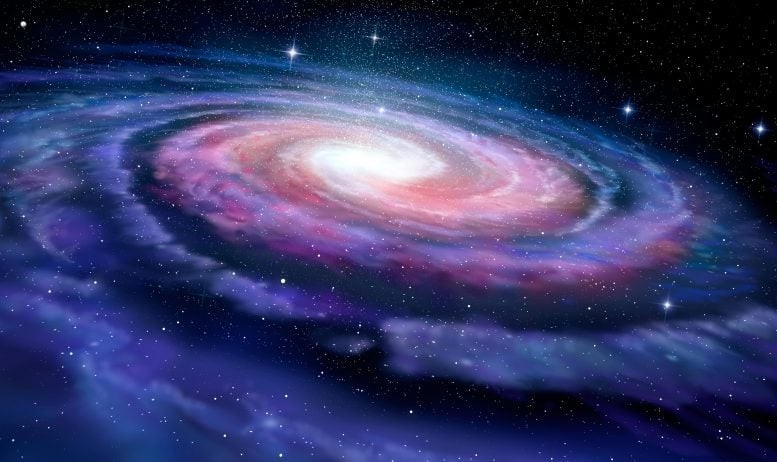
Figure 1. Hidden River of Gas Discovered Flowing into the Milky Way’s Core.
Butterfield likened the galaxy’s dust lanes to “hidden rivers” of gas and dust funneling material toward the Milky Way’s core. The Midpoint Cloud, she noted, marks the transition zone where matter from the galactic disk moves into the extreme environment of the galactic center, offering a rare chance to study the gas before it accumulates there. Figure 1 shows Hidden River of Gas Discovered Flowing into the Milky Way’s Core.
Clues from Molecular Tracers
Using the NSF Green Bank Telescope, researchers examined molecules such as ammonia (NH₃) and cyanobutadiyne (HC₅N)—both reliable markers of dense interstellar gas. These observations led to the discovery of the hidden Midpoint Cloud within one of the Milky Way’s inward-moving dust lanes, along with several notable features:
- Newly identified maser: A previously unknown ammonia-linked maser—concentrated microwave radiation—was detected, often signaling regions of active star formation.
- Potential star-forming sites: : Dense clumps of gas and dust, including one dubbed Knot E, could be on the verge of birthing new stars. Knot E may be a frEGG (free-floating evaporating gas globule), slowly eroding under radiation from nearby stars.
- Signs of stellar feedback: A shell-like structure inside the cloud likely formed from explosive stellar events that expelled matter into the surrounding gas.
- Intense gas turbulence: The cloud’s gas shows extreme turbulence, similar to that in the galaxy’s central region, possibly caused by inflowing dust-lane material or interactions with nearby clouds.
“Star formation in galactic bars is a bit of a puzzle,” noted Larry Morgan of the NSF Green Bank Observatory. “The powerful forces in these regions can actually inhibit star formation. But the leading edges—like where the Midpoint is located—can concentrate gas enough to spark new stars.”
The findings position the Midpoint Cloud as a vital link in the transfer of matter from the Milky Way’s disk to its core, shedding light on how galaxies grow their central structures and form stars in extreme conditions.
Source: SciTECHDaily
Cite this article:
Priyadharshini S (2025), Astronomers Uncover Previously Unknown River of Gas Streaming Toward the Milky Way’s Core, AnaTechMaz, pp.478
Recent Post
-
China Successfully Tests Domestically Developed Operating System In Space to Cut Reliance on Foreign Software
China Successfully Tests...
-
World’s Largest Space Camera Captures Stunning First Images of the Universe
The Vera C. Rubin Observatory has unveiled its first breathtaking...
-
Most Detailed Image of the Sun Yet Uncovers Hidden Magnetic Stripes
In a groundbreaking achievement, scientists from the U.S. National Science Foundation’s National Solar ...
-
European Space Agency Partners with Blue Origin to Secure Future Access to Low-Earth Orbit
For decades, the International Space Station (ISS) has served as...
-
NASA’s Lunar Rover to Search for Ice, Chart Minerals, and Explore the Subsurface
NASA is launching a new chapter in lunar exploration, equipping....
-
NASA Just Entered the Sun’s Atmosphere — and the Views Are Stunning
NASA’s Parker Solar Probe is transforming our understanding...
-

Shubhanshu Shukla Returns to Earth After Spending 20 Days in Space
Indian Air Force Group Captain Shubhanshu Shukla has returned...
-

US Company’s Maglev Launches Ramp Aims to Hurl Rockets into Orbit Using Minimal Fuel
Several companies are exploring ways to send spacecraft into orbit...
-
Did a Cosmic Impact Block the Grand Canyon? Unraveling A 56,000-Year-Old Enigma
Around 56,000 years ago, an extraordinary coincidence unfolded:...
NASA Finally Unveils the True Source of These Mysterious Cosmic X-Rays
Astronomers have finally unraveled a long-standing puzzle surrounding...
-
Strange Space Object Circles the Sun Once for Every Ten Neptune Orbits — What’s Behind It?
Astronomers have uncovered a mysterious object lurking far...
-
Astronomers Uncover Previously Unknown River of Gas Streaming Toward the Milky Way’s Core
Natalie Butterfield, NSF National Radio Astronomy Observatory scientist...
-
Interstellar Comet, Possibly as Ancient as the Galaxy, Pays a Visit to our Solar System
“This is exactly what we’re here for—finding objects like this, sharing...
-
NASA Discovers Potential Ingredients for Life on Saturn’s Moon Titan
An introduction to Titan’s unique environment — thick...