

Google's New AI-Powered Web Guide Experiment Reshapes Search Results
On Thursday, Google introduced a new AI-driven feature called Web Guide, designed to organize Google Search results more intelligently. As part of the Search Labs initiative, Web Guide uses artificial intelligence to group search results based on distinct aspects of a user's query, making it easier to explore different angles on a topic.
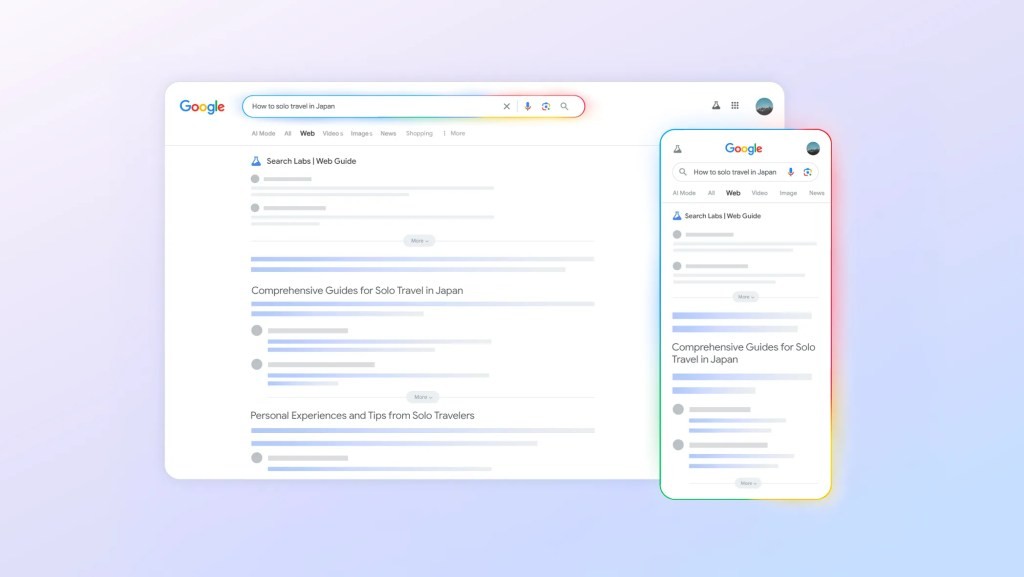
Figure 1. Google's AI-Driven Web Guide Experiment Transforms Search Experience.
Search Labs allows users to try out experimental Google features by opting in. These tests can be enabled or disabled at any time and include innovations like AI Mode, Notebook LM, the filmmaking assistant Flow, and more experimental ideas—such as an audio news show generated from content in your Google Discover feed. Figure 1 shows Google's AI-Driven Web Guide Experiment Transforms Search Experience.
The new Web Guide experiment builds on the fan-out technique already used in Google’s AI Mode to display search results. Powered by Gemini, Google’s advanced AI model, the feature enhances query understanding and surfaces additional relevant pages that might be overlooked by traditional search methods.
Google says Web Guide is particularly effective for open-ended or complex queries, such as “how to solo travel in Japan” or multi-sentence prompts like “My family is spread across multiple time zones. What are the best tools for staying connected and maintaining close relationships despite the distance?”
For these types of searches, Web Guide organizes the results into distinct sections, each tailored to a specific aspect of the query. For example, a search about solo travel in Japan might be grouped into comprehensive travel guides, safety tips, first-hand experiences, and more.
The experiment is available to users who opt in via Search Labs and initially restructures results on the Web tab of Google Search. Users can toggle back to standard results directly from the tab without fully disabling the experiment.
Google also notes that the feature will eventually expand beyond the Web tab to other areas of Search, including the main “All” tab.
What Is Google’s Web Guide?
Google’s Web Guide is an experimental feature within Search Labs that uses AI to organize search results more intelligently. Rather than presenting a flat list of links, Web Guide clusters results into meaningful sections, each focusing on a specific aspect of the user’s query. The goal is to make information easier to navigate—especially for broader or more complex searches.
Powered by Gemini and Fan-Out Search
At the heart of Web Guide is Gemini, Google’s latest generative AI model. Web Guide expands on the fan-out technique already seen in AI Mode, where AI interprets the search intent and fans out the results into categorized clusters. This allows Google to identify and surface helpful pages that might be overlooked in traditional search layouts.
Designed for Complex or Open-Ended Queries
Web Guide is particularly effective for open-ended or multi-part queries. For example, a search like “how to solo travel in Japan” could generate grouped results for safety tips, travel guides, blogs, and local advice. Even detailed queries like “What are the best tools for staying connected with family across time zones?” are handled with neatly categorized answers, each offering a different perspective or toolset.
Flexible User Experience with Opt-In Control
Available to users who opt in through Search Labs, Web Guide initially appears on the Web tab of Google Search. Users can easily switch back to the standard results view directly from this tab—without turning off the experiment entirely. This flexible approach lets users test the feature without fully committing to it.
What’s Next for Web Guide?
Google plans to expand Web Guide beyond the Web tab, bringing it to the “All” tab and other areas of Search in the future. As it continues to evolve, the feature could become a core part of how Google Search helps users explore topics more deeply, with AI doing the heavy lifting in organizing and contextualizing content.
Source:TC
Cite this article:
Priyadharshini S (2025), Google's New AI-Powered Web Guide Experiment Reshapes Search Results, AnaTechMaz, pp.277
Recent Post
-
iOS 26 Beta 3 Tones Down Liquid Glass Effect
Apple continues to refine its new Liquid Glass design with the release of iOS 26 Beta.....
-

Beware: That ‘Unsubscribe’ Button Could Be a Scam
Most legitimate bulk emails—like newsletters, promotional offers streaming service updates.....
-

Google Veo 3 Now Available in India: Here's How to Get Started
Google has officially released Veo 3—its latest AI-powered video generation tool—in.....
-
Anthropic Quietly Imposes Stricter Usage Limits on Claude Code
Since Monday morning, users of Claude Code have encountered unexpected.....
-

Why A Y Combinator Startup Abandoned Its AI Agent For Windows and Pivoted
Pig.dev, a startup from Y Combinator’s Winter 2025 batch, initially....
-

Google Photos Introduces AI Tools To Remix Photos and Transform Them into Videos
Google Photos is getting a creative AI boost. The company announced....
-
Google's New AI-Powered Web Guide Experiment Reshapes Search Results
On Thursday, Google introduced a new AI-driven feature called.....

Mozilla Firefox Users, Beware! Government Alerts on Critical Browser Security Flaws — How to Protect Yourself
If you use Mozilla Firefox...

WhatsApp May Soon Allow Two Accounts on One iPhone: Here’s What to Expect
A new feature will let users add a second WhatsApp account using a.....

Perplexity AI Brings Task Scheduling to WhatsApp Chatbot: How to Use It
Perplexity AI’s WhatsApp bot now supports custom task scheduling.....
-

WhatsApp’s New Meta AI Feature Can Summarize Unread Messages
WhatsApp has launched a new feature called Message Summaries, powered.....
-

ElevenLabs Unveils Mobile App for AI Voice Creation
ElevenLabs has released a new mobile app for Android and iOS that lets users easily convert.....
-
OpenAI Tests ChatGPT's 'Study Together' Feature: How It Works
Some ChatGPT users have noticed a new feature called 'Study Together,' which takes a more.....
-
Jack Dorsey’s New App 'Bitchat' Enables Messaging Without Internet
Bitchat uses Bluetooth mesh networking to enable peer.....
-
WhatsApp to Launch Ads and Paid Subscription Options Soon
On Monday, June 16, WhatsApp announced plans to introduce ads and paid.....