

Ride Sharing and Car-Sharing
Ride-sharing and car-sharing services are two popular forms of alternative transportation that have gained significant popularity in recent years.
Ride-sharing is an innovative on-demand transport service that aims to promote sustainable transport, reduce car utilization, increase vehicle occupancy and public transport ridership. By reviewing ride-sharing studies around the world, this paper aims to map major aspects of ride-sharing, including online platforms, user factors and barriers that affect ride-sharing services, and extract useful insights regarding their successful implementation.[1]

Figure 1.Ride Sharing and Car- Sharing
Figure 1 shows the impacts of ICT-based mobility services vary in different cities, depending on socioeconomic, urban form, and cultural parameters. The impacts of car-sharing and ridesourcing on public transport have not been investigated appropriately in post-Soviet Union cities. This study presents exploratory evidence on how ridesourcing and car-sharing affect public transport usage in Moscow. Additionally, it studies how demographics, spatial parameters, attitudes, and travel preferences influence the frequency of use of ridesourcing and car-sharing in Moscow. An online mobility survey was conducted at the beginning of 2020 among respondents (sample size is 777) in the Moscow agglomeration. Overall, 66% of ridesourcing users shifted from public transport to these mobility services, which shows the substitutional impact of ridesourcing on public transport. Additionally, the logit model indicates that the regular use of ridesourcing negatively correlates with the regular use of buses/trams/trolleybuses in Moscow. The impact of car-sharing on public transport seems less substitutional and more complementary than the impact of ridesourcing.[2]
Ride-sharing services, such as Uber and Lyft, allow passengers to use a mobile app to request a ride from a nearby driver. The driver uses their own personal vehicle to pick up the passenger and transport them to their desired location. Ride-sharing services are popular because they offer a convenient and affordable alternative to traditional taxi services and can help reduce traffic congestion and carbon emissions by reducing the number of cars on the road.
Car-sharing services, such as Zipcar and Car2Go, allow users to rent a car for short periods of time, typically by the hour or day. Users can reserve a car online or through a mobile app, and then access the car using a smart card or mobile device. Car-sharing services are popular because they provide a flexible and cost-effective alternative to owning a car, especially for people who only need a car occasionally or for short trips.
Both ride-sharing and car-sharing services have become increasingly popular in urban areas, where parking and car ownership can be expensive and inconvenient. These services offer an attractive alternative for people who want to reduce their carbon footprint or who don't want to deal with the hassle and expense of owning a car.
References:
- https://etrr.springeropen.com/articles/10.1186/s12544-021-00522-1
- https://www.mdpi.com/2413-8851/6/2/33
Cite this article:
Janani R (2023), Ride Sharing and Car- Sharing, AnaTechMaz, pp. 117
Recent Post
-
The Internet of E-mobility
Electro mobility(or e-Mobility) represents the concept of using electric powertrain technologies, in-vehicle information, and communication technologies and connected.........
-
Shared Mobility Solutions
New mobility services provide a continuum of choices that cover many types of personal trips, and together with a robust public transit system, allow people to get to work,..
-

Future Smartphone Predictions
It’s pretty clear that smartphones will soon be getting even smarter. In the mid-2000s, mobile phones could only do a tiny fraction of the things that their modern........
-

Augmented & Virtual Reality (AR/VR)
A big challenge for the mobility industry is reducing road accidents due to human negligence. Startups develop AR solutions to restrict the number of distractions for a driver........
-

Mobility-as-a-Service
Integrating various modes of transportation into a single mobility service presents a user-centric approach to mobility. To achieve this, startups are building a range of mobility........
-

Electrification
To accelerate the growth of electric mobility and promote sustainability, advances have to be spurred in electric drive solutions, EV charging, and infrastructure, as well as data analytics.......
-
Micromobility
Micromobility is gradually gaining in popularity across the world for its convenience and environmental benefits. It is a powerful approach to tackle vehicular greenhouse......
-
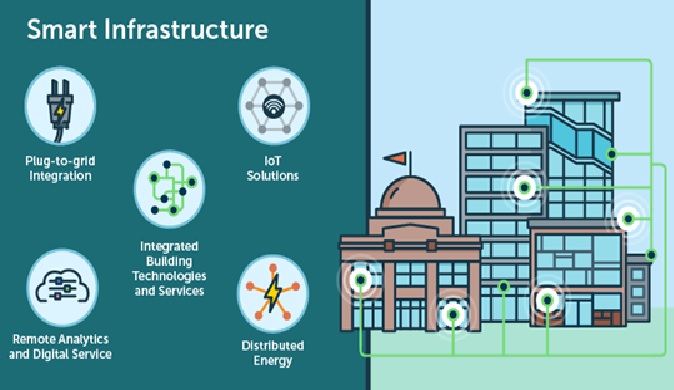
Smart Infrastructure
Smart infrastructure is widely acknowledged as one of the main components of smart cities. It extends not only to smart roads, automated parking, and IoT but also to all the various......
-

3D Printing
Startups and emerging companies are providing 3D printing solutions for creating various automotive parts. Additive manufacturing with different materials also allows.........
-
Smart Mobility
A new road revolution is upon us as the reality of autonomous/driverless cars comes ever closer. While the digitalisation, AI and sensors built into vehicles will power this new technology.......
-
Autonomous Driving
Autonomous driving technology has always been one of the most promising areas within the mobility industry and it continues to grow. This top mobility trend aims to minimize.......
-
Ride Sharing and Car-Sharing
Ride-sharing and car-sharing services are two popular forms of alternative transportation that have gained significant popularity in recent years. Ride-sharing is an innovative on-demand........
-
Integrated mobility solutions
Integrated mobility means mobility service providers working together to offer suitable transport options for each stage of a journey. The aim is to ensure seamless connections.........
-
Accessibility and inclusivity
Mobility is not just about transportation for the able-bodied, and there is a growing awareness of the need for accessible and inclusive transportation options for people.........
-

Increased Emphasis on Sustainable Transportation
Increased Emphasis on Sustainable Transportation.....