

3D Printing
Startups and emerging companies are providing 3D printing solutions for creating various automotive parts. Additive manufacturing with different materials also allows for designing versatile components and spare parts. These include materials that possess a variety of properties like elasticity, conductivity, and heat resistance, all of which have automotive applications. Automotive companies use prototyping of parts or full-scale designs for multiple purposes, including for testing forms and shapes. 3D printing of prototypes involves considerably lower costs than actually fabricating the design. This opens new opportunities for startups to test new material combinations with low-cost multiple iterations, thus enabling rapid prototyping.
- Rapid DMLS enables 3D Direct Metal Laser Sintering
- Upwego provides 3D Printing Software [1]
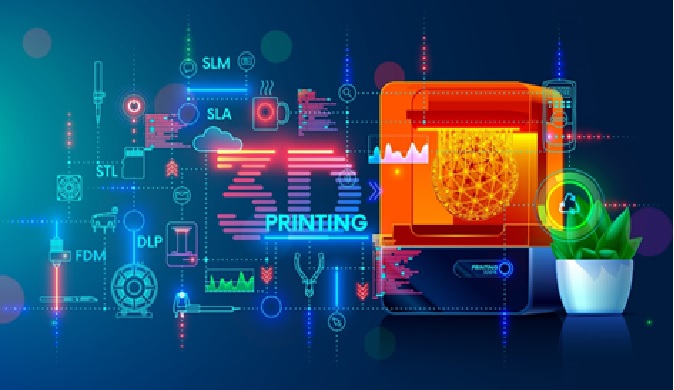
Figure 1. 3D Printing
3D Printing is shown in figure 1. 3D-printing is revolutionizing the rapid prototyping in analytical chemistry. In the last few years, we observed the development of 3D-printed components for ion studies, such as ion sources, ion transfer and ion mobility spectrometry (IMS) devices. Often, 3D-printed gadgets add functions to existing mass spectrometry (MS) systems. Custom adapters improve the sensibility for coupling with ambient ionization and upstream chromatography methods, and sample preparation units optimize the following MS analyses. Besides, 3D-printer parts are suitable for constructing custom analytical robots and mass imaging systems.
Some of those assemblies implement new concepts and are commercially not available. An essential aspect of using 3D-printing is the fast turnover of design improvements, which is motivated by permissive licenses. The easy reproducibility and exchange of ideas lead to a community-driven development, which is accompanied by economic advantages for public research and education.[2]
Advantages of 3D printing:
- 1 Cost reduction
- 2 Less waste
- 3 Reduce production time
- 4 An enhanced competitive advantage
- 5 Reduce errors
- 6 Confidentiality
- 7 Production on demand
Disadvantages of 3D printing:
- Initial costs of printer
- Post processing
- Printing time
- Special skill required for 3D models
- Manufacturing Job Losses [3]
3D printing, like modeling or three dimensional scanning, is a creation tool among other things, but what most distinguishes it is its potential to create an almost unlimited number of shapes. As with every tool, you need to master it, to take advantage of its abilities, but also know its limits. Prototyping is not the ultimate solution for every manufacturing need. Techniques that are hundreds, or even thousands, of years old such as casting, machining, and blowing, will still stay in our industrial landscape for a long time. [4]
References:
- https://www.startus-insights.com/innovators-guide/top-10-mobility-industry-trends-innovations-in-2021/#3d-printing
- https://pubs.rsc.org/en/content/articlelanding/2021/ay/d0ay02290j
- https://tractus3d.com/knowledge/learn-3d-printing/advantages-of-3d-printing/
- https://www.oreilly.com/library/view/make-design-for/9781457187353/app01.html
Cite this article:
Gokula Nandhini K (2023), 3D Printing, AnaTechMaz, pp. 114
Recent Post
-
The Internet of E-mobility
Electro mobility(or e-Mobility) represents the concept of using electric powertrain technologies, in-vehicle information, and communication technologies and connected.........
-
Shared Mobility Solutions
New mobility services provide a continuum of choices that cover many types of personal trips, and together with a robust public transit system, allow people to get to work,..
-

Future Smartphone Predictions
It’s pretty clear that smartphones will soon be getting even smarter. In the mid-2000s, mobile phones could only do a tiny fraction of the things that their modern........
-

Augmented & Virtual Reality (AR/VR)
A big challenge for the mobility industry is reducing road accidents due to human negligence. Startups develop AR solutions to restrict the number of distractions for a driver........
-

Mobility-as-a-Service
Integrating various modes of transportation into a single mobility service presents a user-centric approach to mobility. To achieve this, startups are building a range of mobility........
-

Electrification
To accelerate the growth of electric mobility and promote sustainability, advances have to be spurred in electric drive solutions, EV charging, and infrastructure, as well as data analytics.......
-
Micromobility
Micromobility is gradually gaining in popularity across the world for its convenience and environmental benefits. It is a powerful approach to tackle vehicular greenhouse......
-
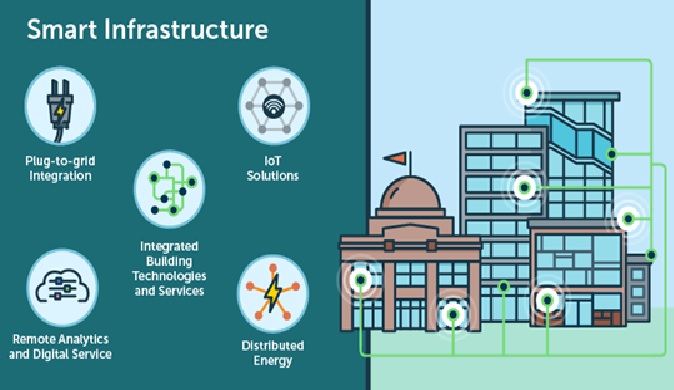
Smart Infrastructure
Smart infrastructure is widely acknowledged as one of the main components of smart cities. It extends not only to smart roads, automated parking, and IoT but also to all the various......
-
3D Printing
Startups and emerging companies are providing 3D printing solutions for creating various automotive parts. Additive manufacturing with different materials also allows.........
-
Smart Mobility
A new road revolution is upon us as the reality of autonomous/driverless cars comes ever closer. While the digitalisation, AI and sensors built into vehicles will power this new technology.......
-
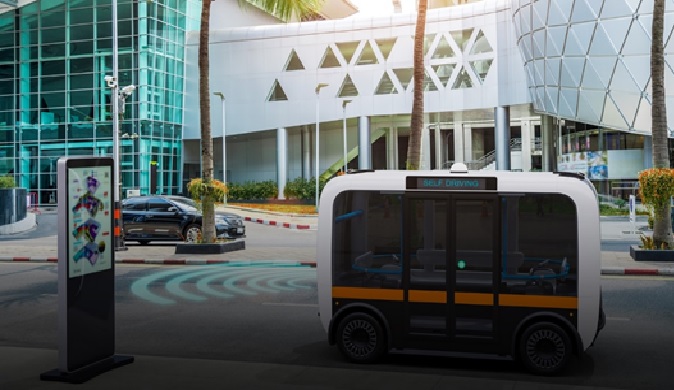
Autonomous Driving
Autonomous driving technology has always been one of the most promising areas within the mobility industry and it continues to grow. This top mobility trend aims to minimize.......
-

Ride Sharing and Car-Sharing
Ride-sharing and car-sharing services are two popular forms of alternative transportation that have gained significant popularity in recent years. Ride-sharing is an innovative on-demand........
-
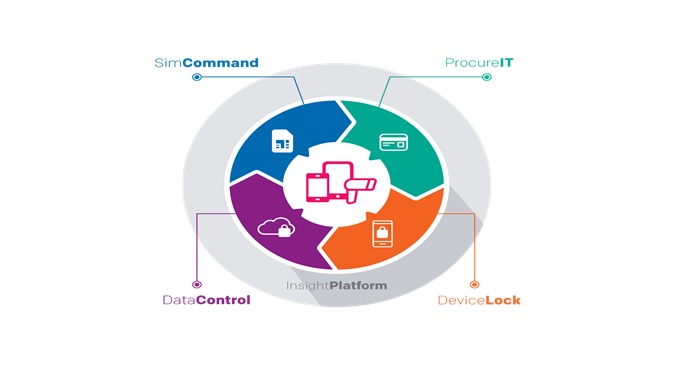
Integrated mobility solutions
Integrated mobility means mobility service providers working together to offer suitable transport options for each stage of a journey. The aim is to ensure seamless connections.........
-
Accessibility and inclusivity
Mobility is not just about transportation for the able-bodied, and there is a growing awareness of the need for accessible and inclusive transportation options for people.........
-

Increased Emphasis on Sustainable Transportation
Increased Emphasis on Sustainable Transportation.....