

Augmented & Virtual Reality (AR/VR)
A big challenge for the mobility industry is reducing road accidents due to human negligence. Startups develop AR solutions to restrict the number of distractions for a driver. For example, heads-up displays (HUDs) shift the attention of drivers from their dashboards to their windshields. AR-based applications also allow automotive companies to provide simulations when the customers or cars are not present in a showroom. These applications improve customer experiences by allowing car owners to remotely inspect their cars. Startups also work on AR/VR solutions to ease the complications encountered by a technician during maintenance. [1]
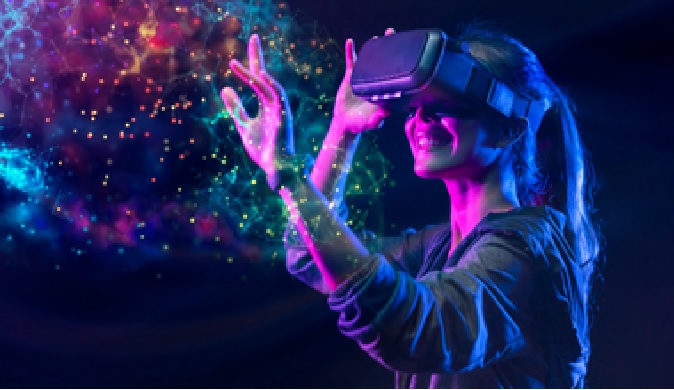
Figure 1. Augmented & Virtual Reality
Augmented & Virtual Reality is shown in figure 1. AR uses a real-world setting while VR is completely virtual. AR users can control their presence in the real world; VR users are controlled by the system. VR requires a headset device, but AR can be accessed with a smartphone. AR enhances both the virtual and real world while VR only enhances a fictional reality.
Virtual Reality:
In terms of virtual reality, there are a lot of developments from both Google and Facebook where they created special goggles or devices to be attached to mobile phones for experiencing virtual worlds. Complex scenarios still require a lot of processing power, and they are usually used in games and those devices are most popular with kids.
In VR worlds, the users usually have additional devices (joysticks, etc.) for interacting with virtual objects. Since we are talking about mobile applications, VR is not that popular and used due to the nature of the device (doesn’t have a lot of power, and additional controllers).
Augmented Reality:
Here, things are a little more evolved, and while companies are interested in VR technologies, a lot more budget and development go into mobile AR at the moment.
In essence, augmented reality is adding digital content to real-world anchors and being able to analyze the environment of the user.
From an AR perspective, we currently have the capabilities to do the following:
- placing a virtual object in the real world (it will remain at the same location)
- scaling, rotating, moving, and animating virtual objects
- interacting with virtual objects
- measuring real objects through virtual anchors
- sound effects based on the proximity of the source
AR is closely related to AI, it’s used a lot in combination with AI techniques to modify the user’s environment and interact with him. An example would be the recovery app I’ve mentioned before where AI would be used to detect the human body pose and AR would enhance the experience by showing different metrics or what needs to be improved to correctly do the exercise. [2]
VR/AR Mobile Applications Use Cases:
One of the biggest first mobile apps that used virtual and augmented reality was Pokémon Go. If you’re not familiar, Pokémon Go was a game developed and published by Niantic for iOS and Android devices. It broke world records when it came to downloads and app revenue figures. It was launched in 2006 and by 2024, Pokémon Go is set to have 900 million downloads and an estimated 1.2 billion dollars in revenue. Pokémon Go is not the only noticeable player in the augmented reality market as the industry is currently valued at 162 billion dollars highlighting how quickly augmented reality and virtual reality apps have been growing.[3]
Benefits of AR and VR
- Providing Training in a Safe and Affordable Manner
- A Better Way of Practicing Skills
- Developing Soft Skills and Expertise
- Getting Employees Ready for Emergencies
- Enhance the Effectiveness of Learning Materials
- Helping Employees Develop Technical Skills
- The Best Way for Gamification [4]
Virtual and augmented reality trends and advantages largely speak for themselves. Because it may bring incredible benefits and enhance the entire consumer experience on many levels, businesses and consumers alike are investing in this type of cutting-edge technology. Understanding your target market and providing the best customer experience possible will help you run a successful business and encourage repeat business. People everywhere will find it easier to complete daily tasks when augmented and virtual reality are used, and if your business offers this, clients will always be more likely to come back.[5]
References:
- https://www.startus-insights.com/innovators-guide/top-10-mobility-industry-trends-innovations-in-2021/#augmented-virtual-reality
- https://appssemble.com/blog/augmented-and-virtual-reality-in-mobile-apps.html
- https://www.sphereinc.com/blogs/ar-vr-mobile-app-development/
- https://www.hurix.com/benefits-of-using-ar-vr-technology-in-employee-training/
- https://talent500.co/blog/augmented-reality-ar-virtual-reality-vr-in-mobile-apps/amp/
Cite this article:
Gokula Nandhini K (2023), Augmented & Virtual Reality (AR/VR), AnaTechMaz, pp. 109
Recent Post
-
The Internet of E-mobility
Electro mobility(or e-Mobility) represents the concept of using electric powertrain technologies, in-vehicle information, and communication technologies and connected.........
-
Shared Mobility Solutions
New mobility services provide a continuum of choices that cover many types of personal trips, and together with a robust public transit system, allow people to get to work,..
-

Future Smartphone Predictions
It’s pretty clear that smartphones will soon be getting even smarter. In the mid-2000s, mobile phones could only do a tiny fraction of the things that their modern........
-
Augmented & Virtual Reality (AR/VR)
A big challenge for the mobility industry is reducing road accidents due to human negligence. Startups develop AR solutions to restrict the number of distractions for a driver........
-

Mobility-as-a-Service
Integrating various modes of transportation into a single mobility service presents a user-centric approach to mobility. To achieve this, startups are building a range of mobility........
-

Electrification
To accelerate the growth of electric mobility and promote sustainability, advances have to be spurred in electric drive solutions, EV charging, and infrastructure, as well as data analytics.......
-
Micromobility
Micromobility is gradually gaining in popularity across the world for its convenience and environmental benefits. It is a powerful approach to tackle vehicular greenhouse......
-
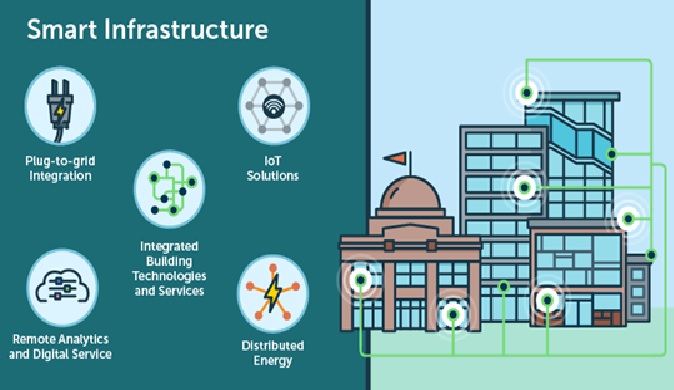
Smart Infrastructure
Smart infrastructure is widely acknowledged as one of the main components of smart cities. It extends not only to smart roads, automated parking, and IoT but also to all the various......
-

3D Printing
Startups and emerging companies are providing 3D printing solutions for creating various automotive parts. Additive manufacturing with different materials also allows.........
-
Smart Mobility
A new road revolution is upon us as the reality of autonomous/driverless cars comes ever closer. While the digitalisation, AI and sensors built into vehicles will power this new technology.......
-
Autonomous Driving
Autonomous driving technology has always been one of the most promising areas within the mobility industry and it continues to grow. This top mobility trend aims to minimize.......
-

Ride Sharing and Car-Sharing
Ride-sharing and car-sharing services are two popular forms of alternative transportation that have gained significant popularity in recent years. Ride-sharing is an innovative on-demand........
-
Integrated mobility solutions
Integrated mobility means mobility service providers working together to offer suitable transport options for each stage of a journey. The aim is to ensure seamless connections.........
-
Accessibility and inclusivity
Mobility is not just about transportation for the able-bodied, and there is a growing awareness of the need for accessible and inclusive transportation options for people.........
-

Increased Emphasis on Sustainable Transportation
Increased Emphasis on Sustainable Transportation.....