

Robots Break Free from Maps with Smarter LiDAR Technology
Autonomous robots are taking a major step toward operating independently in complex, real-world environments thanks to a collaboration between Ouster and FieldAI. By combining high-resolution digital lidar technology with a universal robot intelligence platform, the partnership aims to enable robots to work effectively in locations where traditional automation systems often struggle.
At the center of the collaboration is Ouster’s Rev8 digital lidar platform, which delivers the accuracy, durability, and reliability required for deployments in unstructured and demanding environments. The technology is being integrated with FieldAI’s Field Foundation Models, an AI-powered robotics platform designed to function across multiple robot types, tasks, and operating conditions.
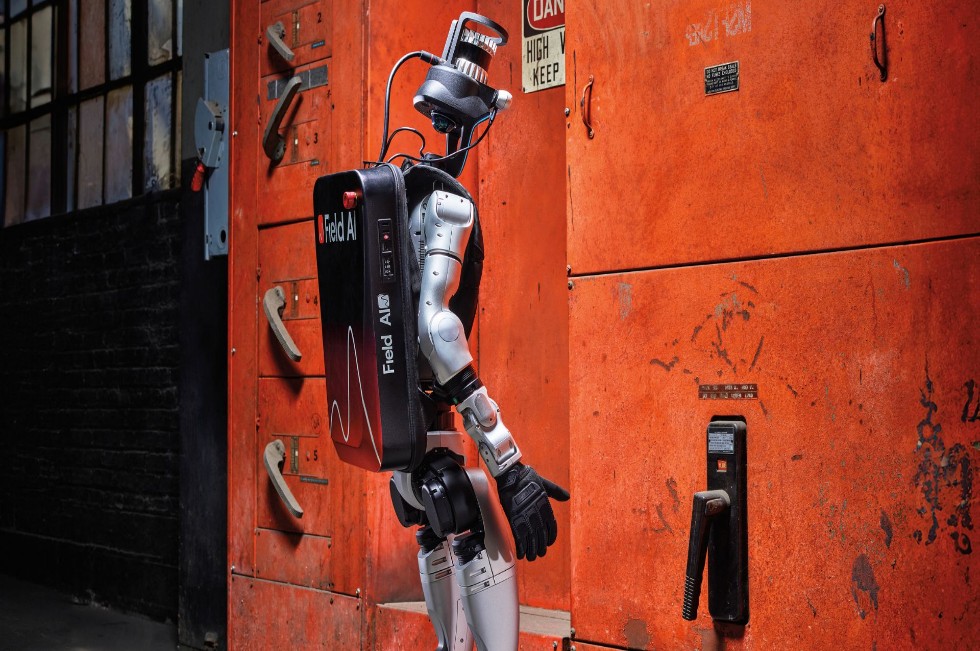
Figure 1. Smarter LiDAR Technology Robots.
Unlike conventional robotic systems that depend on detailed maps, pre-programmed routes, specialized infrastructure, or extensive site preparation, FieldAI’s approach allows robots to enter unfamiliar worksites and begin operating with minimal prior information. The system is designed to help robots assess their surroundings, understand environmental conditions, and navigate independently, much like a new employee learning a workplace. Figure 1 show smarter lidar technology robots.
A key component of this capability is FieldAI’s large-scale foundation models, which are trained to understand and interact with the physical world. These models help robots function in unpredictable environments where terrain, obstacles, equipment, and working conditions can change constantly. Such capabilities are particularly valuable in industries such as construction, mining, energy production, manufacturing, and remote industrial operations.
To provide the environmental awareness required for autonomous decision-making, FieldAI relies on Ouster’s advanced lidar sensors. Using laser pulses to measure distances and create highly accurate three-dimensional representations of surroundings, lidar gives robots detailed spatial awareness. Ouster’s latest Rev8 platform enhances this capability by introducing native color perception alongside precise depth sensing, allowing robots to gather richer and more interpretable environmental data.
The Rev8 platform is engineered for situations where cameras or GPS-based systems may be limited, including indoor facilities, underground operations, and other GPS-denied environments. Its rugged design also enables reliable operation in harsh industrial settings characterized by dust, vibration, severe weather, and heavy equipment activity.
FieldAI already employs Ouster’s lidar technology in demanding operational environments. As deployments expand across large industrial projects, the company plans to leverage the enhanced capabilities of the Rev8 platform to improve robot safety, situational awareness, and autonomous decision-making [1]. The addition of color-enabled lidar data is expected to help robots better identify objects, interpret conditions, and explain their actions with greater clarity.
The partnership reflects the growing momentum behind physical AI—intelligent systems capable of performing real-world tasks in dynamic environments. By combining advanced sensing with general-purpose robotic intelligence, Ouster and FieldAI hope to accelerate the adoption of autonomous robots across industries where work is hazardous, labor-intensive, or difficult for humans to access, opening new possibilities for the future of industrial automation.
References:
- https://interestingengineering.com/ai-robotics/robots-move-beyond-mapped-worlds-with-advanced-lidar-sensing
Cite this article:
Keerthana S (2026), Robots Break Free from Maps with Smarter LiDAR Technology, AnaTechMaz, pp.375
Recent Post
-

Agile Robots Joins Forces with Google DeepMind in New Robotics Partnership
Agile Robots has entered into a new partnership with Google....
-
Amazon Buys Humanoid Robotics Startup Fauna Robotics
Amazon has acquired New York–based humanoid robotics startup Fauna Robotics, as confirmed....
-
DJI Brings Immersive Aerial Dogfighting Experience to Insta360
The imaging system is built around 1-inch–equivalent sensors with 2.4-micrometer....
-
Robot Legs Wow in Demo: Skating, Stair-Climbing, and One-Wheel Balancing
Launched in 2022 with a $400 million investment from Hyundai....
-

Tiny Robots, 50 Times Thinner Than a Hair, Can Track and Move Bacteria
Photon-powered nanorobots can precisely steer, capture, and.....
-
“Robot Explores 1.5 Miles Below, Captures 86,000 Images of French Shipwreck”
A cutting-edge underwater robot has captured thousands of....
-

“Notion Faces Data Exposure Risk from Unprotected API Access”
Privacy-focused browser maker Brave Software has rolled out its “Shred” feature to Android...
-

Humanoid Robot Passenger Sparks Flight Delay Over Oversized Banned Battery in the U.S.
An unusual airline incident unfolded in California when a....
-
China’s New Moon Robot Aims to Assist Future Lunar Missions
China has unveiled a new AI-powered lunar robot designed to assist future Moon missions by carrying....
-

Touch-Sensitive Robot Can Navigate Like Humans Without Vision
Researchers at the National University of Singapore have....
-
Brain-Like Navigation Gives Robots Smarter Mobility
For decades, robotics researchers have envisioned autonomous machines capable of navigating...
NVIDIA Builds the Foundation for an AI-Driven Robotic Future
As artificial intelligence moves beyond software and into the physical world, NVIDIA is positioning itself at....
New Low-Power Antenna Boosts Deep-Water Robot Communication
Communicating underwater has long been one of the biggest challenges facing autonomous underwater....
Hybrid Intelligence Revolutionizes Precision Manufacturing Robotics
Researchers led by Changtian Z., Jiaxuan H., and Xinyang L. have developed an...
Robots Break Free from Maps with Smarter LiDAR Technology
Autonomous robots are taking a major step toward operating independently in complex, real-world ....