

“Robot Explores 1.5 Miles Below, Captures 86,000 Images of French Shipwreck”
Robotic Explorer Uncovers Deep-Sea French Shipwreck with Unmatched Precision
A cutting-edge underwater robot has captured thousands of images and recovered fragile artifacts from a 16th-century shipwreck buried more than 1.5 miles beneath the Mediterranean Sea—highlighting how advanced robotics is reshaping deep-sea exploration.
The mission, led by the French Navy alongside a team of underwater archaeologists, focused on a wreck known as Camarat 4. Discovered during a routine seabed survey, the site lies at extreme depths where crushing pressure, near-freezing temperatures, and total darkness make human access impossible.
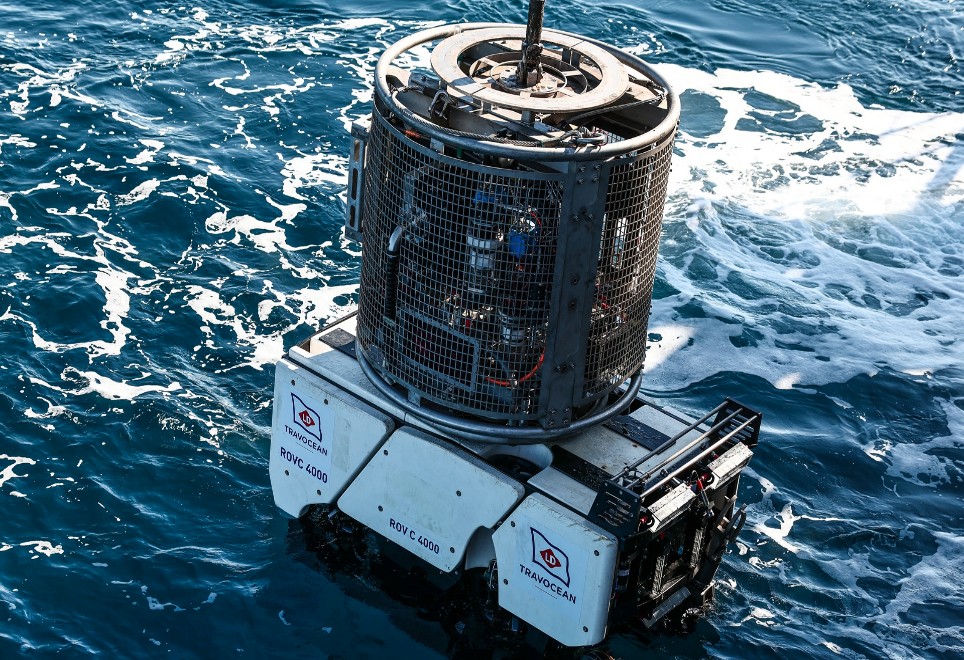
Figure 1. ROV C 4000 remotely operated vehicle.
Exploring the Ocean’s Harshest Frontier
Guided remotely from a support vessel above, the robot descends for nearly an hour before reaching the seafloor. Using live video feeds, operators carefully navigate the machine across delicate debris fields, maneuvering with precision to avoid disturbing the centuries-old site. Figure 1 shows ROV C 4000 remotely operated vehicle.
Equipped with high-resolution cameras and robotic manipulators, the system captures thousands of detailed images while hovering over scattered cargo and structural remains. These visuals allow researchers to document the wreck comprehensively without physically disrupting it. At depths exceeding 1.5 miles, the robot withstands pressures of nearly 150 atmospheres—conditions that would crush conventional equipment. Its reinforced design and stable tether system enable reliable operation in one of Earth’s most extreme environments.
Precision Handling in Extreme Conditions
Working at such depths requires extraordinary care. Even slight disturbances can stir up sediment, obscure visibility, or damage fragile artifacts preserved for centuries. The robot’s finely tuned manipulators are designed to handle delicate objects with minimal force. During the mission, it successfully retrieved items such as ceramic jugs without causing breakage—an impressive feat under such challenging conditions.
The system can also record up to eight images per second, producing tens of thousands of photographs in a single dive. These images are later used to create detailed 3D reconstructions, allowing scientists to study the wreck remotely with remarkable clarity.
Unlocking Secrets of Maritime History
Archaeologists believe the wreck belonged to a merchant vessel that once transported ceramics and metal goods along Mediterranean trade routes. Finds like these are exceptionally rare, particularly at such extreme depths.
According to archaeologist Franca Cibecchini, the clarity of the imagery is so high that it hardly feels like the site lies deep beneath the ocean’s surface [1]. Lead researcher Marine Sadania noted that discoveries like this provide valuable insights into 16th-century maritime trade—an area where historical records remain limited.
A New Era of Non-Invasive Exploration
Beyond its historical significance, the mission demonstrates a broader shift in underwater archaeology. With the ability to revisit sites, gather extensive data, and recover artifacts with minimal disruption, robotic systems are redefining how scientists explore the ocean’s hidden past.
One of the recovered ceramic artifacts is believed to be among the deepest objects ever retrieved from a shipwreck in France—marking a milestone in both archaeology and engineering. As robotic technology continues to advance, the mysteries of the deep sea are becoming more accessible than ever—without disturbing the fragile history resting beneath the waves.
References:
- https://interestingengineering.com/ai-robotics/deep-sea-robot-shipwreck-recovery-france
Cite this article:
Keerthana S (2026), “Robot Explores 1.5 Miles Below, Captures 86,000 Images of French Shipwreck”, AnaTechMaz, pp.366
Recent Post
-
Agile Robots Joins Forces with Google DeepMind in New Robotics Partnership
Agile Robots has entered into a new partnership with Google....
-
Amazon Buys Humanoid Robotics Startup Fauna Robotics
Amazon has acquired New York–based humanoid robotics startup Fauna Robotics, as confirmed....
-
DJI Brings Immersive Aerial Dogfighting Experience to Insta360
The imaging system is built around 1-inch–equivalent sensors with 2.4-micrometer....
-
Robot Legs Wow in Demo: Skating, Stair-Climbing, and One-Wheel Balancing
Launched in 2022 with a $400 million investment from Hyundai....
-

Tiny Robots, 50 Times Thinner Than a Hair, Can Track and Move Bacteria
Photon-powered nanorobots can precisely steer, capture, and.....
-
“Robot Explores 1.5 Miles Below, Captures 86,000 Images of French Shipwreck”
A cutting-edge underwater robot has captured thousands of....
-

“Notion Faces Data Exposure Risk from Unprotected API Access”
Privacy-focused browser maker Brave Software has rolled out its “Shred” feature to Android...
-
Humanoid Robot Passenger Sparks Flight Delay Over Oversized Banned Battery in the U.S.
An unusual airline incident unfolded in California when a....
-
China’s New Moon Robot Aims to Assist Future Lunar Missions
China has unveiled a new AI-powered lunar robot designed to assist future Moon missions by carrying....
-
Touch-Sensitive Robot Can Navigate Like Humans Without Vision
Researchers at the National University of Singapore have....
-
Brain-Like Navigation Gives Robots Smarter Mobility
For decades, robotics researchers have envisioned autonomous machines capable of navigating...
NVIDIA Builds the Foundation for an AI-Driven Robotic Future
As artificial intelligence moves beyond software and into the physical world, NVIDIA is positioning itself at....
New Low-Power Antenna Boosts Deep-Water Robot Communication
Communicating underwater has long been one of the biggest challenges facing autonomous underwater....
Hybrid Intelligence Revolutionizes Precision Manufacturing Robotics
Researchers led by Changtian Z., Jiaxuan H., and Xinyang L. have developed an...
Robots Break Free from Maps with Smarter LiDAR Technology
Autonomous robots are taking a major step toward operating independently in complex, real-world ....