

DJI Brings Immersive Aerial Dogfighting Experience to Insta360
The imaging system is built around 1-inch–equivalent sensors with 2.4-micrometer pixels, large enough to preserve detail even in harsh, high-contrast lighting where smaller sensors struggle. It also introduces DJI’s “Virtual Gimbal,” enabling the camera to go beyond the limits of traditional mechanical stabilization. By using a full 360° field of view, it allows for unlimited rotation and tilt, making dynamic camera moves possible—so even while flying forward, the horizon can be rotated, perspectives shifted backward, or flips seamlessly executed.
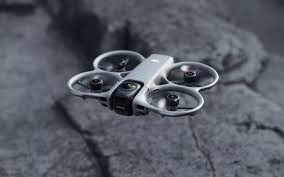
Figure 1. DJI Delivers Immersive Aerial Dogfighting to Insta360 Experience.
The device includes 42 GB of onboard storage, enough for about 30 minutes of 8K footage, and supports fast transfers via Wi-Fi 6 at speeds up to 100 MB/s. Its live feed runs on DJI’s O4+ transmission system, delivering 1080p at 60 fps over distances of up to 20 km (12.4 miles) with strong resistance to interference. For FPV pilots using immersive goggles, this reliability is crucial, as losing signal mid-flight can quickly become a costly mistake. Figure 1 shows DJI Delivers Immersive Aerial Dogfighting to Insta360 Experience.
The Avata 360 introduces full omnidirectional obstacle detection that remains effective even in low-light conditions, thanks to DJI’s “Nightscape” capability. This is a rare feature in its class and proves especially valuable for shooting in confined or urban spaces. It also comes with built-in propeller guards, and if the front lens gets damaged in a collision, it can be quickly replaced on-site using an optional repair kit.
On the software side, the AI toolkit enhances creative control with features like Spotlight Free for smooth, cinematic automated shots, ActiveTrack 360° for reliable subject tracking in complex environments, and an FPV tilt effect in post-production that recreates the natural banking motion of first-person flight—ideal for filmmakers seeking that immersive look without extensive piloting experience.
DJI wasn’t the first to enter this space. Antigravity’s A1 debuted last December as the first 360-degree FPV drone under 250 g (8.8 oz)—a key weight class that often avoids registration requirements in many regions. Weighing around 455 g (1 lb), the Avata 360 clearly isn’t aiming to compete on that front.
Instead, it stands out in other areas. It features larger sensors (1 inch compared to the A1’s 1/1.28 inch), higher frame rates (8K/60fps versus the A1’s 8K/30fps limit), and a transmission range that doubles the A1’s 10 km (6.2 miles). However, the A1 still has a strong advantage in battery life, offering up to 39 minutes of flight time, while the Avata 360 manages about 23 minutes. On extended shoots without easy access to charging, that difference can become a significant limitation.
Pre-orders for the Avata 360 are now live, with shipping expected in April 2026. The standalone drone starts at €459 (£409), while Fly More Combo bundles go up to €939 (£829), including either the RC 2 joystick or a motion controller.
In the United States, however, buyers are effectively left out—the Avata 360 is not expected to launch there due to the FCC’s import restrictions on DJI hardware. As a result, the Antigravity A1 remains the only option for immersive FPV flying currently available in the US market.
Source: NEW ATLAS
Cite this article:
Priyadharshini S (2026), DJI Brings Immersive Aerial Dogfighting Experience to Insta360, AnaTechMaz, pp. 363
Recent Post
-

Agile Robots Joins Forces with Google DeepMind in New Robotics Partnership
Agile Robots has entered into a new partnership with Google....
-
Amazon Buys Humanoid Robotics Startup Fauna Robotics
Amazon has acquired New York–based humanoid robotics startup Fauna Robotics, as confirmed....
-
DJI Brings Immersive Aerial Dogfighting Experience to Insta360
The imaging system is built around 1-inch–equivalent sensors with 2.4-micrometer....
-
Robot Legs Wow in Demo: Skating, Stair-Climbing, and One-Wheel Balancing
Launched in 2022 with a $400 million investment from Hyundai....
-

Tiny Robots, 50 Times Thinner Than a Hair, Can Track and Move Bacteria
Photon-powered nanorobots can precisely steer, capture, and.....
-
“Robot Explores 1.5 Miles Below, Captures 86,000 Images of French Shipwreck”
A cutting-edge underwater robot has captured thousands of....
-

“Notion Faces Data Exposure Risk from Unprotected API Access”
Privacy-focused browser maker Brave Software has rolled out its “Shred” feature to Android...
-

Humanoid Robot Passenger Sparks Flight Delay Over Oversized Banned Battery in the U.S.
An unusual airline incident unfolded in California when a....
-
China’s New Moon Robot Aims to Assist Future Lunar Missions
China has unveiled a new AI-powered lunar robot designed to assist future Moon missions by carrying....
-

Touch-Sensitive Robot Can Navigate Like Humans Without Vision
Researchers at the National University of Singapore have....
-
Brain-Like Navigation Gives Robots Smarter Mobility
For decades, robotics researchers have envisioned autonomous machines capable of navigating...

NVIDIA Builds the Foundation for an AI-Driven Robotic Future
As artificial intelligence moves beyond software and into the physical world, NVIDIA is positioning itself at....
New Low-Power Antenna Boosts Deep-Water Robot Communication
Communicating underwater has long been one of the biggest challenges facing autonomous underwater....

Hybrid Intelligence Revolutionizes Precision Manufacturing Robotics
Researchers led by Changtian Z., Jiaxuan H., and Xinyang L. have developed an...
Robots Break Free from Maps with Smarter LiDAR Technology
Autonomous robots are taking a major step toward operating independently in complex, real-world ....