

NVIDIA Builds the Foundation for an AI-Driven Robotic Future
As artificial intelligence moves beyond software and into the physical world, NVIDIA is positioning itself at the center of the next technological revolution. At its GTC Taipei event, the company unveiled a sweeping range of innovations designed to accelerate the development of humanoid robots, autonomous vehicles, industrial automation systems, and advanced semiconductor manufacturing.
The announcements reflect NVIDIA’s growing ambition to build a complete ecosystem for physical AI—providing the models, tools, computing infrastructure, and simulation environments needed to create intelligent machines capable of interacting with the real world.
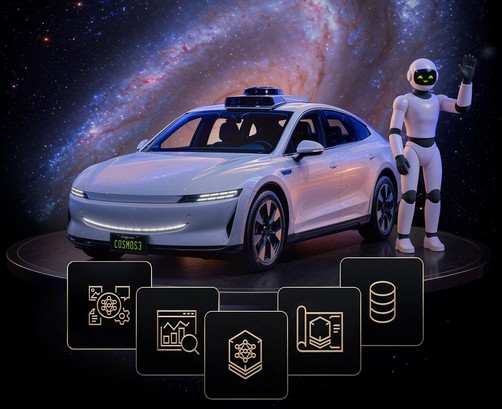
Figure 1. Robotaxis and Smart Factories.
The Rise of Physical AI
According to NVIDIA CEO Jensen Huang, rapid progress in multimodal AI is bringing the era of physical intelligence closer than ever. At the center of this vision is Cosmos 3, NVIDIA’s new open foundation model designed for physical AI applications. Unlike traditional AI systems, Cosmos 3 can process and generate text, images, video, sound, and actions within a single framework, enabling machines to perceive, reason, plan, and act in real-world environments. Figure 1 illustrates applications in robotaxis and smart factories.
A Platform for Intelligent Machines
Built on an advanced architecture, Cosmos 3 supports robotics, autonomous vehicles, and industrial AI. NVIDIA has also introduced open-source tools that streamline data generation, simulation, training, and deployment, helping developers accelerate AI innovation.
Advancing Humanoid Robotics
NVIDIA unveiled the Isaac GR00T Reference Humanoid Robot, an integrated platform that combines robotics hardware, AI software, simulation, and onboard computing. Designed to simplify humanoid robot development, the platform is expected to be adopted by leading research institutions, including ETH Zurich, Stanford Robotics Center, and UC San Diego.
AI-Powered Manufacturing and Mobility
Through its collaboration with TSMC, NVIDIA is applying AI to semiconductor manufacturing processes such as wafer inspection, lithography, and process optimization [1]. The company also introduced Alpamayo 2 Super, a reasoning model designed to improve decision-making and safety in robotaxis and autonomous vehicles.
Building the Next AI Revolution
NVIDIA’s latest innovations signal a shift from digital AI assistants toward intelligent machines that operate in the physical world. From humanoid robots and self-driving vehicles to smart factories and advanced chip production, the company is laying the foundation for the next generation of AI-powered industries.
References:
- https://interestingengineering.com/ai-robotics/nvidia-physical-ai-cosmos3-humanoid-robots-tsmc
Cite this article:
Keerthana S (2026), NVIDIA Builds the Foundation for an AI-Driven Robotic Future, AnaTechMaz, pp.372
Recent Post
-

Agile Robots Joins Forces with Google DeepMind in New Robotics Partnership
Agile Robots has entered into a new partnership with Google....
-
Amazon Buys Humanoid Robotics Startup Fauna Robotics
Amazon has acquired New York–based humanoid robotics startup Fauna Robotics, as confirmed....
-
DJI Brings Immersive Aerial Dogfighting Experience to Insta360
The imaging system is built around 1-inch–equivalent sensors with 2.4-micrometer....
-
Robot Legs Wow in Demo: Skating, Stair-Climbing, and One-Wheel Balancing
Launched in 2022 with a $400 million investment from Hyundai....
-

Tiny Robots, 50 Times Thinner Than a Hair, Can Track and Move Bacteria
Photon-powered nanorobots can precisely steer, capture, and.....
-
“Robot Explores 1.5 Miles Below, Captures 86,000 Images of French Shipwreck”
A cutting-edge underwater robot has captured thousands of....
-

“Notion Faces Data Exposure Risk from Unprotected API Access”
Privacy-focused browser maker Brave Software has rolled out its “Shred” feature to Android...
-
Humanoid Robot Passenger Sparks Flight Delay Over Oversized Banned Battery in the U.S.
An unusual airline incident unfolded in California when a....
-
China’s New Moon Robot Aims to Assist Future Lunar Missions
China has unveiled a new AI-powered lunar robot designed to assist future Moon missions by carrying....
-

Touch-Sensitive Robot Can Navigate Like Humans Without Vision
Researchers at the National University of Singapore have....
-
Brain-Like Navigation Gives Robots Smarter Mobility
For decades, robotics researchers have envisioned autonomous machines capable of navigating...
NVIDIA Builds the Foundation for an AI-Driven Robotic Future
As artificial intelligence moves beyond software and into the physical world, NVIDIA is positioning itself at....
New Low-Power Antenna Boosts Deep-Water Robot Communication
Communicating underwater has long been one of the biggest challenges facing autonomous underwater....
Hybrid Intelligence Revolutionizes Precision Manufacturing Robotics
Researchers led by Changtian Z., Jiaxuan H., and Xinyang L. have developed an...
Robots Break Free from Maps with Smarter LiDAR Technology
Autonomous robots are taking a major step toward operating independently in complex, real-world ....