

Brain-Like Navigation Gives Robots Smarter Mobility
For decades, robotics researchers have envisioned autonomous machines capable of navigating unfamiliar environments with the speed, flexibility, and energy efficiency seen in living creatures. Despite major advances in artificial intelligence and robotics, many modern navigation systems still struggle in unpredictable real-world settings. Robots often depend heavily on prebuilt maps or data-intensive neural networks, limiting their ability to adapt beyond trained conditions. These systems also consume large amounts of energy and frequently fail when surroundings change unexpectedly. In contrast, animals effortlessly explore complex environments for long periods using minimal biological energy, revealing a gap between artificial and natural intelligence.
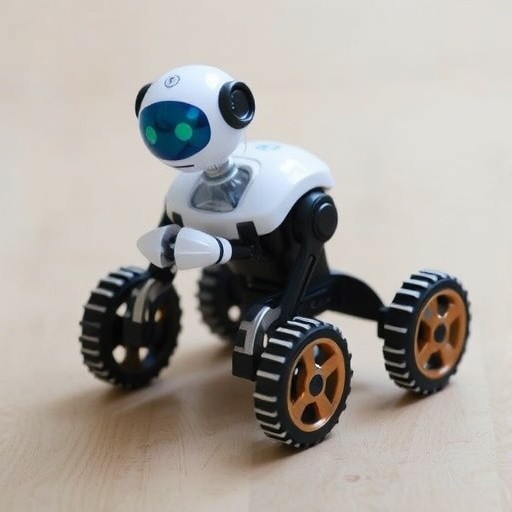
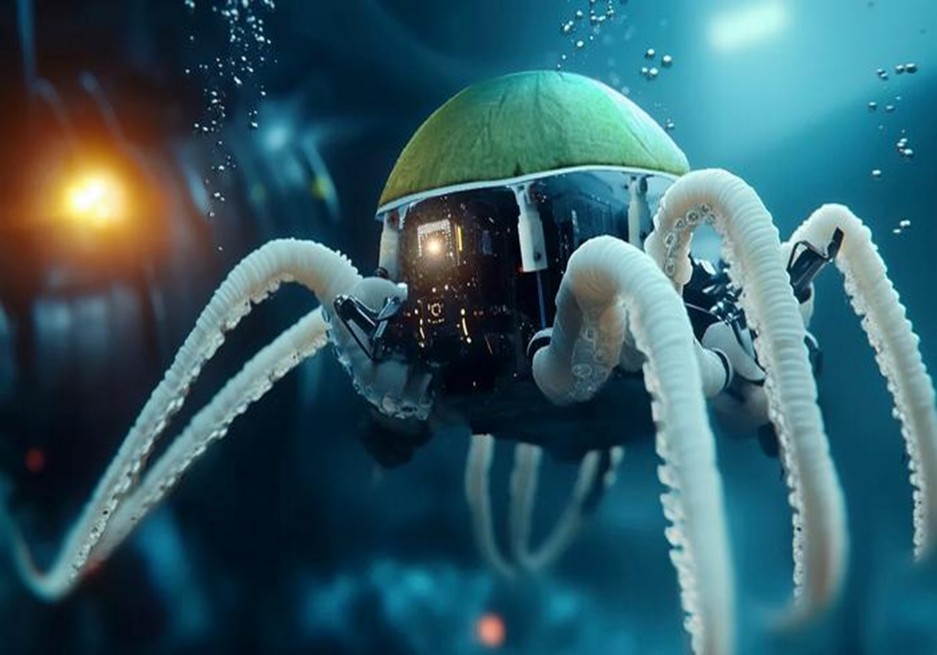
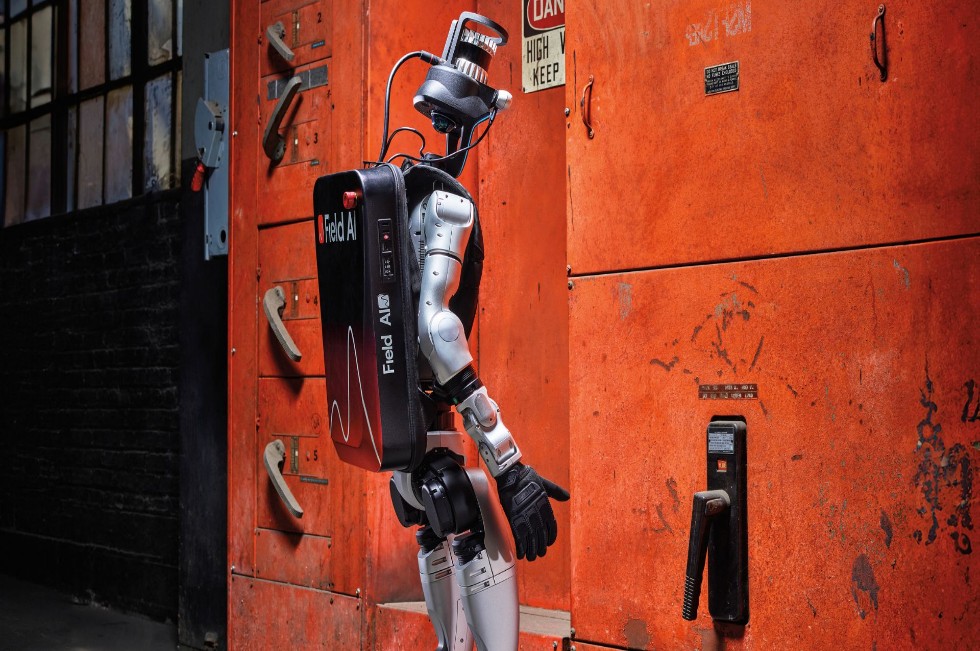
Figure 1. Robots Smarter Mobility.
Scientists now believe the key to closing this gap lies in understanding how biological organisms navigate. Central to this process is the concept of the “cognitive map” — an internal spatial representation that allows animals to remember landmarks, plan routes, and adapt to new environments. Unlike rigid robotic maps, cognitive maps are dynamic, hierarchical, and capable of organizing spatial information across multiple scales. They help living creatures prioritize useful information, discard irrelevant details, and continuously update knowledge based on experience. Researchers aim to replicate these capabilities in robots, enabling machines to reason about space instead of simply reacting to sensor inputs. Figure 1 shows robots smarter mobility.
Another major inspiration comes from the hierarchical planning strategies used by animals. Biological systems do not calculate every movement individually. Instead, they combine broad route planning with rapid local decision-making, allowing efficient navigation through changing environments. Current robotic systems often rely on computationally expensive global pathfinding algorithms or simple obstacle-avoidance methods that lack adaptability. By introducing layered planning architectures modeled after the brain, researchers hope to create robots that can react faster while reducing computational demands.
Neuromorphic hardware is emerging as a powerful technology supporting this transformation. Designed to mimic the spiking activity of biological neurons, neuromorphic processors perform event-driven computations while consuming far less energy than traditional CPUs and GPUs. These systems are particularly suited for navigation tasks because they can process sensory information, maintain spatial memory, and execute planning simultaneously with remarkable efficiency. Combining cognitive-map-based navigation with neuromorphic computing could dramatically extend the operational life of autonomous robots.
Progress in this field relies heavily on collaboration between neuroscience, computer science, and engineering. Discoveries such as place cells, grid cells, and head-direction cells in animal brains provide valuable insight into how living organisms encode and interpret space [1]. Translating these biological mechanisms into computational models suitable for robots requires entirely new approaches to memory systems, spatial reasoning, and adaptive learning. At the same time, advances in low-power electronics and real-time sensing technologies are essential for bringing these ideas into practical robotic platforms.
Real-world environments also demand a high degree of flexibility. Animals constantly update their understanding of surroundings when obstacles move or landmarks change. Future robotic systems equipped with adaptive spatial memory networks could achieve similar plasticity by continuously learning from new experiences. Such capabilities would allow robots to function more reliably in disaster response missions, deep-sea exploration, and even extraterrestrial environments where uncertainty is unavoidable.
Researchers are also moving toward navigation systems capable of higher-level spatial reasoning. Beyond simply moving from one location to another, next-generation robots may learn to interpret the meaning of environments, prioritize goals, and make context-aware decisions. By integrating semantic understanding into navigation, robots could eventually demonstrate forms of situational awareness once thought unique to biological intelligence.
As bio-inspired navigation research advances, the line between artificial and biological cognition continues to blur. The fusion of cognitive mapping, hierarchical planning, adaptive learning, and energy-efficient hardware may ultimately redefine autonomous robotics, bringing machines closer than ever to the remarkable navigational abilities of living organisms.
References:
- https://bioengineer.org/brain-inspired-navigation-revolutionizes-robot-mobility/
Cite this article:
Keerthana S (2026), Brain-Like Navigation Gives Robots Smarter Mobility, AnaTechMaz, pp.371
Recent Post
-

Agile Robots Joins Forces with Google DeepMind in New Robotics Partnership
Agile Robots has entered into a new partnership with Google....
-
Amazon Buys Humanoid Robotics Startup Fauna Robotics
Amazon has acquired New York–based humanoid robotics startup Fauna Robotics, as confirmed....
-
DJI Brings Immersive Aerial Dogfighting Experience to Insta360
The imaging system is built around 1-inch–equivalent sensors with 2.4-micrometer....
-
Robot Legs Wow in Demo: Skating, Stair-Climbing, and One-Wheel Balancing
Launched in 2022 with a $400 million investment from Hyundai....
-
Tiny Robots, 50 Times Thinner Than a Hair, Can Track and Move Bacteria
Photon-powered nanorobots can precisely steer, capture, and.....
-
“Robot Explores 1.5 Miles Below, Captures 86,000 Images of French Shipwreck”
A cutting-edge underwater robot has captured thousands of....
-

“Notion Faces Data Exposure Risk from Unprotected API Access”
Privacy-focused browser maker Brave Software has rolled out its “Shred” feature to Android...
-
Humanoid Robot Passenger Sparks Flight Delay Over Oversized Banned Battery in the U.S.
An unusual airline incident unfolded in California when a....
-
China’s New Moon Robot Aims to Assist Future Lunar Missions
China has unveiled a new AI-powered lunar robot designed to assist future Moon missions by carrying....
-
Touch-Sensitive Robot Can Navigate Like Humans Without Vision
Researchers at the National University of Singapore have....
-
Brain-Like Navigation Gives Robots Smarter Mobility
For decades, robotics researchers have envisioned autonomous machines capable of navigating...
NVIDIA Builds the Foundation for an AI-Driven Robotic Future
As artificial intelligence moves beyond software and into the physical world, NVIDIA is positioning itself at....
New Low-Power Antenna Boosts Deep-Water Robot Communication
Communicating underwater has long been one of the biggest challenges facing autonomous underwater....
Hybrid Intelligence Revolutionizes Precision Manufacturing Robotics
Researchers led by Changtian Z., Jiaxuan H., and Xinyang L. have developed an...
Robots Break Free from Maps with Smarter LiDAR Technology
Autonomous robots are taking a major step toward operating independently in complex, real-world ....