

Humanoid Robot Passenger Sparks Flight Delay Over Oversized Banned Battery in the U.S.
An unusual airline incident unfolded in California when a humanoid robot named “Bebop” caused a delay on a Southwest Airlines flight due to concerns over its lithium battery.
The robot, weighing around 70 pounds (32 kg), was scheduled to travel with its team from Oakland to San Diego for a work-related event. However, what seemed like a routine journey quickly turned complicated when airport staff flagged potential safety risks linked to its power source.

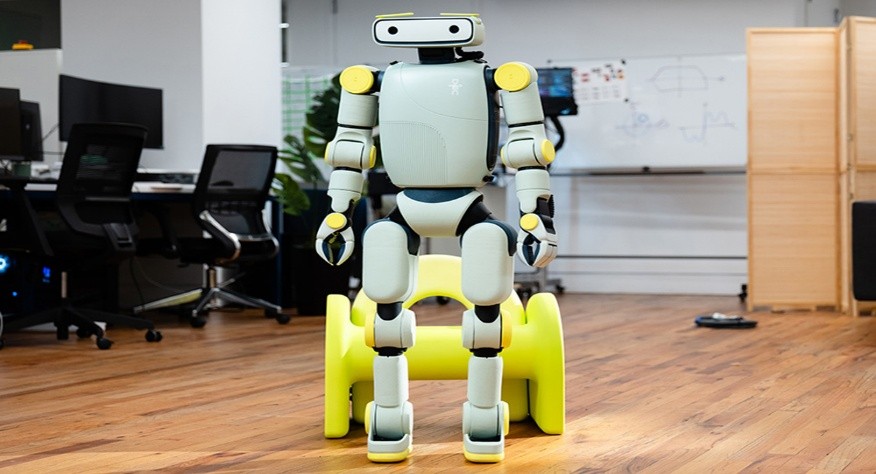
Figure 1. Robot Passenger.
Battery Size Raises Red Flags
Airline officials grew concerned after discovering that Bebop’s lithium battery exceeded standard aviation limits. While passengers are typically allowed to carry batteries under 100 watt-hours (Wh), and sometimes up to 160 Wh with prior approval, anything beyond that threshold is generally prohibited. Figure 1 shows robot passenger.
The robot’s battery reportedly surpassed these limits, prompting additional inspections and ultimately leading to its removal before departure [1]. The process required coordination between airline staff, security personnel, and the robot’s handlers—contributing to a delay of roughly an hour.
Why Lithium Batteries Are Restricted
The caution is not without reason. Lithium batteries can pose serious risks if damaged or overheated, potentially leading to a phenomenon known as thermal runaway. In such cases, batteries may ignite and are notoriously difficult to extinguish mid-flight, posing a significant hazard to passengers and crew.
Because of these risks, oversized batteries are typically transported as regulated cargo under strict handling procedures, rather than being allowed in passenger cabins.
A Brief Moment of Entertainment
Amid the disruption, Bebop reportedly entertained fellow passengers while officials worked through the issue—offering a lighthearted moment during the delay. Eventually, the situation was resolved, and the robot was permitted to board, albeit without its original battery setup.
Looking Ahead
The robot’s team is now working to retrieve the confiscated batteries and arrange compliant replacements for upcoming events. Future travel plans will likely involve shipping such components separately to meet aviation regulations.
While the incident highlights the novelty of traveling with advanced robotics, it also underscores the importance of adhering to established safety standards—especially when it comes to high-capacity energy storage systems.
References:
- https://interestingengineering.com/ai-robotics/us-humanoid-robot-flight-passenger
Cite this article:
Keerthana S (2026), Humanoid Robot Passenger Sparks Flight Delay Over Oversized Banned Battery in the U.S., AnaTechMaz, pp.368
Recent Post
-

Agile Robots Joins Forces with Google DeepMind in New Robotics Partnership
Agile Robots has entered into a new partnership with Google....
-
Amazon Buys Humanoid Robotics Startup Fauna Robotics
Amazon has acquired New York–based humanoid robotics startup Fauna Robotics, as confirmed....
-
DJI Brings Immersive Aerial Dogfighting Experience to Insta360
The imaging system is built around 1-inch–equivalent sensors with 2.4-micrometer....
-
Robot Legs Wow in Demo: Skating, Stair-Climbing, and One-Wheel Balancing
Launched in 2022 with a $400 million investment from Hyundai....
-

Tiny Robots, 50 Times Thinner Than a Hair, Can Track and Move Bacteria
Photon-powered nanorobots can precisely steer, capture, and.....
-
“Robot Explores 1.5 Miles Below, Captures 86,000 Images of French Shipwreck”
A cutting-edge underwater robot has captured thousands of....
-

“Notion Faces Data Exposure Risk from Unprotected API Access”
Privacy-focused browser maker Brave Software has rolled out its “Shred” feature to Android...
-
Humanoid Robot Passenger Sparks Flight Delay Over Oversized Banned Battery in the U.S.
An unusual airline incident unfolded in California when a....
-
China’s New Moon Robot Aims to Assist Future Lunar Missions
China has unveiled a new AI-powered lunar robot designed to assist future Moon missions by carrying....
-

Touch-Sensitive Robot Can Navigate Like Humans Without Vision
Researchers at the National University of Singapore have....
-
Brain-Like Navigation Gives Robots Smarter Mobility
For decades, robotics researchers have envisioned autonomous machines capable of navigating...
NVIDIA Builds the Foundation for an AI-Driven Robotic Future
As artificial intelligence moves beyond software and into the physical world, NVIDIA is positioning itself at....
New Low-Power Antenna Boosts Deep-Water Robot Communication
Communicating underwater has long been one of the biggest challenges facing autonomous underwater....
Hybrid Intelligence Revolutionizes Precision Manufacturing Robotics
Researchers led by Changtian Z., Jiaxuan H., and Xinyang L. have developed an...
Robots Break Free from Maps with Smarter LiDAR Technology
Autonomous robots are taking a major step toward operating independently in complex, real-world ....