

Agile Robots Takes Over Thyssenkrupp Automation Engineering
A physical AI company is deepening its capabilities in industrial automation. This week, Agile Robots SE announced that it is acquiring the assets of thyssenkrupp Automation Engineering across Europe and North America, formerly part of thyssenkrupp AG’s Automotive Technology division.
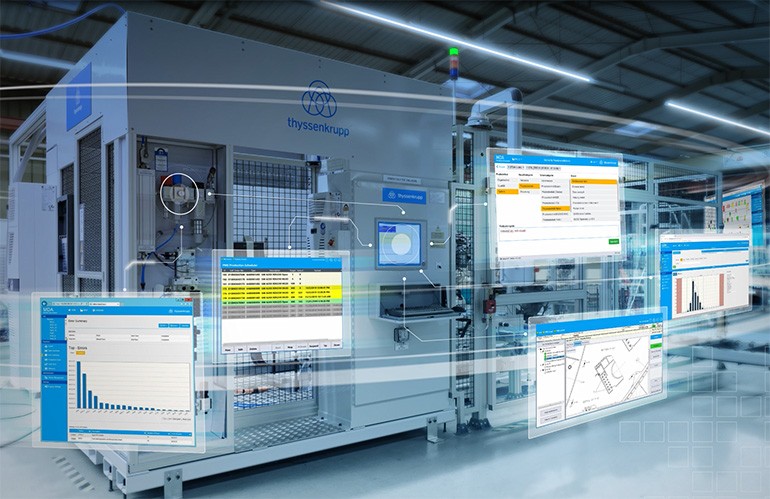
Figure 1. Agile Robots Acquires Thyssenkrupp Automation Engineering.
“Now is the ideal moment to merge AI, robotics, and industrial know-how. Physical AI can deliver major productivity gains for manufacturers,” said Zhaopeng Chen, founder and CEO of Agile Robots. “By joining forces with thyssenkrupp Automation Engineering, we’re well positioned to help lead the next industrial revolution — starting from Germany.” Figure 1 shows Agile Robots Acquires Thyssenkrupp Automation Engineering.
Agile Robots, founded in 2018 as a spin-off from the German Aerospace Center (DLR) in Munich, said it has deployed over 20,000 robots and doubled its revenue each year, reaching about €200 million ($231.9 million U.S.) in 2024. It noted that thyssenkrupp Automation Engineering generated revenue in the hundreds of millions that same year.
The company pointed to the business unit’s technical expertise, established customer relationships, and long-standing experience in the global automotive sector as key factors behind the acquisition.
Agile Robots aims to expand beyond the automotive sector
Agile Robots has deployed its robotic systems for clients worldwide across industries ranging from consumer electronics to automotive. The company said these initiatives have gone beyond simple robot installations, helping to upgrade and modernize entire production lines.
At the same time, Agile Robots acknowledged that the acquisition comes amid a tough market landscape. With the automotive industry undergoing major transformation, the company sees a chance to reposition itself.
According to Agile Robots, the acquired business unit will support its expansion into high-growth fields such as electronics, medical technology, and logistics. Both companies intend to combine their strengths in industrial automation and autonomous mobile robots (AMRs) and collaborate on developing new modular systems.
Agile Robots expands its technical capabilities
Agile Robots said its end-to-end portfolio integrates robotics hardware, software, data, and in-house manufacturing expertise. In 2023, it acquired collaborative robot maker Franka Emika GmbH, and just last week, it introduced its Agile ONE industrial humanoid.
The company now has more than 2,500 employees representing roughly 60 countries. It also claims one of the largest R&D teams in the robotics sector, with over 1,000 specialists in AI and robotics.
By acquiring thyssenkrupp Automation Engineering, Agile Robots will add about 650 experts and 10 additional locations across Europe and North America. Beyond engineering and supply chain strengths, the unit’s North American presence is expected to help Agile Robots further expand in the U.S. market.
thyssenkrupp Automation Engineering to become Krause Automation
Founded in 1950 as Johann A. Krause in Bremen, Germany, thyssenkrupp Automation Engineering quickly established itself as a leading machinery supplier to the European automotive industry. Thyssen Industrie AG acquired the company outright in 1989, expanding its footprint into North America.
“We are contributing decades of experience in plant engineering and executing complex, mission-critical projects for global customers to a fast-growing, future-focused organization,” said Dr. Rolf-Günther Nieberding, CEO of thyssenkrupp Automation Engineering.
“With Agile Robots’ innovations, we can apply our strengths in robotics, software, and system integration to deliver even greater value to our shared customers — while continuing to support the strong growth of the Agile Robots Group,” he added.
Reference:
- https://www.therobotreport.com/agile-robots-acquires-thyssenkrupp-automation-engineering/
Cite this article:
Priyadharshini S (2025), Agile Robots Takes Over Thyssenkrupp Automation Engineering, AnaTechMaz, pp.299
Recent Post
-

Vine Robot Expands by Everting its Own Skin from the Tip
Researchers have developed miniature, steerable vine-like robots capable of navigating complex pathways....
-
Morphing Robot Duo Walks, Drives and Takes to the Skies
Like something straight out of an early Transformers movie, researchers at Caltech....
-
Robot Hands are Growing Increasingly Human-Like
Hyundai-owned Boston Dynamics recently unveiled a new set of grippers” for its streamlined Atlas ....
-
Spider-Inspired Construction Robot Could Build a House in Just One Day
Instead of performing individual tasks like tying rebar or assembling....
-
X-BAT Combat Drone Combines VTOL Agility, Stealth and High-Speed Performance
Autonomous aircraft makers seem to be engaging in a bit of one-upmanship ....
-

TikTok Robot Sensation Rizzbot Flips off Users
Rizzbot, a kid-sized humanoid robot built by Unitree Robotics with over a million TikTok followers and more...
-
Mbodi to Demonstrate AI-Powered Robot Training at TechCrunch Disrupt 2025
Robots can perform a wide range of tasks, from packing boxes....
-
Dive Deeper: The First Underwater Exoskeleton that Enhances Your Swimming Instincts
Divers may soon get a helpful boost to their flutter kicks thanks to....
-
Futuristic Visions Captured in Stunning Robot Imagery
Humans have long been fascinated with their own image. In the 1920s play R.U.R. (Rossum’s Universal Robots)....
-

Marching Robot Inspired by Nature Brings 'Interstellar' to Life
If you want to build a real-life HAL 9000, all you really need is an LED, some carpentry skills, and a laptop....
-

Microscopic Robots Navigate Your Bloodstream to Combat Strokes
Microrobots could become a promising method for clearing dangerous blood vessel blockages that lead to strokes....
-
Watch: Hyper-Realistic Robot Revealed as Machine in Shocking Dissection
When Xpeng unveiled its next-gen Iron humanoid earlier this month, it stole....
-
DARPA Pledges $6.5M for Top Small Heavy-Lift Drone Innovations
Through its Tactical Technology Office (TTO), DARPA aims to push drone technology forward with its Lift....
-
Agile Robots Takes Over Thyssenkrupp Automation Engineering
A physical AI company is deepening its capabilities in industrial automation....
-
Advantech Combines Computing Power with D3 Embedded Sensing for Mobile Robots
As mobile robots increasingly populate factories and warehouses, there....