

Marching Robot Inspired by Nature Brings 'Interstellar' to Life
If you want to build a real-life HAL 9000, all you really need is an LED, some carpentry skills, and a laptop running a talking AI. Building your own R2-D2, however, is a far more complex endeavor, requiring a careful assembly of motors, electronics, and a variety of materials. But what if your goal was to recreate TARS—the blocky, stainless-steel robot with shoulder-mounted legs from Christopher Nolan’s Interstellar?

Figure 1. Biomimetic Robot Channels 'Interstellar' Into the Real World.
For most people, that would likely mean years of robotics study and engineering experience. Luckily, Aditya Sripada holds a master’s degree from Carnegie Mellon University’s Robotics Institute and works as a senior robotics engineer at Nimble.ai. Alongside his longtime collaborator Abhishek Warrier, he brought TARS to life in the form of TARS3D. Figure 1 shows Biomimetic Robot Channels 'Interstellar' Into the Real World.
As shown in their demonstration video, TARS3D is nothing short of fascinating. Its four independently articulated, telescopic pillars quickly transform into an X-shape as pillars 1 and 3 rotate forward while pillars 2 and 4 rotate backward. Curved pads at the top and bottom of each pillar act as “feet,” allowing the robot to roll smoothly as an eight-spoke, double rimless wheel. According to Sripada and Warrier, TARS3D is the first robot inspired by TARS that can seamlessly both walk and roll.
The roboticists point out that while much of locomotion research focuses on biomimicry, robots navigating “many human-engineered settings can benefit from nonanthropomorphic forms.” True to the movie version, TARS3D can walk—albeit somewhat precariously—but rolling is where it really excels. Its seven independent movements—three rotary and four prismatic—leverage machine learning and optimization to discover gaits that would be impossible to calculate analytically.
In their paper, the authors explain that they “used deep reinforcement learning (DRL) in simulation” and found that the learned policies could both replicate analytically derived gaits and discover entirely novel behaviors. They concluded that TARS3D’s “biotranscending morphology” enables multiple previously unexplored modes of locomotion, suggesting a promising path forward for multimodal robotics.
Although TARS3D isn’t ready for interstellar missions—it’s still tethered by cables, and at just 25 cm (9.8 in) tall and 990 g (2.2 lb) of 3D-printed components, it’s small and light enough to perch on a table—Sripada and Warrier plan to eventually test its locomotion across a variety of terrains.
Sripada reflected that building TARS3D, which he began in November 2022 without a laboratory, funding, or formal affiliation— “just late nights and weekends and a desire to reconnect with the simple joy of building robots”—reminded him why he first fell in love with robotics. “The wonder, the patience, the heartbreak when things fail, the quiet euphoria when they finally work, and the feeling that somewhere in the process, you discover a small new truth about motion, persistence, and yourself,” he said.
Source: NEW ATLAS
Cite this article:
Priyadharshini S (2025), Marching Robot Inspired by Nature Brings 'Interstellar' to Life, AnaTechMaz, pp.295
Recent Post
-

Vine Robot Expands by Everting its Own Skin from the Tip
Researchers have developed miniature, steerable vine-like robots capable of navigating complex pathways....
-
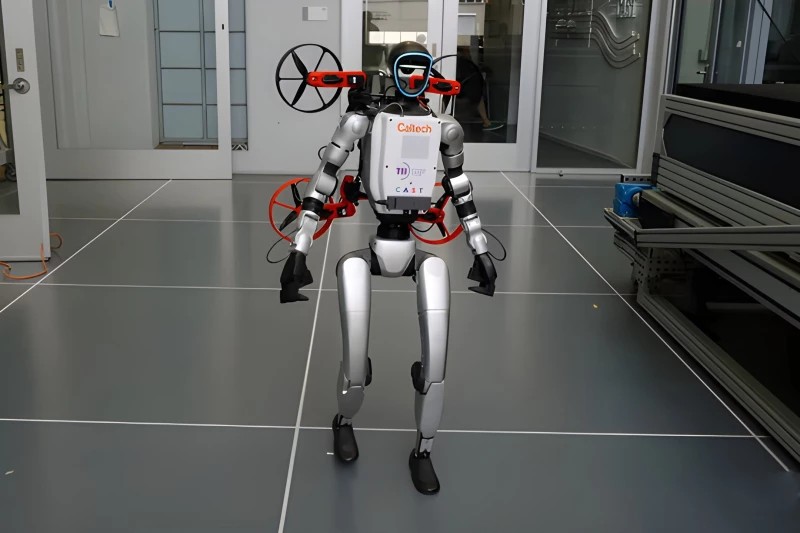
Morphing Robot Duo Walks, Drives and Takes to the Skies
Like something straight out of an early Transformers movie, researchers at Caltech....
-
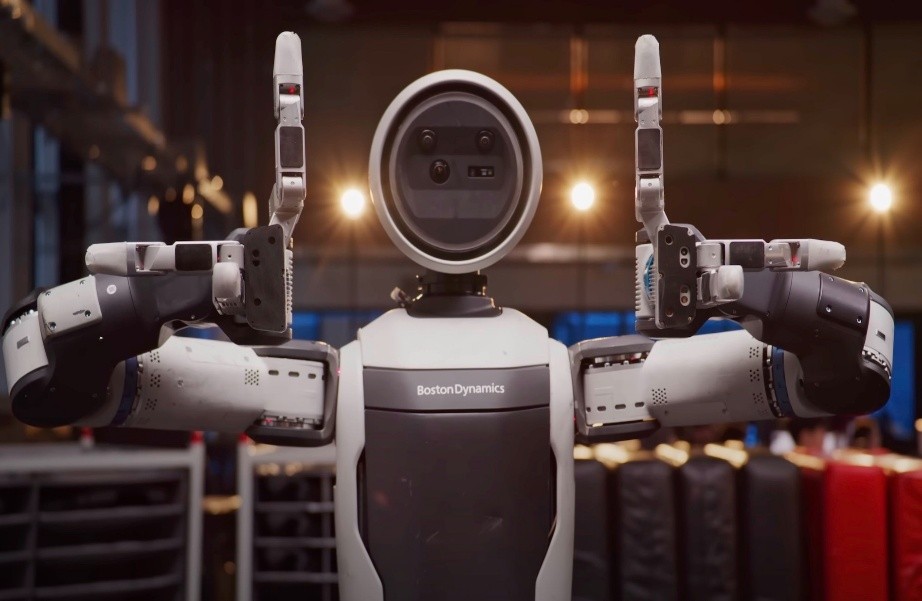
Robot Hands are Growing Increasingly Human-Like
Hyundai-owned Boston Dynamics recently unveiled a new set of grippers” for its streamlined Atlas ....
-
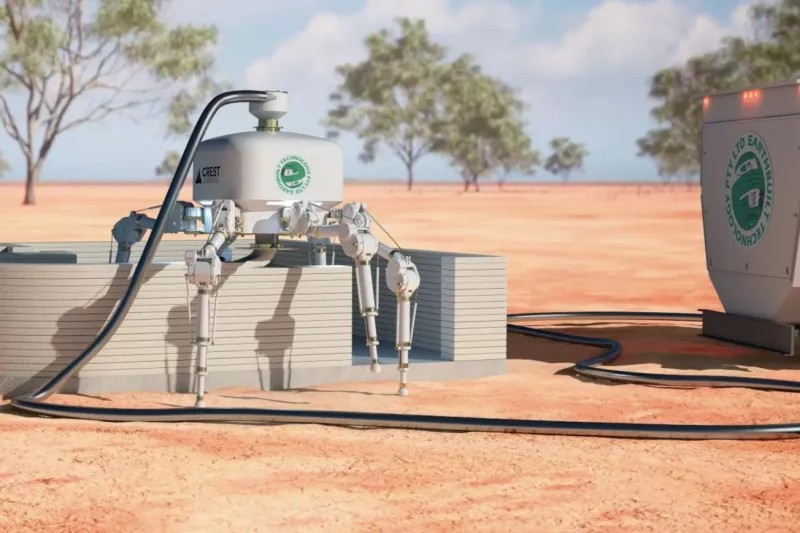
Spider-Inspired Construction Robot Could Build a House in Just One Day
Instead of performing individual tasks like tying rebar or assembling....
-

X-BAT Combat Drone Combines VTOL Agility, Stealth and High-Speed Performance
Autonomous aircraft makers seem to be engaging in a bit of one-upmanship ....
-
TikTok Robot Sensation Rizzbot Flips off Users
Rizzbot, a kid-sized humanoid robot built by Unitree Robotics with over a million TikTok followers and more...
-
Mbodi to Demonstrate AI-Powered Robot Training at TechCrunch Disrupt 2025
Robots can perform a wide range of tasks, from packing boxes....
-
Dive Deeper: The First Underwater Exoskeleton that Enhances Your Swimming Instincts
Divers may soon get a helpful boost to their flutter kicks thanks to....
-
Futuristic Visions Captured in Stunning Robot Imagery
Humans have long been fascinated with their own image. In the 1920s play R.U.R. (Rossum’s Universal Robots)....
-
Marching Robot Inspired by Nature Brings 'Interstellar' to Life
If you want to build a real-life HAL 9000, all you really need is an LED, some carpentry skills, and a laptop....
-

Microscopic Robots Navigate Your Bloodstream to Combat Strokes
Microrobots could become a promising method for clearing dangerous blood vessel blockages that lead to strokes....
-
Watch: Hyper-Realistic Robot Revealed as Machine in Shocking Dissection
When Xpeng unveiled its next-gen Iron humanoid earlier this month, it stole....
-
DARPA Pledges $6.5M for Top Small Heavy-Lift Drone Innovations
Through its Tactical Technology Office (TTO), DARPA aims to push drone technology forward with its Lift....
-

Agile Robots Takes Over Thyssenkrupp Automation Engineering
A physical AI company is deepening its capabilities in industrial automation....
-
Advantech Combines Computing Power with D3 Embedded Sensing for Mobile Robots
As mobile robots increasingly populate factories and warehouses, there....