

DARPA Pledges $6.5M for Top Small Heavy-Lift Drone Innovations
Through its Tactical Technology Office (TTO), DARPA aims to push drone technology forward with its Lift Challenge—a $6.5 million competition designed to develop small drones capable of carrying payloads four times their own weight.
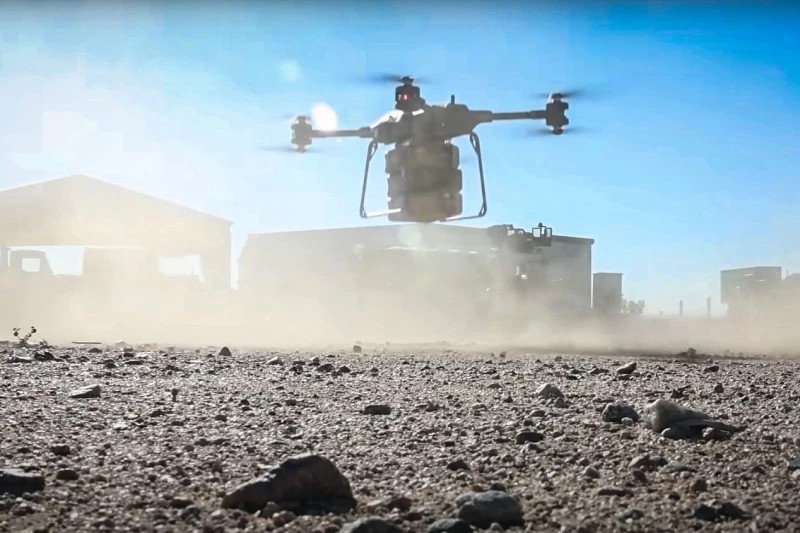
Figure 1. DARPA Launches $6.5M Challenge for Small Drones with Massive Lift.
For more than a decade, drones have captured attention in both military and civilian aerospace sectors. These small, semi-autonomous aircraft can operate in swarms and access areas previously unsuitable for conventional flight, already beginning to transform both warfare and everyday applications. Figure 1 shows DARPA Launches $6.5M Challenge for Small Drones with Massive Lift.
However, small drones face significant limitations. Chief among them is that most rotorcraft cannot lift payloads heavier than themselves. While a 1:1 payload-to-weight ratio is strong compared with many conventional transport aircraft, which often carry just one-third of their own weight, even this ratio falls short for small drones.
DARPA’s goal is to radically improve this ratio, creating rotorcraft that can lift four times their own weight. To make this vision a reality, the agency has launched the Lift Challenge to accelerate innovation in drone lift capabilities.
The competition requirements are straightforward. Entrants must build a drone weighing less than 55 lb (25 kg) that complies with FAA regulations. The drone must lift a minimum payload of 110 lb (50 kg), using cast iron Olympic barbell plates provided by DARPA to ensure consistency.
While carrying the payload, the drone must maintain a steady cruising altitude of 350 ft ± 50 ft (106.7 m ± 15.2 m) above ground level. It must then navigate a designated five-nautical-mile (9 km) course. After four nautical miles, the drone must hover and safely deliver its cargo to a designated drop zone, then continue the final mile before performing a vertical landing within a 10-ft (3-m) circle.
Competition winners will be determined by successful course completion, with ties broken by speed. Drones that carry less than the 4:1 payload-to-weight ratio will receive only half of the prize.
The $6.5 million prize pool will be divided among first, second, and third place, with awards of $2.5 million, $1.5 million, and $1 million, respectively. Additional prizes of $500,000 each will recognize the Most Revolutionary Aerodynamic Design, Most Revolutionary Powertrain Design, and Most Promising Design.
“DARPA recognizes that the best solutions often come from unexpected places,” said Phillip Smith, Lift Challenge program manager. “That’s why we’ve created an open design challenge format—to encourage out-of-the-box thinking.
“The Lift Challenge isn’t just about building better drones; it’s about securing America’s leadership in UAS technology for decades to come. By setting ambitious goals and inviting broad participation, we aim to unlock new capabilities, accelerate our defense industrial base, and give the U.S. a strategic advantage.”
Source: NEW ATLAS
Cite this article:
Priyadharshini S (2025), DARPA Pledges $6.5M for Top Small Heavy-Lift Drone Innovations, AnaTechMaz, pp.298
Recent Post
-

Vine Robot Expands by Everting its Own Skin from the Tip
Researchers have developed miniature, steerable vine-like robots capable of navigating complex pathways....
-
Morphing Robot Duo Walks, Drives and Takes to the Skies
Like something straight out of an early Transformers movie, researchers at Caltech....
-
Robot Hands are Growing Increasingly Human-Like
Hyundai-owned Boston Dynamics recently unveiled a new set of grippers” for its streamlined Atlas ....
-
Spider-Inspired Construction Robot Could Build a House in Just One Day
Instead of performing individual tasks like tying rebar or assembling....
-
X-BAT Combat Drone Combines VTOL Agility, Stealth and High-Speed Performance
Autonomous aircraft makers seem to be engaging in a bit of one-upmanship ....
-

TikTok Robot Sensation Rizzbot Flips off Users
Rizzbot, a kid-sized humanoid robot built by Unitree Robotics with over a million TikTok followers and more...
-
Mbodi to Demonstrate AI-Powered Robot Training at TechCrunch Disrupt 2025
Robots can perform a wide range of tasks, from packing boxes....
-
Dive Deeper: The First Underwater Exoskeleton that Enhances Your Swimming Instincts
Divers may soon get a helpful boost to their flutter kicks thanks to....
-
Futuristic Visions Captured in Stunning Robot Imagery
Humans have long been fascinated with their own image. In the 1920s play R.U.R. (Rossum’s Universal Robots)....
-

Marching Robot Inspired by Nature Brings 'Interstellar' to Life
If you want to build a real-life HAL 9000, all you really need is an LED, some carpentry skills, and a laptop....
-

Microscopic Robots Navigate Your Bloodstream to Combat Strokes
Microrobots could become a promising method for clearing dangerous blood vessel blockages that lead to strokes....
-
Watch: Hyper-Realistic Robot Revealed as Machine in Shocking Dissection
When Xpeng unveiled its next-gen Iron humanoid earlier this month, it stole....
-
DARPA Pledges $6.5M for Top Small Heavy-Lift Drone Innovations
Through its Tactical Technology Office (TTO), DARPA aims to push drone technology forward with its Lift....
-

Agile Robots Takes Over Thyssenkrupp Automation Engineering
A physical AI company is deepening its capabilities in industrial automation....
-
Advantech Combines Computing Power with D3 Embedded Sensing for Mobile Robots
As mobile robots increasingly populate factories and warehouses, there....