

Dive Deeper: The First Underwater Exoskeleton that Enhances Your Swimming Instincts
Divers may soon get a helpful boost to their flutter kicks thanks to an exoskeleton developed by researchers at Peking University (PU). By taking on some of the effort involved in underwater swimming, the device could also help extend the life of a scuba tank.
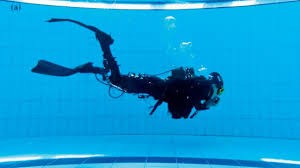
Figure 1. Dive Smarter: The Exoskeleton That Powers Your Legs.
Although watching a diver glide beneath the sea’s surface seems calm and effortless, swimming actually engages the body’s largest muscle groups—the legs—which require a significant amount of oxygen from the diver’s tank. For example, a diver using an 80-cubic-foot tank at a depth of 65.6 feet typically has enough oxygen for about 35–50 minutes. Figure 1 shows Dive Smarter: The Exoskeleton That Powers Your Legs.
To increase underwater endurance without altering breathing apparatus, the PU researchers focused on reducing the energy needed to swim, thereby lowering the oxygen consumption of the diver.
The exoskeleton itself is made up of several components. Two sealed motor units attach to the diver’s back and connect via flexible Bowden cables to lightweight cuffs on the thighs and shanks. A waist strap stabilizes the system, which is worn over a wetsuit. The entire unit weighs approximately 9 kg (20 lb), with the majority of the weight concentrated on the back.
The true innovation of the exoskeleton lies in its embedded sensors, known as Inertial Measurement Units (IMUs), which relay the position of the diver’s legs to the motor. This enables the motor to detect the stage of each flutter kick and adjust the force on the Bowden cables accordingly. During the downstroke, a built-in clutch engages the motor to assist the motion, while during the upstroke, the motor disengages so it doesn’t resist the diver’s recovery.
To evaluate the system, the researchers outfitted six certified divers with the exoskeleton in a 50-meter (164-ft) swimming pool at a depth of two meters (6.6 ft). Each diver completed three 100-meter (328-ft) underwater swims using a flutter kick, both with and without the exoskeleton, and with it powered on and off. The results were striking: quadriceps and calf activation dropped by just over 20%, while air consumption decreased by 22.7%.
The researchers note that further testing is required to refine the exoskeleton. Their plans include using computational fluid dynamics to map water resistance on divers, conducting trials in more dynamic, real-world conditions beyond the pool, experimenting with different swimming speeds and styles, exploring lighter-weight materials, and adding additional sensors to monitor metrics such as heart rate alongside air consumption.
“Our research extends the boundaries of wearable robotics and introduces a completely new scenario for exoskeleton studies,” the team writes in their study, published in IEEE Transactions on Robotics. “Powered exoskeletons enhance human functionality, and specialized environments or working conditions do not fully limit their usefulness.
“This work provides a reference for the design and evaluation of future underwater assistive devices, with the potential to strengthen the human connection to the ocean and expand the horizons of exploration.”
Source: NEW ATLAS
Cite this article:
Priyadharshini S (2025), Dive Deeper: The First Underwater Exoskeleton that Enhances Your Swimming Instincts, AnaTechMaz, pp.293
Recent Post
-

Vine Robot Expands by Everting its Own Skin from the Tip
Researchers have developed miniature, steerable vine-like robots capable of navigating complex pathways....
-
Morphing Robot Duo Walks, Drives and Takes to the Skies
Like something straight out of an early Transformers movie, researchers at Caltech....
-

Robot Hands are Growing Increasingly Human-Like
Hyundai-owned Boston Dynamics recently unveiled a new set of grippers” for its streamlined Atlas ....
-

Spider-Inspired Construction Robot Could Build a House in Just One Day
Instead of performing individual tasks like tying rebar or assembling....
-

X-BAT Combat Drone Combines VTOL Agility, Stealth and High-Speed Performance
Autonomous aircraft makers seem to be engaging in a bit of one-upmanship ....
-

TikTok Robot Sensation Rizzbot Flips off Users
Rizzbot, a kid-sized humanoid robot built by Unitree Robotics with over a million TikTok followers and more...
-
Mbodi to Demonstrate AI-Powered Robot Training at TechCrunch Disrupt 2025
Robots can perform a wide range of tasks, from packing boxes....
-
Dive Deeper: The First Underwater Exoskeleton that Enhances Your Swimming Instincts
Divers may soon get a helpful boost to their flutter kicks thanks to....
-

Futuristic Visions Captured in Stunning Robot Imagery
Humans have long been fascinated with their own image. In the 1920s play R.U.R. (Rossum’s Universal Robots)....
-

Marching Robot Inspired by Nature Brings 'Interstellar' to Life
If you want to build a real-life HAL 9000, all you really need is an LED, some carpentry skills, and a laptop....
-

Microscopic Robots Navigate Your Bloodstream to Combat Strokes
Microrobots could become a promising method for clearing dangerous blood vessel blockages that lead to strokes....
-
Watch: Hyper-Realistic Robot Revealed as Machine in Shocking Dissection
When Xpeng unveiled its next-gen Iron humanoid earlier this month, it stole....
-

DARPA Pledges $6.5M for Top Small Heavy-Lift Drone Innovations
Through its Tactical Technology Office (TTO), DARPA aims to push drone technology forward with its Lift....
-

Agile Robots Takes Over Thyssenkrupp Automation Engineering
A physical AI company is deepening its capabilities in industrial automation....
-

Advantech Combines Computing Power with D3 Embedded Sensing for Mobile Robots
As mobile robots increasingly populate factories and warehouses, there....