

Spider-Inspired Construction Robot Could Build a House in Just One Day
Instead of performing individual tasks like tying rebar or assembling wood panels, Charlotte uses an extrusion system to 3D print the compressed building material layer by layer. It moves and elevates itself on its spider-like legs, completing the entire construction process in a single machine.
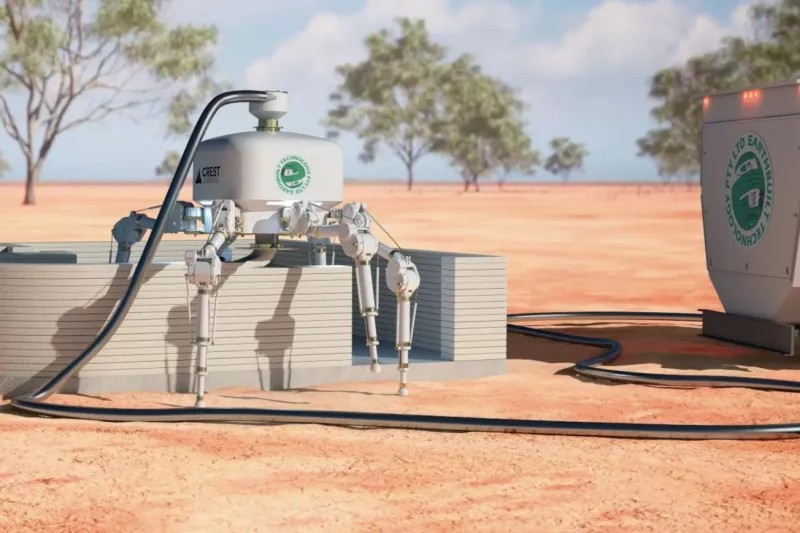
Figure 1. Spider-Like Robot Promises to 3D Print a House in a Single Day.
The robot is still in development and likely years away from building its first home. However, a scaled-down prototype was recently showcased at an exhibition. The companies behind Charlotte envision it not only constructing homes in the near future but also building lunar bases for Moon research. They highlight that its compact, bio-inspired design and autonomous capabilities make it especially suited for use on the Moon. Figure 1 shows Spider-Like Robot Promises to 3D Print a House in a Single Day.
Although Charlotte’s design currently supports only simple structures, its main advantage lies in tackling labor shortages and construction delays—two major hurdles in addressing housing crises worldwide. The 3D-printed buildings are both floodproof and fireproof, and the process is significantly faster and more cost-effective than traditional construction methods. Additionally, if the Earthbuilt material is sourced locally, the carbon footprint can be substantially reduced.
Of course, such solutions won’t fit every market, climate, or customer preference. But for the millions affected by housing shortages and the global housing mismatch, this approach offers a promising way to help address these challenges.
How It Builds – 3D Printing in Action
Detail Charlotte’s construction process: using an extrusion system to 3D print compressed building material layer by layer, raising itself on its legs, and completing tasks that would normally require multiple steps and machines.
Current Status and Prototypes
Discuss the development stage, noting that it is years away from building full-sized homes. Include mention of scaled-down prototypes displayed at exhibitions.
Potential Applications – Earth and Beyond
Explore its real-world applications: quickly addressing housing shortages, creating floodproof and fireproof structures, and the potential for lunar bases due to its compact, versatile, and autonomous design.
Advantages and Limitations
Highlight the benefits—speed, cost-efficiency, sustainability with local materials—and acknowledge limitations, such as simple design structures and suitability to certain markets or climates. Conclude with its promise in tackling global housing challenges.
Source: NEW ATLAS
Cite this article:
Priyadharshini S (2025), Spider-Inspired Construction Robot Could Build a House in Just One Day, AnaTechMaz, pp.289
Recent Post
-

Vine Robot Expands by Everting its Own Skin from the Tip
Researchers have developed miniature, steerable vine-like robots capable of navigating complex pathways....
-
Morphing Robot Duo Walks, Drives and Takes to the Skies
Like something straight out of an early Transformers movie, researchers at Caltech....
-
Robot Hands are Growing Increasingly Human-Like
Hyundai-owned Boston Dynamics recently unveiled a new set of grippers” for its streamlined Atlas ....
-
Spider-Inspired Construction Robot Could Build a House in Just One Day
Instead of performing individual tasks like tying rebar or assembling....
-
X-BAT Combat Drone Combines VTOL Agility, Stealth and High-Speed Performance
Autonomous aircraft makers seem to be engaging in a bit of one-upmanship ....
-
TikTok Robot Sensation Rizzbot Flips off Users
Rizzbot, a kid-sized humanoid robot built by Unitree Robotics with over a million TikTok followers and more...
-
Mbodi to Demonstrate AI-Powered Robot Training at TechCrunch Disrupt 2025
Robots can perform a wide range of tasks, from packing boxes....
-

Dive Deeper: The First Underwater Exoskeleton that Enhances Your Swimming Instincts
Divers may soon get a helpful boost to their flutter kicks thanks to....
-
Futuristic Visions Captured in Stunning Robot Imagery
Humans have long been fascinated with their own image. In the 1920s play R.U.R. (Rossum’s Universal Robots)....
-

Marching Robot Inspired by Nature Brings 'Interstellar' to Life
If you want to build a real-life HAL 9000, all you really need is an LED, some carpentry skills, and a laptop....
-

Microscopic Robots Navigate Your Bloodstream to Combat Strokes
Microrobots could become a promising method for clearing dangerous blood vessel blockages that lead to strokes....
-
Watch: Hyper-Realistic Robot Revealed as Machine in Shocking Dissection
When Xpeng unveiled its next-gen Iron humanoid earlier this month, it stole....
-

DARPA Pledges $6.5M for Top Small Heavy-Lift Drone Innovations
Through its Tactical Technology Office (TTO), DARPA aims to push drone technology forward with its Lift....
-

Agile Robots Takes Over Thyssenkrupp Automation Engineering
A physical AI company is deepening its capabilities in industrial automation....
-
Advantech Combines Computing Power with D3 Embedded Sensing for Mobile Robots
As mobile robots increasingly populate factories and warehouses, there....