

Microscopic Robots Navigate Your Bloodstream to Combat Strokes
Microrobots could become a promising method for clearing dangerous blood vessel blockages that lead to strokes. These tiny spheres aren’t fully autonomous; rather, they are magnetically guided beads loaded with life-saving drugs and small amounts of a radioactive tracer, allowing doctors to monitor their path.
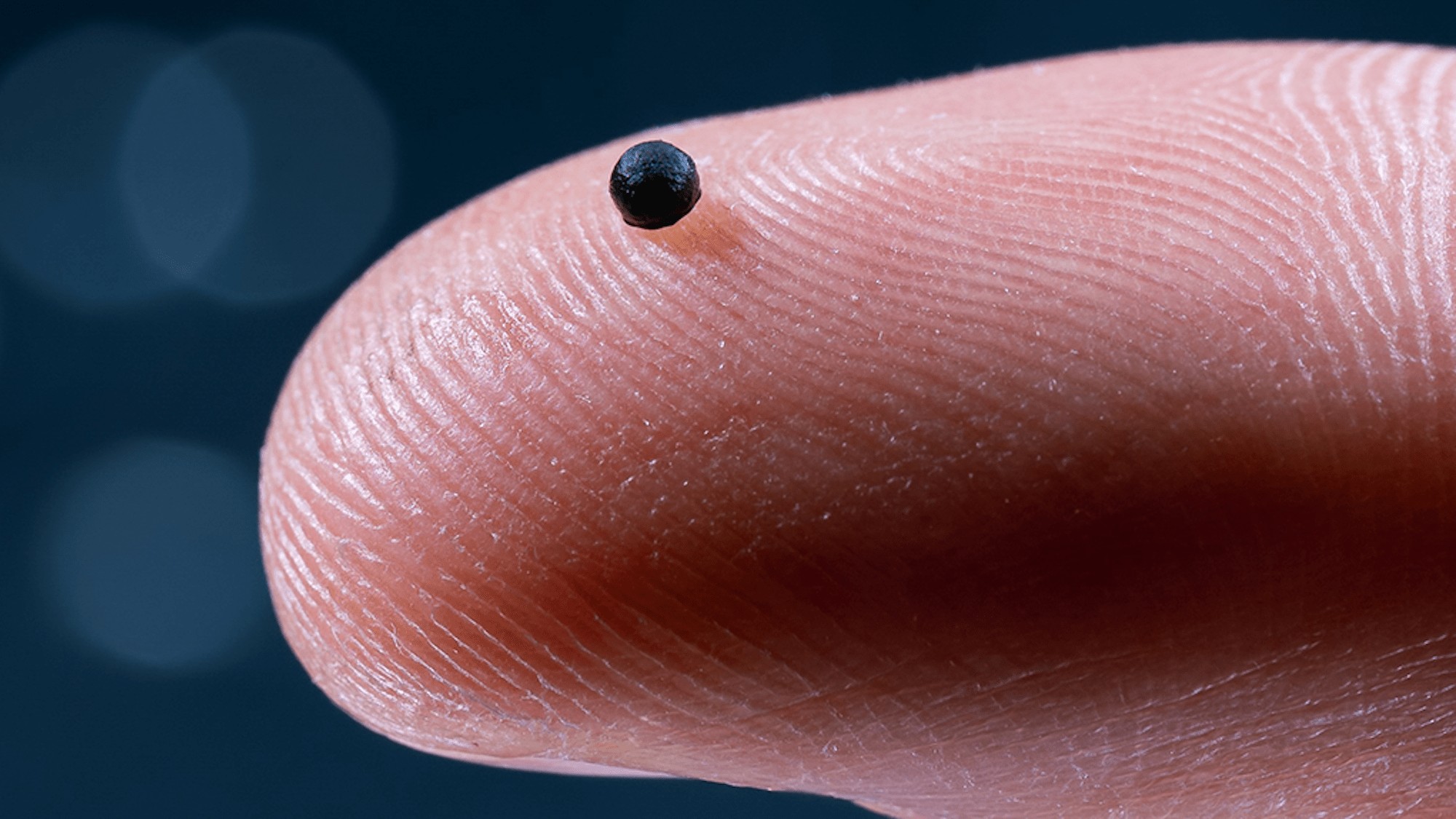
Figure 1. Microscopic Bots Navigate Blood to Treat Strokes.
Currently, stroke treatment often relies on injectable medications designed to dissolve blockages in blood vessels, known as thrombi. Because of the circulatory system’s complexity, high doses are typically required to ensure sufficient drug delivery to the affected area. This approach carries inherent risks, including serious side effects such as internal bleeding. Figure 1 shows Microscopic Bots Navigate Blood to Treat Strokes.
“Since the blood vessels in the human brain are extremely tiny, the capsule’s size is inherently limited. The key technical challenge is ensuring that a capsule this small still possesses enough magnetic strength,” said Fabian Landers, a robotics researcher and coauthor of the study.
Landers and his team incorporated tantalum nanoparticles into the capsule to enable X-ray tracking. After years of fine-tuning the mix of components, they now report a magnetic microrobot capable of reliably navigating the human body’s roughly 360 arteries and veins.
“Magnetic fields and gradients are ideal for minimally invasive procedures because they penetrate deeply into the body and—at the strengths and frequencies we use—pose no harmful effects,” explained Bradley Nelson, a microrobotist and coauthor of the study.
Effectiveness, however, depends on the precision of these tiny delivery agents. To test their design, Landers and Nelson first injected the microrobot via a catheter into artificial silicone models of human and animal blood vessels. The specialized catheter, based on an existing design, features an internal guidewire connected to a polymer gripper that opens to release the microrobot. But navigating it isn’t as simple as moving the device at a single, steady pace.
“The speed of blood flow in the human arterial system varies widely depending on the location. This makes guiding a microrobot extremely complex,” Nelson said.
To overcome this, the guidance system employs three distinct strategies to traverse every region of the head’s arteries. Using one rotating magnetic field, the team successfully and precisely steered the microrobot at speeds of up to 4 millimeters per second.
In another test model, a shifting magnetic field gradient was used to pull the microrobot along the stronger field—even against the current of blood flow. In some instances, the device achieved speeds of up to 20 centimeters per second.
“It’s remarkable how much blood flows through our vessels and at such high speed,” said Landers. “Our navigation system must be able to withstand all of that.”
Following successful laboratory demonstrations, the team progressed to clinical tests using pigs. In 95 percent of cases, the microrobot successfully delivered thrombus medication to the intended location. The procedure also showed promise in a sheep’s cerebrospinal fluid, suggesting potential applications across a range of medical treatments.
“This complex anatomical environment holds enormous potential for therapeutic interventions, which is why we were so encouraged that the microrobot could navigate it successfully as well,” Landers added.
Source: POPULAR SCIENCE
Cite this article:
Priyadharshini S (2025), Microscopic Robots Navigate Your Bloodstream to Combat Strokes, AnaTechMaz, pp.296
Recent Post
-

Vine Robot Expands by Everting its Own Skin from the Tip
Researchers have developed miniature, steerable vine-like robots capable of navigating complex pathways....
-
Morphing Robot Duo Walks, Drives and Takes to the Skies
Like something straight out of an early Transformers movie, researchers at Caltech....
-
Robot Hands are Growing Increasingly Human-Like
Hyundai-owned Boston Dynamics recently unveiled a new set of grippers” for its streamlined Atlas ....
-
Spider-Inspired Construction Robot Could Build a House in Just One Day
Instead of performing individual tasks like tying rebar or assembling....
-

X-BAT Combat Drone Combines VTOL Agility, Stealth and High-Speed Performance
Autonomous aircraft makers seem to be engaging in a bit of one-upmanship ....
-

TikTok Robot Sensation Rizzbot Flips off Users
Rizzbot, a kid-sized humanoid robot built by Unitree Robotics with over a million TikTok followers and more...
-
Mbodi to Demonstrate AI-Powered Robot Training at TechCrunch Disrupt 2025
Robots can perform a wide range of tasks, from packing boxes....
-

Dive Deeper: The First Underwater Exoskeleton that Enhances Your Swimming Instincts
Divers may soon get a helpful boost to their flutter kicks thanks to....
-

Futuristic Visions Captured in Stunning Robot Imagery
Humans have long been fascinated with their own image. In the 1920s play R.U.R. (Rossum’s Universal Robots)....
-

Marching Robot Inspired by Nature Brings 'Interstellar' to Life
If you want to build a real-life HAL 9000, all you really need is an LED, some carpentry skills, and a laptop....
-
Microscopic Robots Navigate Your Bloodstream to Combat Strokes
Microrobots could become a promising method for clearing dangerous blood vessel blockages that lead to strokes....
-
Watch: Hyper-Realistic Robot Revealed as Machine in Shocking Dissection
When Xpeng unveiled its next-gen Iron humanoid earlier this month, it stole....
-

DARPA Pledges $6.5M for Top Small Heavy-Lift Drone Innovations
Through its Tactical Technology Office (TTO), DARPA aims to push drone technology forward with its Lift....
-

Agile Robots Takes Over Thyssenkrupp Automation Engineering
A physical AI company is deepening its capabilities in industrial automation....
-
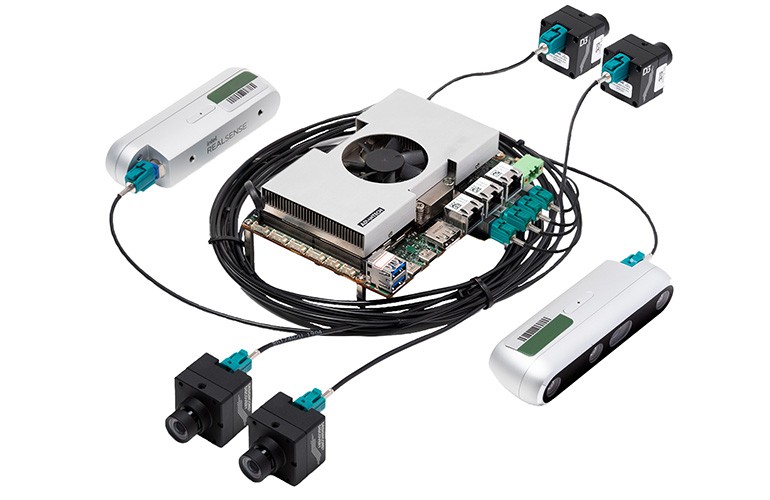
Advantech Combines Computing Power with D3 Embedded Sensing for Mobile Robots
As mobile robots increasingly populate factories and warehouses, there....