

X-BAT Combat Drone Combines VTOL Agility, Stealth and High-Speed Performance
Autonomous aircraft makers seem to be engaging in a bit of one-upmanship as Shield AI unveils its X-BAT VTOL Collaborative Combat Aircraft (CCA), which combines runway-free takeoff and landing with long-range endurance.
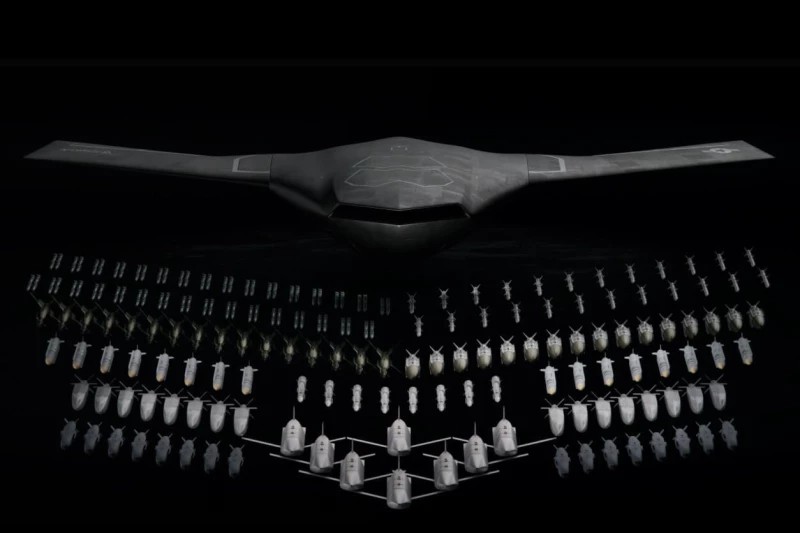
Figure 1. X-BAT Combat Drone Unites Vertical Lift, Stealth, and Supersonic Speed.
Drones capable of fighter-like performance and able to team with manned aircraft are becoming increasingly common, with two prototypes now officially classified as combat aircraft by the U.S. Air Force. This trend isn’t surprising, given the potential of CCAs to act as force multipliers—turning human fighter pilots into mission commanders and enabling operations that were previously too risky to attempt. Figure 1 shows X-BAT Combat Drone Unites Vertical Lift, Stealth, and Supersonic Speed.
Shield AI is raising the stakes with the X-BAT. Building on the company’s smaller, propeller-driven V-BAT drone, the X-BAT was unveiled on October 22, 2025, in Washington, D.C., before an audience of military leaders, elected officials, and industry partners. This launch marks Shield AI’s expansion into larger aircraft, specifically Group 5 drones—the heaviest category—each weighing over 1,320 lb (599 kg).
The X-BAT is designed as a combat VTOL drone capable of operating in contested environments affected by jammed communications and electronic warfare. Its vertical takeoff and landing capabilities eliminate the need for runways, while a long-range endurance of over 2,000 nautical miles (3,704 km / 2,300 miles) reduces reliance on logistical support, making it ideal for remote locations, islands, and ship decks.
Despite its capabilities, the X-BAT remains relatively compact. Its cranked kite wingspan measures just 39 ft (12 m), with a fuselage length of 26 ft (8 m). Shield AI claims that when positioned upright, the drone occupies less space than three conventional fighter jets—though this is balanced by the footprint of its launch and recovery transporter.
At the heart of the X-BAT is Shield AI’s proprietary Hivemind software, which enables complex tactical maneuvers and autonomous collaboration with other drones and piloted aircraft—even in scenarios where radio communications or GPS are unavailable.
Shield AI says X BAT is powered by an F 16 engine—meaning that if it includes an afterburner and its airframe and controls support supersonic flight, it could potentially reach about Mach 1.2, unusually fast for a Collaborative Combat Aircraft. The airframe and wing planform clearly prioritize low observability: weapons sit in an internal bay to reduce radar signature, though external hardpoints can be fitted for a high thrust “beast mode.”
According to the company, X BAT has been in development for 18 months. Its first VTOL flight is slated for later this year, and operational deployment is targeted for 2028.
“X BAT is a revolution in airpower because it combines four things—VTOL, range, multi role capability, and autonomy,” said Armor Harris, senior vice president of aircraft at Shield AI. “VTOL plus range solves survivability on the ground and dependency on tankers. Multirole provides critical flexibility as the threat evolves, because no plan survives first contact with the enemy. X BAT’s ability to autonomously operate standalone or collaboratively allows it to project power when other assets aren’t around and simplifies kill chains.”
Source: NEW ATLAS
Cite this article:
Priyadharshini S (2025), X-BAT Combat Drone Combines VTOL Agility, Stealth and High-Speed Performance, AnaTechMaz, pp.290
Recent Post
-

Vine Robot Expands by Everting its Own Skin from the Tip
Researchers have developed miniature, steerable vine-like robots capable of navigating complex pathways....
-
Morphing Robot Duo Walks, Drives and Takes to the Skies
Like something straight out of an early Transformers movie, researchers at Caltech....
-
Robot Hands are Growing Increasingly Human-Like
Hyundai-owned Boston Dynamics recently unveiled a new set of grippers” for its streamlined Atlas ....
-
Spider-Inspired Construction Robot Could Build a House in Just One Day
Instead of performing individual tasks like tying rebar or assembling....
-
X-BAT Combat Drone Combines VTOL Agility, Stealth and High-Speed Performance
Autonomous aircraft makers seem to be engaging in a bit of one-upmanship ....
-

TikTok Robot Sensation Rizzbot Flips off Users
Rizzbot, a kid-sized humanoid robot built by Unitree Robotics with over a million TikTok followers and more...
-
Mbodi to Demonstrate AI-Powered Robot Training at TechCrunch Disrupt 2025
Robots can perform a wide range of tasks, from packing boxes....
-

Dive Deeper: The First Underwater Exoskeleton that Enhances Your Swimming Instincts
Divers may soon get a helpful boost to their flutter kicks thanks to....
-

Futuristic Visions Captured in Stunning Robot Imagery
Humans have long been fascinated with their own image. In the 1920s play R.U.R. (Rossum’s Universal Robots)....
-

Marching Robot Inspired by Nature Brings 'Interstellar' to Life
If you want to build a real-life HAL 9000, all you really need is an LED, some carpentry skills, and a laptop....
-

Microscopic Robots Navigate Your Bloodstream to Combat Strokes
Microrobots could become a promising method for clearing dangerous blood vessel blockages that lead to strokes....
-
Watch: Hyper-Realistic Robot Revealed as Machine in Shocking Dissection
When Xpeng unveiled its next-gen Iron humanoid earlier this month, it stole....
-
DARPA Pledges $6.5M for Top Small Heavy-Lift Drone Innovations
Through its Tactical Technology Office (TTO), DARPA aims to push drone technology forward with its Lift....
-

Agile Robots Takes Over Thyssenkrupp Automation Engineering
A physical AI company is deepening its capabilities in industrial automation....
-
Advantech Combines Computing Power with D3 Embedded Sensing for Mobile Robots
As mobile robots increasingly populate factories and warehouses, there....