

Could Black Holes Serve as Gateways to Another Universe? Scientists Explore the Possibility
Unlocking the Secrets of Black Holes
New research from the University of Sheffield has the potential to revolutionize our understanding of black holes, time, and the enigmatic force known as dark energy, offering fresh insights into some of the universe’s greatest mysteries.
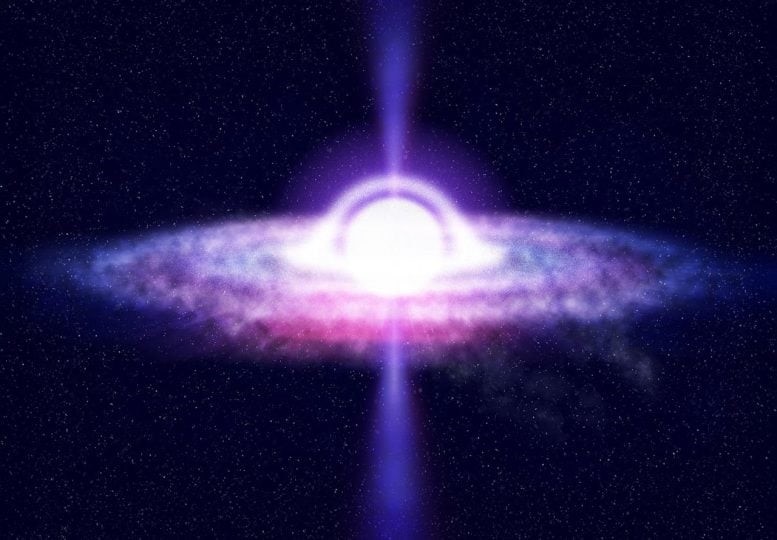
Figure 1. Are Black Holes Portals to Another Universe? Scientists Investigate.
Black holes—cosmic regions where gravity is so powerful that nothing, not even light, can escape—have long intrigued scientists. For decades, astrophysicists and theoretical physicists have sought to unravel their secrets. Their mystique extends beyond academia, inspiring popular films and books like 2001: A Space Odyssey, The Martian, and Interstellar, which delve into humanity’s enduring fascination with these celestial enigmas. Figure 1 shows Are Black Holes Portals to Another Universe? Scientists Investigate.
Einstein’s Theory and the Singularity Paradox
Einstein’s Theory of General Relativity predicts that anything crossing a black hole’s event horizon is inevitably drawn toward its core, where it is obliterated by intense gravitational forces. At this core—known as the singularity—the matter of a collapsed star is believed to be compressed into an infinitely small point. Here, the fundamental laws of physics break down, and our conventional understanding of time and space no longer applies.
However, a new study challenges this long-standing idea. By incorporating quantum mechanics—a fundamental theory governing the universe at its smallest scales—scientists propose an alternative perspective. Rather than signaling the end of time and space, the singularity might instead mark the beginning of something new.
The study, titled "Black Hole Singularity Resolution in Unimodular Gravity from Unitarity," was published on March 11 in Physical Review Letters. It explores the point at which our current understanding of physics and time begins to break down.
White Holes: The Reverse of a Black Hole
While black holes are often described as pulling everything—including time—into a point of no return, the study theorizes that white hole’s function in the opposite way, expelling matter, energy, and time back into the universe.
The research employs a simplified theoretical model known as a planar black hole. Unlike traditional black holes, which are spherical, a planar black hole has a flat, two-dimensional boundary. The researchers’ ongoing work suggests that this mechanism could also apply to conventional black holes, potentially reshaping our understanding of these cosmic phenomena.
Quantum Mechanics and the Fate of Time
“It has long been a question as to whether quantum mechanics can change our understanding of black holes and give us insights into their true nature,” said Dr. Steffen Gielen from the University of Sheffield’s School of Mathematical and Physical Sciences. He co-authored the study with Lucía Menéndez-Pidal from the Complutense University of Madrid.
“In quantum mechanics, time as we understand it cannot end, as systems perpetually change and evolve.”
The researchers' findings suggest that, under the laws of quantum mechanics, the singularity at a black hole’s core is replaced by a region of intense quantum fluctuations—small, temporary changes in the energy of space. In this region, space and time do not cease to exist but instead transition into a new phase: a white hole. This theoretical counterpart to a black hole expels matter and energy rather than consuming them, potentially marking the point where time begins anew.
Dark Energy: A Cosmic Timekeeper?
“While time is generally considered relative to the observer, in our research, time is derived from the mysterious dark energy that permeates the entire universe.
“We propose that time is measured by the dark energy that exists everywhere in the universe and drives its ongoing expansion. This key idea provides a new perspective on understanding the phenomena occurring within a black hole.”
A Glimpse Beyond the Event Horizon
Intriguingly, the idea that a singularity could mark a beginning rather than an end raises the possibility of something even more mysterious lying beyond a white hole.
“Hypothetically, an observer—a theoretical entity—could traverse a black hole, pass through what we perceive as a singularity, and emerge on the other side of a white hole,” Dr. Gielen explained. “It’s a highly abstract notion of an observer, but in theory, it could happen.”
Beyond these theoretical explorations, the proposed deep connection between the fundamental nature of time and the enigmatic dark energy driving the universe’s expansion will continue to be investigated in the months and years ahead.
Source: SciTECHDaily
Cite this article:
Priyadharshini S (2025), "Could Black Holes Serve as Gateways to Another Universe? Scientists Explore the Possibility", AnaTechMaz, pp. 268
Recent Post
-
Web Telescope Provides First Direct Evidence of Carbon Dioxide on an Exoplanet
NASA’s Webb Space Telescope has captured the first direct images of carbon dioxide in an exoplanet beyond...
-

NASA’s SpaceX Crew-9 Splashes Down Off Coast of Florida
NASA astronauts Nick Hague, Suni Williams, Butch Wilmore, and Roscosmos cosmonaut...
-

AI Uncovers a Cosmic Secret, Revealing Hidden Bubbles in the Milky Way
A team of Japanese researchers has leveraged artificial...
-
Google's Inaugural Satellite Designed for Wildfire Detection Is Now in Orbit
The first satellite in a groundbreaking constellation designed to...
-
Scientists Have Captured the Sharpest Image Yet of The Universe’s First Light
The Atacama Cosmology Telescope (ACT) has captured the most...
-
NASA's Cloud Software Helps Businesses Secure Their Spot in Space
Planning space missions is a complex process that requires precise...
-
Scientists Discover an Unusual Gas on Exoplanets, Potentially the Biggest Clue in The Search for Alien Life
Scientists from the University of California, Riverside, propose...
-
Ultra-Thin Lightsails with Micro-Perforations for High-Speed Space Travel
Researchers from TU Delft and Brown University have developed...
-
Andromeda XXXV: A Newly Discovered Galaxy That Defies Expectations
Astronomers have discovered Andromeda XXXV, the faintest...
-
Blood Moon Rising: Witness The Breathtaking Total Lunar Eclipse
On the night of March 13 into the early hours of March 14,...
-
After A Century of Searching, Astronomers Confirm Four Planets Orbiting Barnard’s Star
Astronomers have uncovered strong evidence that Barnard’s...
-
Ancient Asteroid Reveals 4.6-Billion-Year-Old Magnetic Secrets of The Solar System
Around 4.6 billion years ago, the solar system emerged from a dense cloud of interstellar ...
-
Could Black Holes Serve as Gateways to Another Universe? Scientists Explore the Possibility
New research from the University of Sheffield has the potential...
-
When Disks Collide: The Turbulent Origins of Rogue Planets
To explore this concept, scientists from multiple institutions—including the University of Zurich...
-
NASA’s SpaceX Crew-10 Prepared for Launch
NASA and SpaceX are on track to launch the Crew-10 mission...