

Ultra-Thin Lightsails with Micro-Perforations for High-Speed Space Travel
Researchers from TU Delft and Brown University have developed scalable lightsails—ultra-thin reflectors propelled by laser radiation pressure for high-speed space travel.
These lightsails push the boundaries of nanotechnology, achieving extreme thinness at the nanoscale (1/1000th the thickness of a human hair) while maintaining large-scale dimensions. The prototype, just 200 nanometers thick, measures 60mm by 60mm and features billions of microscopic holes. If fully scaled, it could expand to the size of seven football fields while remaining only one millimeter thick.
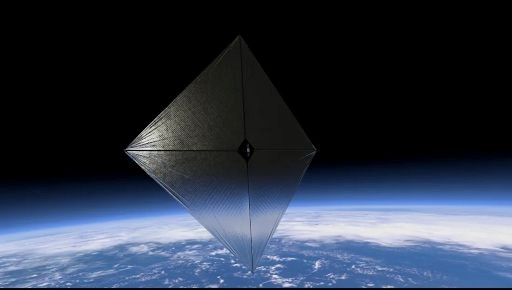
Figure 1. Thin Lightsails with Micro-Perforations.
“This isn’t just about making things smaller; it’s a completely new approach to nanotechnology. We’re designing high-aspect-ratio structures that are thinner than ever before yet extend across massive dimensions,” said Richard Norte, associate professor at TU Delft [1]. Figure 1 shows Thin Lightsails with Micro-Perforations.
Harnessing Laser Power
What sets this lightsail apart is its unique blend of large-scale coverage and nanoscale precision, making it both lightweight and highly reflective.To optimize its structural design, researchers employed a neural topology optimization technique. Additionally, they developed an innovative gas-based etching process to selectively remove material beneath the sail structure, leaving behind an ultra-thin membrane.
“We’ve pioneered a gas-based etching method that allows us to carefully remove material beneath the sails, preserving only the delicate structure. If a sail fails, it’s usually during fabrication—once suspended, they are surprisingly robust. These techniques are uniquely developed at TU Delft,” Norte added.
These advanced lightsails are engineered to utilize laser-driven radiation pressure, enabling them to reach astonishing speeds [2]. This propulsion method presents a significant advantage over conventional chemical rockets, offering the potential for much faster space travel.
According to the researchers, probes equipped with these lightsails could, in theory, reach Mars in a time comparable to international mail delivery.Furthermore, while current rocket technology would take 10,000 years to reach the nearest star, lightsail technology could potentially shorten this journey to just 20 years.
Lightsail Technology Could Also Advance Physics
While interstellar travel with lightsails remains a long-term goal, current research demonstrates their ability to move over minuscule picometer distances.Norte’s team is now conducting experiments to achieve motion over centimeter-scale distances, even against Earth's gravitational pull.
Reference:
- https://interestingengineering.com/space/researchers-develop-scalable-laser-powered-lightsails
- https://singularityhub.com/2024/07/31/this-ultra-thin-lightsail-could-tow-a-tiny-spacecraft-to-the-nearest-stars/
Cite this article:
Keerthana S (2025),Ultra-Thin Lightsails with Micro-Perforations for High-Speed Space Travel, AnaTechMaz,pp.263
Recent Post
-
Web Telescope Provides First Direct Evidence of Carbon Dioxide on an Exoplanet
NASA’s Webb Space Telescope has captured the first direct images of carbon dioxide in an exoplanet beyond...
-

NASA’s SpaceX Crew-9 Splashes Down Off Coast of Florida
NASA astronauts Nick Hague, Suni Williams, Butch Wilmore, and Roscosmos cosmonaut...
-

AI Uncovers a Cosmic Secret, Revealing Hidden Bubbles in the Milky Way
A team of Japanese researchers has leveraged artificial...
-
Google's Inaugural Satellite Designed for Wildfire Detection Is Now in Orbit
The first satellite in a groundbreaking constellation designed to...
-
Scientists Have Captured the Sharpest Image Yet of The Universe’s First Light
The Atacama Cosmology Telescope (ACT) has captured the most...
-
NASA's Cloud Software Helps Businesses Secure Their Spot in Space
Planning space missions is a complex process that requires precise...
-

Scientists Discover an Unusual Gas on Exoplanets, Potentially the Biggest Clue in The Search for Alien Life
Scientists from the University of California, Riverside, propose...
-
Ultra-Thin Lightsails with Micro-Perforations for High-Speed Space Travel
Researchers from TU Delft and Brown University have developed...
-

Andromeda XXXV: A Newly Discovered Galaxy That Defies Expectations
Astronomers have discovered Andromeda XXXV, the faintest...
-

Blood Moon Rising: Witness The Breathtaking Total Lunar Eclipse
On the night of March 13 into the early hours of March 14,...
-

After A Century of Searching, Astronomers Confirm Four Planets Orbiting Barnard’s Star
Astronomers have uncovered strong evidence that Barnard’s...
-
Ancient Asteroid Reveals 4.6-Billion-Year-Old Magnetic Secrets of The Solar System
Around 4.6 billion years ago, the solar system emerged from a dense cloud of interstellar ...
-

Could Black Holes Serve as Gateways to Another Universe? Scientists Explore the Possibility
New research from the University of Sheffield has the potential...
-

When Disks Collide: The Turbulent Origins of Rogue Planets
To explore this concept, scientists from multiple institutions—including the University of Zurich...
-
NASA’s SpaceX Crew-10 Prepared for Launch
NASA and SpaceX are on track to launch the Crew-10 mission...