

Ancient Asteroid Reveals 4.6-Billion-Year-Old Magnetic Secrets of The Solar System
A Distant Magnetic Field
Around 4.6 billion years ago, the solar system emerged from a dense cloud of interstellar gas and dust, collapsing into a swirling disk. Most material coalesced at the center to form the sun, while the rest created a nebula of ionized gas. Scientists believe interactions between the young sun and this ionized disk generated a magnetic field that guided the formation of planets, asteroids, and moons.
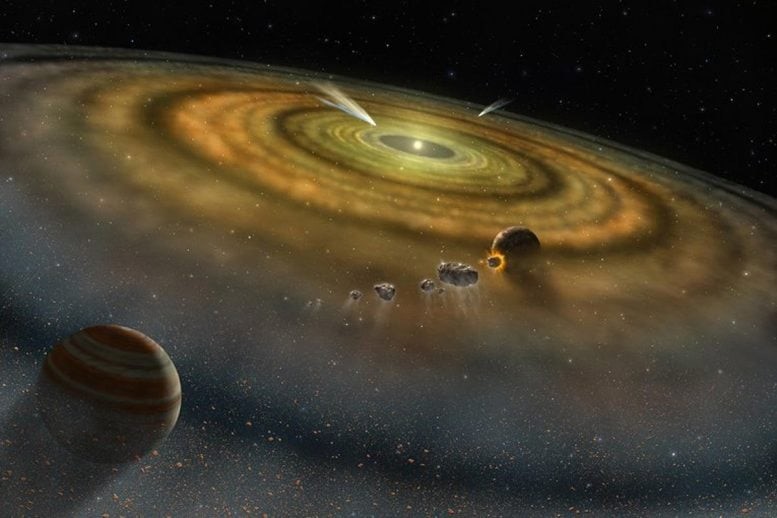
Figure 1. Ancient Asteroid Unveils 4.6-Billion-Year-Old Magnetic Clues.
“This nebular field vanished within 3 to 4 million years, and we remain intrigued by its role in early planetary formation,” says Mansbach. Figure 1 shows Ancient Asteroid Unveils 4.6-Billion-Year-Old Magnetic Clues.
Scientists have established that a magnetic field once permeated the inner solar system, extending up to 7 astronomical units (AU)—roughly the distance to Jupiter. This nebular field, with an intensity between 50 and 200 microtesla, likely played a crucial role in shaping the inner terrestrial planets. Estimates of its strength are based on meteorites that landed on Earth, believed to have originated from the inner nebula.
“But the extent of this magnetic field and its influence on the outer solar system remain uncertain due to a lack of relevant samples,” says Mansbach.
Rewinding the Clock
The team had a rare opportunity to study samples from the outer solar system using Ryugu, an asteroid believed to have formed beyond 7 AU in the early solar system before drifting into Earth's vicinity. In December 2020, JAXA’s Hayabusa 2 mission returned samples of Ryugu, offering scientists a glimpse into a possible relic of the distant past.
Researchers analyzed several millimeter-sized grains from the asteroid, placing them in a magnetometer—an instrument in Weiss’ lab that measures the strength and direction of a sample’s magnetization. They then applied an alternating magnetic field to gradually demagnetize each sample.
Rewinding the Magnetic Record
“Like a tape recorder, we are slowly rewinding the sample’s magnetic record,” Mansbach explains. “We then look for consistent trends that tell us if it formed in a magnetic field.”
The analysis revealed no clear signs of a preserved magnetic field in the Ryugu samples. This suggests that either no nebular field existed in the outer solar system where the asteroid formed, or the field was too weak to be recorded in its grains. If the latter is true, the team estimates the field’s strength would have been no more than 15 microtesla.
To further investigate, the researchers revisited data from previously studied meteorites, particularly “ungrouped carbonaceous chondrites” — meteorites believed to have originated in the outer solar system. Earlier estimates suggested these samples were too young to have formed before the solar nebula dissipated, meaning any recorded magnetism wouldn’t reflect the nebular field. However, Mansbach and his team took a closer look.
“We reanalyzed the ages of these samples and found they are closer to the start of the solar system than previously thought,” Mansbach says. “We believe these samples formed in the outer, distal region. And one of them actually shows a weak magnetic field detection of about 5 microtesla, consistent with an upper limit of 15 microtesla.”
This new evidence, combined with the Ryugu samples, suggests that beyond 7 AU, the outer solar system once had a faint but influential magnetic field—one strong enough to pull in matter from the outskirts, contributing to the formation of outer planets like Jupiter and Neptune.
A Subtle but Significant Force
“When you’re further from the sun, a weak magnetic field goes a long way,” Weiss notes. “It was predicted that it wouldn’t need to be very strong out there, and that’s exactly what we’re seeing.”
To further investigate distal nebular fields, the team plans to analyze samples from another distant asteroid, Bennu, which were delivered to Earth in September 2023 by NASA’s OSIRIS-REx mission.
“Bennu looks a lot like Ryugu, and we’re eagerly awaiting the first results from those samples,” Mansbach says.
Source: SciTECHDaily
Cite this article:
Priyadharshini S (2025), "Ancient Asteroid Reveals 4.6-Billion-Year-Old Magnetic Secrets of The Solar System", AnaTechMaz, pp. 267
Recent Post
-
Web Telescope Provides First Direct Evidence of Carbon Dioxide on an Exoplanet
NASA’s Webb Space Telescope has captured the first direct images of carbon dioxide in an exoplanet beyond...
-

NASA’s SpaceX Crew-9 Splashes Down Off Coast of Florida
NASA astronauts Nick Hague, Suni Williams, Butch Wilmore, and Roscosmos cosmonaut...
-
AI Uncovers a Cosmic Secret, Revealing Hidden Bubbles in the Milky Way
A team of Japanese researchers has leveraged artificial...
-
Google's Inaugural Satellite Designed for Wildfire Detection Is Now in Orbit
The first satellite in a groundbreaking constellation designed to...
-
Scientists Have Captured the Sharpest Image Yet of The Universe’s First Light
The Atacama Cosmology Telescope (ACT) has captured the most...
-
NASA's Cloud Software Helps Businesses Secure Their Spot in Space
Planning space missions is a complex process that requires precise...
-
Scientists Discover an Unusual Gas on Exoplanets, Potentially the Biggest Clue in The Search for Alien Life
Scientists from the University of California, Riverside, propose...
-
Ultra-Thin Lightsails with Micro-Perforations for High-Speed Space Travel
Researchers from TU Delft and Brown University have developed...
-
Andromeda XXXV: A Newly Discovered Galaxy That Defies Expectations
Astronomers have discovered Andromeda XXXV, the faintest...
-
Blood Moon Rising: Witness The Breathtaking Total Lunar Eclipse
On the night of March 13 into the early hours of March 14,...
-
After A Century of Searching, Astronomers Confirm Four Planets Orbiting Barnard’s Star
Astronomers have uncovered strong evidence that Barnard’s...
-
Ancient Asteroid Reveals 4.6-Billion-Year-Old Magnetic Secrets of The Solar System
Around 4.6 billion years ago, the solar system emerged from a dense cloud of interstellar ...
-
Could Black Holes Serve as Gateways to Another Universe? Scientists Explore the Possibility
New research from the University of Sheffield has the potential...
-
When Disks Collide: The Turbulent Origins of Rogue Planets
To explore this concept, scientists from multiple institutions—including the University of Zurich...
-
NASA’s SpaceX Crew-10 Prepared for Launch
NASA and SpaceX are on track to launch the Crew-10 mission...