

Scientists Have Captured the Sharpest Image Yet of The Universe’s First Light
Sharpest View of the Early Universe
The Atacama Cosmology Telescope (ACT) has captured the most detailed images of the cosmic microwave background ever, revealing the universe as it was 380,000 years after the Big Bang. Covering a 10-degree span—twenty times the Moon’s width—the images highlight early density fluctuations and nearby features like the Milky Way, galaxy clusters, and the Sculptor Galaxy. With a resolution five times sharper than Planck’s, these observations capture faint polarization signals and the movement of cosmic light.
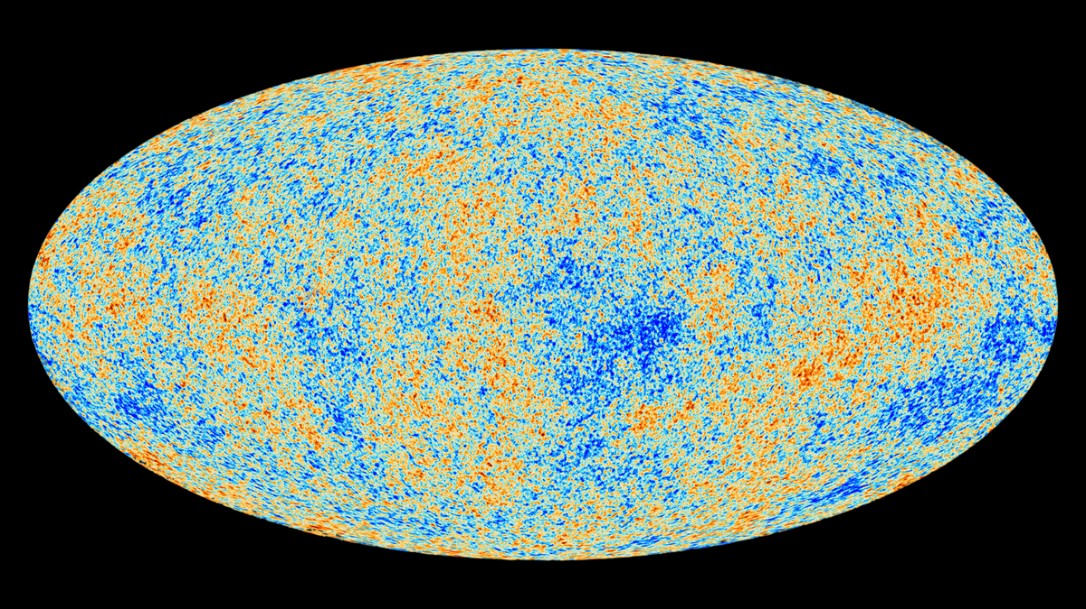
Figure 1. The Universe’s First Light.
Revealing Cosmic Motion
New polarization data from ACT shows how hydrogen and helium gases moved in the early universe. “We can now see not just where things were, but how they moved,” explains Suzanne Staggs, emphasizing that these observations clarify gravity’s role across space. The findings support the standard cosmological model and will be presented at the upcoming American Physical Society conference.Figure 1 shows the universe’s first light.
A Glimpse into the Universe’s Earliest Era
Shortly after the Big Bang, a hot plasma made the universe opaque until the cosmic microwave background emerged as its “baby picture.” ACT’s images reveal subtle variations in gas density and motion over vast scales, laying the groundwork for the stars and galaxies we see today [1]. “Studying this primordial state helps us reconstruct how the universe evolved,” says Jo Dunkley.
Insights into Cosmic Composition and Expansion
The observable universe extends nearly 50 billion light-years in all directions, containing a mass equivalent to 1,900 zetta-suns—about two trillion trillion Suns, according to astrophysicist Erminia Calabrese. Of this, only 100 zetta-suns are normal matter, 500 zetta-suns are dark matter, and 1,300 zetta-suns belong to dark energy. Neutrinos contribute no more than four zetta-suns. Most normal matter is hydrogen (75%) and helium (25%), with heavier elements forming later in stars.
ACT’s latest data refines estimates of the universe’s age (13.8 billion years with 0.1% uncertainty) and expansion. Early cosmic matter collapse created sound waves, making younger universes appear closer.
The Hubble Constant Debate
While CMB data suggests an expansion rate of 67–68 km/s/Mpc, galaxy studies indicate 73–74 km/s/Mpc. ACT’s findings support CMB-based estimates, reaffirming the standard cosmological model. Despite testing alternative theories, researchers found no evidence supporting a higher Hubble constant.
Advancing Cosmic Observations
ACT’s five-year survey used advanced millimeter-wavelength detectors to capture faint cosmic background radiation [2]. “We can observe everything from the Milky Way to distant black hole-hosting galaxies and the early universe,” says Jo Dunkley.
With ACT’s observations concluding in 2022, the focus now shifts to the Simons Observatory. ACT’s newly released data is available via NASA’s LAMBDA archive, with findings submitted for peer review.
Reference:
- https://www.space.com/universe-first-light-cosmic-microwave-background-history-cosmos
- https://scitechdaily.com/scientists-just-snapped-the-clearest-image-of-the-universes-first-light/
Cite this article:
Keerthana S (2025),Scientists Have Captured the Sharpest Image Yet of The Universe’s First Light,AnaTechMaz,pp..260
Recent Post
-
Web Telescope Provides First Direct Evidence of Carbon Dioxide on an Exoplanet
NASA’s Webb Space Telescope has captured the first direct images of carbon dioxide in an exoplanet beyond...
-

NASA’s SpaceX Crew-9 Splashes Down Off Coast of Florida
NASA astronauts Nick Hague, Suni Williams, Butch Wilmore, and Roscosmos cosmonaut...
-
AI Uncovers a Cosmic Secret, Revealing Hidden Bubbles in the Milky Way
A team of Japanese researchers has leveraged artificial...
-
Google's Inaugural Satellite Designed for Wildfire Detection Is Now in Orbit
The first satellite in a groundbreaking constellation designed to...
-
Scientists Have Captured the Sharpest Image Yet of The Universe’s First Light
The Atacama Cosmology Telescope (ACT) has captured the most...
-
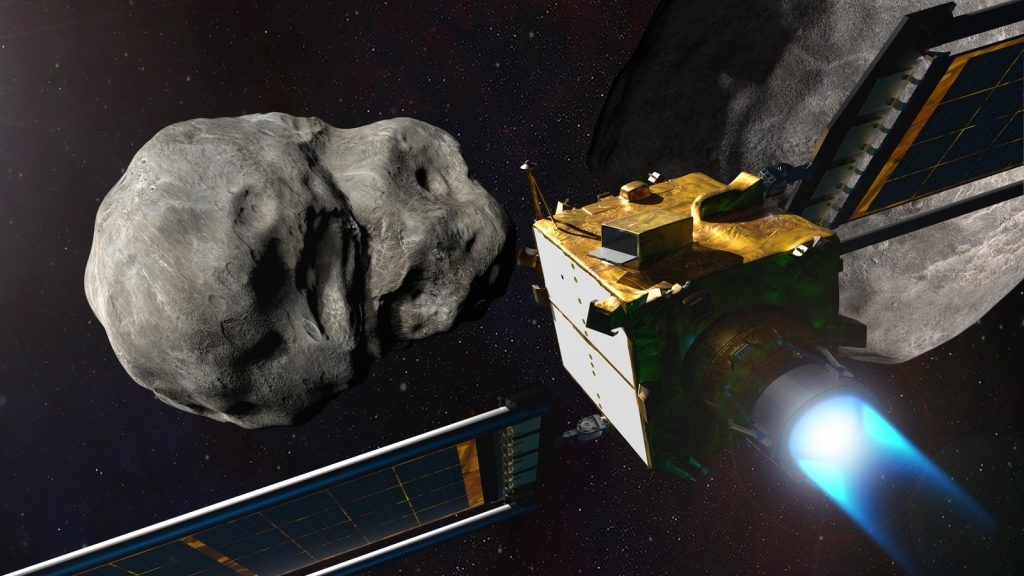
NASA's Cloud Software Helps Businesses Secure Their Spot in Space
Planning space missions is a complex process that requires precise...
-
Scientists Discover an Unusual Gas on Exoplanets, Potentially the Biggest Clue in The Search for Alien Life
Scientists from the University of California, Riverside, propose...
-
Ultra-Thin Lightsails with Micro-Perforations for High-Speed Space Travel
Researchers from TU Delft and Brown University have developed...
-
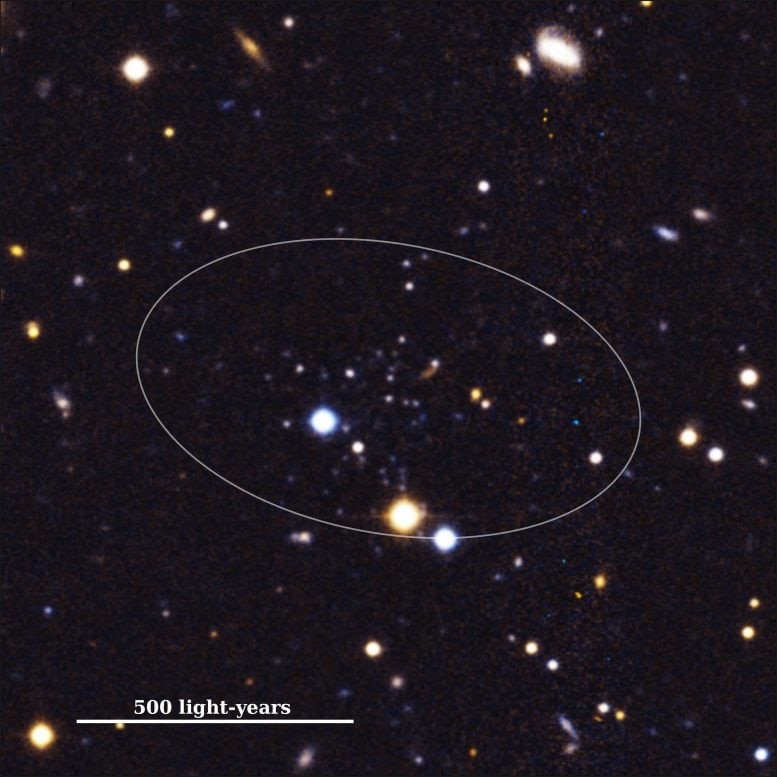
Andromeda XXXV: A Newly Discovered Galaxy That Defies Expectations
Astronomers have discovered Andromeda XXXV, the faintest...
-
Blood Moon Rising: Witness The Breathtaking Total Lunar Eclipse
On the night of March 13 into the early hours of March 14,...
-
After A Century of Searching, Astronomers Confirm Four Planets Orbiting Barnard’s Star
Astronomers have uncovered strong evidence that Barnard’s...
-
Ancient Asteroid Reveals 4.6-Billion-Year-Old Magnetic Secrets of The Solar System
Around 4.6 billion years ago, the solar system emerged from a dense cloud of interstellar ...
-
Could Black Holes Serve as Gateways to Another Universe? Scientists Explore the Possibility
New research from the University of Sheffield has the potential...
-
When Disks Collide: The Turbulent Origins of Rogue Planets
To explore this concept, scientists from multiple institutions—including the University of Zurich...
-
NASA’s SpaceX Crew-10 Prepared for Launch
NASA and SpaceX are on track to launch the Crew-10 mission...