

When Disks Collide: The Turbulent Origins of Rogue Planets
How Colliding Disks Give Rise to PMOs
To explore this concept, scientists from multiple institutions—including the University of Zurich, the University of Hong Kong, the Shanghai Astronomical Observatory, and UC Santa Cruz—conducted high-resolution hydrodynamic simulations. Their models focused on close encounters between circumstellar disks, which are rotating rings of gas and dust surrounding young stars. As these disks interact, their gravitational forces distort the gas, forming elongated structures known as "tidal bridges."
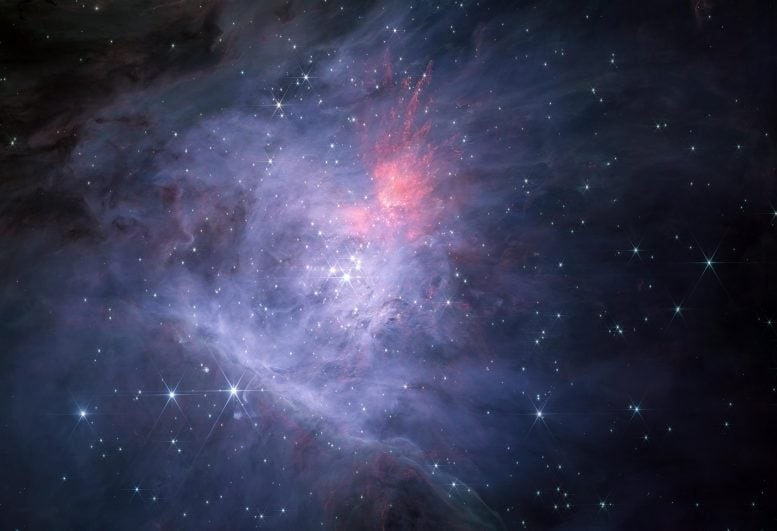
Figure 1. Cosmic Collisions: The Violent Birth of Rogue Planets.
How Free-Floating Worlds Are Born
The simulations revealed that tidal bridges collapse into dense filaments, which then fragment into compact cores. When these filaments reach a critical mass—typically around 10 times that of Jupiter—they give rise to PMOs. The study also found that up to 14% of PMOs form in pairs or small groups, potentially explaining the abundance of PMO binaries in some star clusters. In active star-forming regions like the Trapezium Cluster, where disk encounters are common, this process could produce hundreds of PMOs. Figure 1 shows Cosmic Collisions: The Violent Birth of Rogue Planets.
What Makes PMOs Unique
Unlike ejected planets, PMOs form alongside stars, inheriting material from the outer regions of circumstellar disks and moving in sync with their host cluster. Many PMOs retain gas disks, hinting at the possibility of moon or even planet formation around these wandering worlds.
“This discovery partly reshapes how we view cosmic diversity,” said co-author Lucio Mayer. “PMOs may represent a third class of objects, born not from the raw material of star-forming clouds or through traditional planet formation, but from the gravitational chaos of disk collisions.”
The Chaos of Young Star Systems
- How young star clusters experience close encounters due to their dense environments.
- The significance of gravitational interactions between these disks.
When Disks Collide—The Birth of Tidal Bridges
- Explanation of what happens when two circumstellar disks pass close to each other.
- How gravitational forces distort gas and dust, forming elongated tidal bridges.
- The role of high-resolution hydrodynamic simulations in understanding this process.
Fragmentation and the Birth of Free-Floating Worlds
- How tidal bridges collapse into dense filaments and then break into compact cores.
- The critical mass threshold needed for a PMO to form.
- How this process can generate hundreds of PMOs in star-forming regions like the Trapezium Cluster.
Why PMOs Are Different from Other Planets
- How PMOs differ from ejected planets and traditional planetary bodies.
- Their movement in sync with stars in their birth clusters.
- Evidence that some PMOs retain gas disks, suggesting the potential for moons or even planetary systems.
The Cosmic Impact of PMOs
- What the discovery of PMOs means for our understanding of planetary formation.
- Could PMOs host life-bearing moons?
- Future research and missions aimed at studying rogue planets in greater detail.
Source: SciTECHDaily
Cite this article:
Priyadharshini S (2025),"When Disks Collide: The Turbulent Origins of Rogue Planets", AnaTechMaz, pp. 269
Recent Post
-
Web Telescope Provides First Direct Evidence of Carbon Dioxide on an Exoplanet
NASA’s Webb Space Telescope has captured the first direct images of carbon dioxide in an exoplanet beyond...
-
NASA’s SpaceX Crew-9 Splashes Down Off Coast of Florida
NASA astronauts Nick Hague, Suni Williams, Butch Wilmore, and Roscosmos cosmonaut...
-
AI Uncovers a Cosmic Secret, Revealing Hidden Bubbles in the Milky Way
A team of Japanese researchers has leveraged artificial...
-
Google's Inaugural Satellite Designed for Wildfire Detection Is Now in Orbit
The first satellite in a groundbreaking constellation designed to...
-
Scientists Have Captured the Sharpest Image Yet of The Universe’s First Light
The Atacama Cosmology Telescope (ACT) has captured the most...
-
NASA's Cloud Software Helps Businesses Secure Their Spot in Space
Planning space missions is a complex process that requires precise...
-
Scientists Discover an Unusual Gas on Exoplanets, Potentially the Biggest Clue in The Search for Alien Life
Scientists from the University of California, Riverside, propose...
-
Ultra-Thin Lightsails with Micro-Perforations for High-Speed Space Travel
Researchers from TU Delft and Brown University have developed...
-
Andromeda XXXV: A Newly Discovered Galaxy That Defies Expectations
Astronomers have discovered Andromeda XXXV, the faintest...
-
Blood Moon Rising: Witness The Breathtaking Total Lunar Eclipse
On the night of March 13 into the early hours of March 14,...
-
After A Century of Searching, Astronomers Confirm Four Planets Orbiting Barnard’s Star
Astronomers have uncovered strong evidence that Barnard’s...
-
Ancient Asteroid Reveals 4.6-Billion-Year-Old Magnetic Secrets of The Solar System
Around 4.6 billion years ago, the solar system emerged from a dense cloud of interstellar ...
-
Could Black Holes Serve as Gateways to Another Universe? Scientists Explore the Possibility
New research from the University of Sheffield has the potential...
-
When Disks Collide: The Turbulent Origins of Rogue Planets
To explore this concept, scientists from multiple institutions—including the University of Zurich...
-
NASA’s SpaceX Crew-10 Prepared for Launch
NASA and SpaceX are on track to launch the Crew-10 mission...