

Blood Moon Rising: Witness The Breathtaking Total Lunar Eclipse
On the night of March 13 into the early hours of March 14, 2025, the Moon will pass through Earth's shadow, resulting in a breathtaking total lunar eclipse—the first since November 2022. This phenomenon will cause the Moon to take on a striking reddish hue, often referred to as a "Blood Moon."
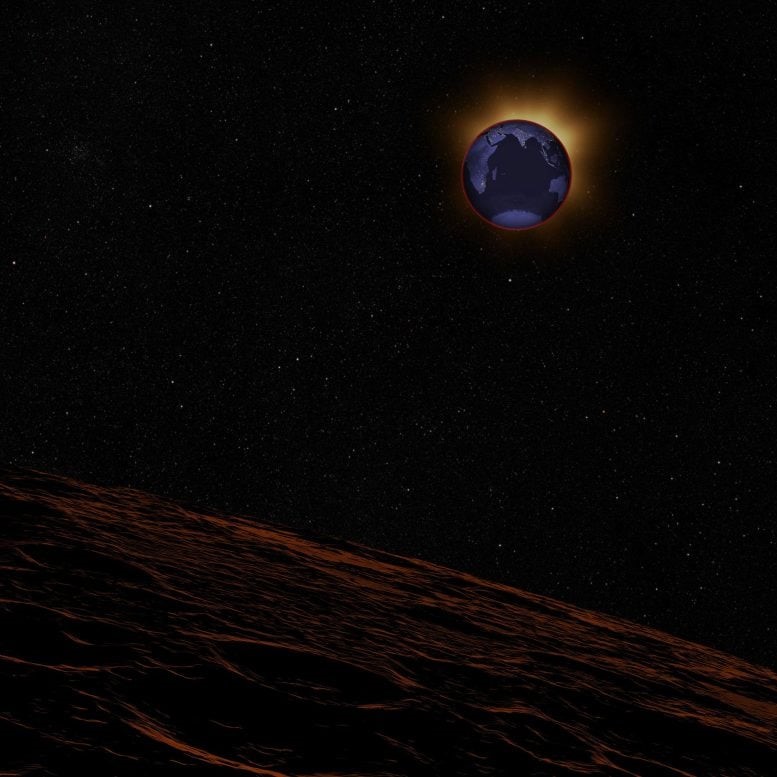
Figure 1. Blood Moon Spectacle: Experience the Stunning Total Lunar Eclipse.
An animation provided by NASA’s Scientific Visualization Studio illustrates the Moon's changing appearance as it moves through the Earth's shadow, along with key timing for various eclipse stages. The imagery is oriented with celestial north at the top, corresponding to the view from mid-northern latitudes. For observers in the Southern Hemisphere, rotating the images 180 degrees will provide the correct perspective. Figure 1 shows Blood Moon Spectacle: Experience the Stunning Total Lunar Eclipse.
What is a Lunar Eclipse?
A lunar eclipse occurs when the Sun, Earth, and Moon align, causing the Moon to pass through Earth's shadow. During a total lunar eclipse, the entire Moon moves into the darkest part of Earth's shadow, known as the umbra. This gives the Moon a striking reddish-orange hue, a phenomenon often called a "Blood Moon."
The red glow occurs because Earth's atmosphere scatters and filters sunlight, allowing only longer wavelengths—red and orange—to reach the Moon. This breathtaking celestial event is a must-see for skywatchers!
How to Watch the Eclipse
No special equipment is needed to enjoy a lunar eclipse—simply step outside and look up! However, using binoculars or a telescope can provide a closer, more detailed view. For the best experience, head to a dark location away from city lights.
This total lunar eclipse will be visible across the Western Hemisphere, providing a breathtaking celestial show for skywatchers in many regions. Don’t miss this chance to witness the Moon’s stunning transformation!
Why Does the Moon Turn Red During a Lunar Eclipse?
The same phenomenon that makes the sky blue and sunsets red also causes the Moon to take on a reddish-orange hue during a lunar eclipse. Although sunlight appears white, it is actually made up of a spectrum of colors, each with different properties.
Blue light has shorter wavelengths and scatters easily in Earth's atmosphere, which is why the sky appears blue during the day. Red and orange light, with longer wavelengths, pass through the atmosphere more directly. During a total lunar eclipse, sunlight refracts around Earth's atmosphere, filtering out the shorter wavelengths and allowing only the red and orange hues to reach the Moon—creating the stunning "Blood Moon" effect.
Why Does the Moon Appear Red During a Lunar Eclipse?
The same scattering effect that makes the sky blue during the day and sunsets red also gives the Moon its reddish hue during a lunar eclipse.
On a clear day, when the Sun is high, blue light is scattered throughout the sky, making it appear blue. However, at sunrise and sunset, sunlight travels through a longer, lower-angle path in Earth's atmosphere. The shorter blue wavelengths scatter away, leaving behind the warmer hues of yellow, orange, and red.
During a total lunar eclipse, the Moon takes on a reddish or orange glow because the sunlight reaching it is filtered through Earth’s atmosphere. The shorter blue wavelengths are scattered, while the longer red and orange wavelengths pass through and illuminate the Moon. It’s as if all the world’s sunrises and sunsets are being projected onto the lunar surface, creating the breathtaking "Blood Moon" effect.
What Else Can I Observe on the Night of the Eclipse?
In addition to the stunning total lunar eclipse, keep an eye on the western sky for a chance to spot Jupiter and Mars. These bright planets will add to the celestial spectacle.
During the eclipse, the Moon will begin its journey in the constellation Leo, positioned beneath the lion’s hind paw. As the night progresses, it will move into Virgo. With the Moon’s brightness reduced by Earth’s shadow, fainter stars and constellations may become more visible than usual—making this a perfect opportunity for stargazing!
Source: SciTECHDaily
Cite this article:
Priyadharshini S (2025), "Blood Moon Rising: Witness The Breathtaking Total Lunar Eclipse", AnaTechMaz, pp. 265
Recent Post
-
Web Telescope Provides First Direct Evidence of Carbon Dioxide on an Exoplanet
NASA’s Webb Space Telescope has captured the first direct images of carbon dioxide in an exoplanet beyond...
-

NASA’s SpaceX Crew-9 Splashes Down Off Coast of Florida
NASA astronauts Nick Hague, Suni Williams, Butch Wilmore, and Roscosmos cosmonaut...
-

AI Uncovers a Cosmic Secret, Revealing Hidden Bubbles in the Milky Way
A team of Japanese researchers has leveraged artificial...
-
Google's Inaugural Satellite Designed for Wildfire Detection Is Now in Orbit
The first satellite in a groundbreaking constellation designed to...
-
Scientists Have Captured the Sharpest Image Yet of The Universe’s First Light
The Atacama Cosmology Telescope (ACT) has captured the most...
-
NASA's Cloud Software Helps Businesses Secure Their Spot in Space
Planning space missions is a complex process that requires precise...
-
Scientists Discover an Unusual Gas on Exoplanets, Potentially the Biggest Clue in The Search for Alien Life
Scientists from the University of California, Riverside, propose...
-
Ultra-Thin Lightsails with Micro-Perforations for High-Speed Space Travel
Researchers from TU Delft and Brown University have developed...
-
Andromeda XXXV: A Newly Discovered Galaxy That Defies Expectations
Astronomers have discovered Andromeda XXXV, the faintest...
-
Blood Moon Rising: Witness The Breathtaking Total Lunar Eclipse
On the night of March 13 into the early hours of March 14,...
-
After A Century of Searching, Astronomers Confirm Four Planets Orbiting Barnard’s Star
Astronomers have uncovered strong evidence that Barnard’s...
-
Ancient Asteroid Reveals 4.6-Billion-Year-Old Magnetic Secrets of The Solar System
Around 4.6 billion years ago, the solar system emerged from a dense cloud of interstellar ...
-
Could Black Holes Serve as Gateways to Another Universe? Scientists Explore the Possibility
New research from the University of Sheffield has the potential...
-
When Disks Collide: The Turbulent Origins of Rogue Planets
To explore this concept, scientists from multiple institutions—including the University of Zurich...
-
NASA’s SpaceX Crew-10 Prepared for Launch
NASA and SpaceX are on track to launch the Crew-10 mission...