

Scientists Discover an Unusual Gas on Exoplanets, Potentially the Biggest Clue in The Search for Alien Life
Could Alien Life Exist on Planets Unlike Earth? A New Method May Provide Answers
Scientists from the University of California, Riverside, propose that certain gases in the atmospheres of exoplanets could serve as key indicators of extraterrestrial life.These distant planets, located beyond our solar system, can be studied using the James Webb Space Telescope (JWST), the most advanced telescope in space.
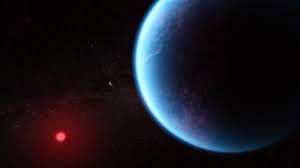
Figure 1. Major Clue in the Search for Alien Life.
Searching for Life Beyond Earth
A group of exoplanets known as Hycean planets—characterized by vast oceans and thick, hydrogen-rich atmospheres—are prime candidates for this research. Though uninhabitable for humans, these planets might provide a suitable environment for microbial life.One promising biosignature is methyl halides, a group of gases containing carbon, hydrogen, and halogen atoms like chlorine or bromine. On Earth, these gases are mainly produced by bacteria, marine algae, fungi, and certain plants.Figure 1 shows Major Clue in the Search for Alien Life.
Detecting biosignatures on Earth-like exoplanets is challenging due to their small size and faint signals. However, larger Hycean planets orbiting small red stars offer a clearer opportunity for detection [1]."Unlike Earth-like planets, where atmospheric noise and telescope limitations make biosignatures difficult to detect, Hycean planets provide a much stronger signal," explained co-author Eddie Schwieterman.
A Faster and More Cost-Effective Search
The researchers believe methyl halides could be easier to detect than other biosignatures like oxygen or methane."Oxygen is currently difficult or even impossible to detect on an Earth-like planet. But on Hycean worlds, methyl halides present a unique opportunity for discovery with existing technology," said lead author Michaela Leung.
In fact, spotting these gases with the JWST could take as little as 13 hours, making the search more efficient and cost-effective compared to identifying other biosignature gases.
A Chemical Clue in Exoplanet Atmospheres
On Earth, methyl halides exist only in trace amounts. However, on Hycean planets, their atmospheric composition and proximity to small red stars could allow these gases to accumulate at much higher concentrations—potentially detectable from light-years away.Microbes in these environments would likely be anaerobic, but their metabolic processes could still produce detectable amounts of these gases.
Previous research has explored other biosignature gases, such as dimethyl sulfide, but methyl halides stand out due to their strong infrared absorption properties and the likelihood of their buildup in hydrogen-rich atmospheres [2]. If methyl halides were detected on multiple planets, it could suggest that microbial life is widespread across the universe.
Looking ahead, researchers plan to study other planetary environments and gases, using Earth's extreme locations, such as the Salton Sea, as models.Although directly sampling exoplanet atmospheres remains beyond our current reach, advancements in telescope technology could bring humanity closer to uncovering extraterrestrial life.
Reference:
- https://interestingengineering.com/space/exoplanets-gas-reveals-alien-life
- https://www.nationalgeographic.com/premium/article/hunt-for-alien-life-exoplanet-just-became-top-suspect
Cite this article:
Keerthana S (2025),Scientists Discover an Unusual Gas on Exoplanets, Potentially the Biggest Clue in The Search for Alien Life, AnaTechMaz,pp.262
Recent Post
-
Web Telescope Provides First Direct Evidence of Carbon Dioxide on an Exoplanet
NASA’s Webb Space Telescope has captured the first direct images of carbon dioxide in an exoplanet beyond...
-

NASA’s SpaceX Crew-9 Splashes Down Off Coast of Florida
NASA astronauts Nick Hague, Suni Williams, Butch Wilmore, and Roscosmos cosmonaut...
-
AI Uncovers a Cosmic Secret, Revealing Hidden Bubbles in the Milky Way
A team of Japanese researchers has leveraged artificial...
-
Google's Inaugural Satellite Designed for Wildfire Detection Is Now in Orbit
The first satellite in a groundbreaking constellation designed to...
-
Scientists Have Captured the Sharpest Image Yet of The Universe’s First Light
The Atacama Cosmology Telescope (ACT) has captured the most...
-
NASA's Cloud Software Helps Businesses Secure Their Spot in Space
Planning space missions is a complex process that requires precise...
-
Scientists Discover an Unusual Gas on Exoplanets, Potentially the Biggest Clue in The Search for Alien Life
Scientists from the University of California, Riverside, propose...
-
Ultra-Thin Lightsails with Micro-Perforations for High-Speed Space Travel
Researchers from TU Delft and Brown University have developed...
-
Andromeda XXXV: A Newly Discovered Galaxy That Defies Expectations
Astronomers have discovered Andromeda XXXV, the faintest...
-
Blood Moon Rising: Witness The Breathtaking Total Lunar Eclipse
On the night of March 13 into the early hours of March 14,...
-
After A Century of Searching, Astronomers Confirm Four Planets Orbiting Barnard’s Star
Astronomers have uncovered strong evidence that Barnard’s...
-
Ancient Asteroid Reveals 4.6-Billion-Year-Old Magnetic Secrets of The Solar System
Around 4.6 billion years ago, the solar system emerged from a dense cloud of interstellar ...
-
Could Black Holes Serve as Gateways to Another Universe? Scientists Explore the Possibility
New research from the University of Sheffield has the potential...
-
When Disks Collide: The Turbulent Origins of Rogue Planets
To explore this concept, scientists from multiple institutions—including the University of Zurich...
-
NASA’s SpaceX Crew-10 Prepared for Launch
NASA and SpaceX are on track to launch the Crew-10 mission...