

After A Century of Searching, Astronomers Confirm Four Planets Orbiting Barnard’s Star
Barnard’s Star Hosts Newly Discovered Planets
Astronomers have uncovered strong evidence that Barnard’s Star, the second-closest star system to Earth, harbors not just one but four small planets.
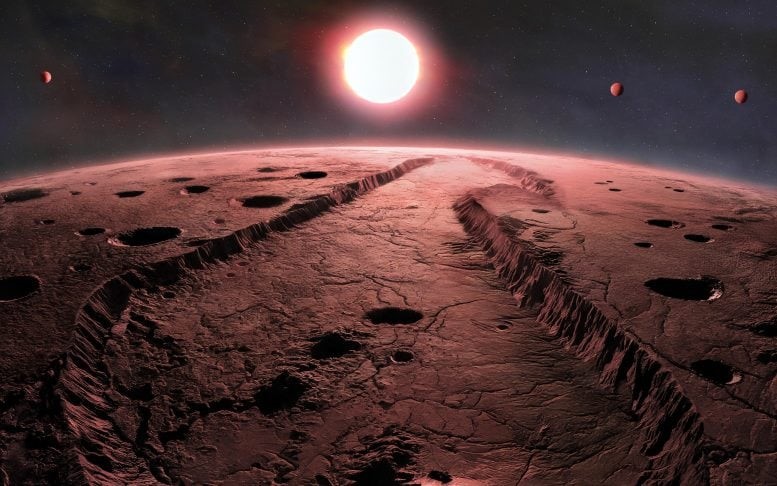
Figure 1. Four Planets Confirmed Around Barnard’s Star After a Century of Searching.
Each of these planets has a mass ranging from 20% to 30% of Earth’s and orbits very close to its star, completing a full orbit within just a few days. Due to their proximity, they are likely too hot to sustain life. However, their discovery represents a major breakthrough in detecting smaller planets around nearby stars. Figure 1 shows Four Planets Confirmed Around Barnard’s Star After a Century of Searching.
The Century-Long Search for Planets
For over a hundred years, astronomers have studied Barnard’s Star in the hopes of discovering planets orbiting it. First identified by E. E. Barnard at Yerkes Observatory in 1916, this star is the closest single-star system to Earth. In contrast, our nearest stellar neighbor, Proxima Centauri, is part of a three-star system, which complicates planet formation and orbital dynamics.
Barnard’s Star belongs to a class of stars known as M dwarfs, which are now understood to be among the most abundant in the universe. Scientists are eager to learn more about the types of planets these stars host.
However, detecting planets around distant stars is a challenge. These planets are far too small to be directly observed against the overwhelming brightness of their stars, even with the most advanced telescopes. As a result, astronomers have had to develop innovative methods to find them.
This animation illustrates the orbital dynamics of the Barnard’s Star planetary system. For over a century, astronomers have studied Barnard’s Star in search of planetary companions. First identified by E. E. Barnard at Yerkes Observatory in 1916, it remains the closest known single-star system to Earth.
Now, with the help of the Gemini North telescope—part of the International Gemini Observatory, co-funded by the U.S. National Science Foundation and operated by NSF NOIRLab—astronomers have confirmed the existence of four sub-Earth exoplanets orbiting the star. Among them is the least massive exoplanet ever detected using the radial velocity technique, setting a new benchmark for discovering smaller planets around nearby stars.
Hunting Planets with Star Wobbles
One such search was led by UChicago professor Jacob Bean and his team, who developed and installed the MAROON-X instrument. Mounted on the Gemini Telescope atop a Hawaiian mountain, MAROON-X is specifically designed to detect distant planets.
Since stars vastly outshine their planets, astronomers focus on the effects planets have on their stars—similar to observing wind by watching a flag’s movement. MAROON-X detects one such effect: the gravitational tug of orbiting planets, which causes the star to wobble slightly. By measuring subtle color shifts in the star’s light with extreme precision, the instrument can determine the number and masses of planets responsible for these movements.
Basant, Bean, and their team carefully calibrated and analyzed data collected over 112 nights spanning three years. Their observations provided strong evidence for three planets orbiting Barnard’s Star. When they combined their findings with data from the ESPRESSO instrument—used in a separate study on the Very Large Telescope in Chile—they found compelling evidence for a fourth planet.
More Than Just Gas Giants
Scientists believe these newly discovered planets are likely rocky, rather than gas giants like Jupiter. Determining this with absolute certainty is challenging, however, because their orbits do not align in a way that allows astronomers to observe them passing in front of their star—a common method used to analyze a planet’s composition. Instead, researchers rely on data from similar planets around other stars to make informed estimates about their makeup.
Additionally, the team was able to rule out, with a high degree of confidence, the presence of other planets within Barnard’s Star’s habitable zone.
An Exciting Future for Discovery
These newly discovered planets are among the smallest ever detected using this technique, marking a significant step toward identifying more and more planets across the universe.
Most rocky exoplanets found so far are much larger than Earth and exhibit similar characteristics throughout the galaxy. However, scientists suspect that smaller planets could have a much wider range of compositions. As more of these planets are discovered, researchers can gain deeper insights into how they form—and what factors might make a planet capable of supporting life.
The Thrill of the Unknown
Beyond the scientific implications, the discovery itself was an exhilarating experience for the researchers.
“We worked on this data really intensely at the end of December, and I was thinking about it all the time,” said Jacob Bean. “It was like, suddenly we knew something that no one else did about the universe. We just couldn’t wait to share this secret.”
He reflected on the broader significance of the find: “A lot of what we do can feel incremental, making it hard to see the bigger picture. But this discovery is something humanity will hopefully know forever. That sense of uncovering something truly new is incredible.”
Source: SciTECHDaily
Cite this article:
Priyadharshini S (2025), "After A Century of Searching, Astronomers Confirm Four Planets Orbiting Barnard’s Star", AnaTechMaz, pp. 266
Recent Post
-
Web Telescope Provides First Direct Evidence of Carbon Dioxide on an Exoplanet
NASA’s Webb Space Telescope has captured the first direct images of carbon dioxide in an exoplanet beyond...
-

NASA’s SpaceX Crew-9 Splashes Down Off Coast of Florida
NASA astronauts Nick Hague, Suni Williams, Butch Wilmore, and Roscosmos cosmonaut...
-
AI Uncovers a Cosmic Secret, Revealing Hidden Bubbles in the Milky Way
A team of Japanese researchers has leveraged artificial...
-
Google's Inaugural Satellite Designed for Wildfire Detection Is Now in Orbit
The first satellite in a groundbreaking constellation designed to...
-
Scientists Have Captured the Sharpest Image Yet of The Universe’s First Light
The Atacama Cosmology Telescope (ACT) has captured the most...
-
NASA's Cloud Software Helps Businesses Secure Their Spot in Space
Planning space missions is a complex process that requires precise...
-
Scientists Discover an Unusual Gas on Exoplanets, Potentially the Biggest Clue in The Search for Alien Life
Scientists from the University of California, Riverside, propose...
-
Ultra-Thin Lightsails with Micro-Perforations for High-Speed Space Travel
Researchers from TU Delft and Brown University have developed...
-
Andromeda XXXV: A Newly Discovered Galaxy That Defies Expectations
Astronomers have discovered Andromeda XXXV, the faintest...
-
Blood Moon Rising: Witness The Breathtaking Total Lunar Eclipse
On the night of March 13 into the early hours of March 14,...
-
After A Century of Searching, Astronomers Confirm Four Planets Orbiting Barnard’s Star
Astronomers have uncovered strong evidence that Barnard’s...
-
Ancient Asteroid Reveals 4.6-Billion-Year-Old Magnetic Secrets of The Solar System
Around 4.6 billion years ago, the solar system emerged from a dense cloud of interstellar ...
-
Could Black Holes Serve as Gateways to Another Universe? Scientists Explore the Possibility
New research from the University of Sheffield has the potential...
-
When Disks Collide: The Turbulent Origins of Rogue Planets
To explore this concept, scientists from multiple institutions—including the University of Zurich...
-
NASA’s SpaceX Crew-10 Prepared for Launch
NASA and SpaceX are on track to launch the Crew-10 mission...