

Air-to-Water Material Offers a New Source of Clean Drinking Water
As climate change intensifies water shortages across many parts of the world, scientists are exploring innovative ways to secure safe drinking water. Researchers at Kiel University in Germany have developed a highly porous, sponge-like material that can capture moisture directly from the air and convert it into clean drinking water. More importantly, the team has demonstrated that the material can now be manufactured on a much larger scale, bringing the technology closer to practical, real-world use.
The breakthrough centers on a class of advanced materials known as metal-organic frameworks (MOFs), which contain an intricate network of microscopic pores capable of absorbing and storing large amounts of water vapor. The researchers focused on a MOF called CAU-10-H, originally developed at Kiel University. Even in dry conditions with humidity as low as 18 percent, the material efficiently captures moisture from the atmosphere and releases it when gently heated to about 70°C (158°F), allowing the process to be repeated multiple times.
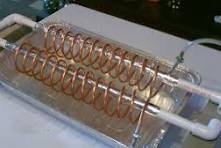
Figure 1. Air-to-Water Material.
To further improve performance, the scientists combined the MOF with conductive carbon materials, enabling it to be heated efficiently using electricity or solar energy. This enhancement accelerates water release and shortens the operating cycle, making the system more practical for continuous water harvesting.
Laboratory tests produced encouraging results. The material absorbed up to 0.17 grams of water per gram of material, allowing one kilogram (2.2 pounds) to generate as much as 1.8 liters (60.8 ounces) of drinking water per day under dry atmospheric conditions. Such performance makes the technology especially promising for arid and water-scarce regions where conventional water sources are limited. Figure 1 shows Air-to-Water Material.
Beyond providing clean water, the researchers discovered another valuable application. The moisture-absorbing material significantly improves adsorption-based cooling systems, delivering up to three times the cooling performance of traditional silica gel. Future cooling technologies could even utilize waste heat from facilities such as data centers, factories, or bakeries to power the process, reducing energy consumption while improving cooling efficiency.
The team has also overcome one of the biggest barriers to commercialization—large-scale manufacturing. Production has increased from small laboratory batches to approximately 30 kilograms (66 pounds), nearly 60 times larger than previous quantities. A techno-economic assessment further suggests the material can be manufactured economically, making widespread deployment increasingly feasible.
By combining efficient atmospheric water harvesting with energy-saving cooling technology, this next-generation material offers a sustainable solution to two growing global challenges: access to clean drinking water and the demand for more efficient climate-control systems. As production continues to scale, the innovation could become an important tool for supporting communities facing water scarcity while advancing environmentally friendly cooling technologies.
References
- https://interestingengineering.com/innovation/new-material-pulls-drinking-water-from-air
Cite this article:
Keerthana S (2026), Air-to-Water Material Offers a New Source of Clean Drinking Water, AnaTechMaz, pp.441
Recent Post
-
Grain-Sized Crystal Challenges Conventional Physics with Magnetic Field Breakthrough
Scientists at Institute of Science and Technology Austria have....
-

Ultra-Fast Flexible Transistors Reach 100 GHz Milestone
Researchers have achieved a major breakthrough in flexible electronics by developing carbon....
-

Ancient Chemical Method Inspires Breakthrough in Advanced Glass Engineering
Scientists have revived a centuries-old glassmaking principle to...
-
Cracking the Code of High-Temperature Superconductors
For decades, the mystery of high-temperature superconductivity has challenged some of the..
-

Unlocking the Atomic Secrets of Record-Breaking Superconductors
The quest for lossless electricity transmission has taken a major step forward. An international...
-
New Artificial Leaf Uses Sunlight to Turn CO₂ into Clean Methanol
Researchers at Yale University have developed a solar-powered artificial leaf capable of converting carbon ...
-
Solidion Unveils Extreme-Climate Battery Platform for Future Space Missions
Battery manufacturer Solidion Technology has introduced a...
-
Revolutionary Mass Spectrometry System Detects Billions of Molecules at Once
Mass spectrometry has long been one of the most important tools...
-
Recycling for Technology: New Partnership Extracts Semiconductor Resources from Aluminum Scrap
A new partnership between ...
-
Smart Thermal Tags Offer a Breakthrough in Plastic Waste Sorting
Plastic waste remains one of the world's most pressing...
-

Physicists Detect Unusual Quantum Rotation Phenomenon That Challenges Intuition
Researchers have found that atomic-scale rotations inside a crystal....
-

Scientists Discover Low-Cost Route to Clean Hydrogen Production
Researchers at the University of Birmingham have developed a new technique for producing hydrogen...
-
Scientists Harvest Electricity from Moisture in the Air Using Common Materials
A study published in Nano Energy reports the development of a....
-

Scientists Solve Long-Standing Mystery of High-Temperature Superconductors
New experimental measurements of nickelate superconductors...
-

Breakthrough Discovery Unveils Previously Hidden State of Matter
Scientists have achieved a major breakthrough by capturing a long-theorized hidden state of....