

Cracking the Code of High-Temperature Superconductors
Scientists Unravel a Key Secret of High-Temperature Superconductors
For decades, the mystery of high-temperature superconductivity has challenged some of the brightest minds in physics. Now, a team of Chinese researchers has taken a significant step toward solving this puzzle by uncovering new clues about how high-temperature nickel-based superconductors, known as nickelates, function at the atomic level.
Led by Professor Junfeng He of the University of Science and Technology of China (USTC), in collaboration with researchers from the Southern University of Science and Technology (SUSTech), the study provides fresh insights into two of the most important questions surrounding high-temperature superconductivity: the nature of the superconducting gap and the mechanism that allows electrons to pair and move without resistance.
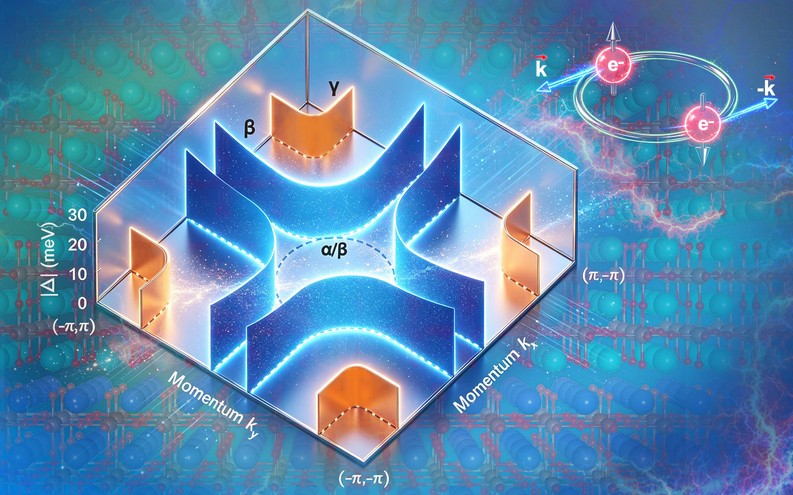
Figure 1. High-Temperature Superconductors.
A New Clue in the Search for Superconductivity
Since its discovery in 1911, superconductivity has fascinated scientists because of its ability to conduct electricity with zero resistance. While copper-based and iron-based superconductors have expanded our understanding of the phenomenon, the exact mechanism behind high-temperature superconductivity remains elusive. Figure 1 shows high-temperature superconductors.
Nickelate superconductors have emerged as a promising new platform for investigating this long-standing mystery. Using advanced angle-resolved photoemission spectroscopy (ARPES), the researchers examined the electronic structure of nickelate thin films and found that the superconducting gap remains intact across momentum space, with no detectable nodes. This observation supports an s-wave (s±) superconducting gap symmetry, providing an important piece of the superconductivity puzzle.
Revealing the Electron Pairing Mechanism
Another major challenge in superconductivity research is understanding how electrons form pairs, a process essential for resistance-free electrical flow. The team detected a characteristic “kink” in the electronic dispersion approximately 70 millielectronvolts below the Fermi level. This feature is widely regarded as a signature of electron-boson coupling, suggesting that interactions between electrons and bosonic excitations may play a key role in creating superconducting pairs. The discovery offers valuable evidence that could help scientists develop a more complete theory of high-temperature superconductivity and guide the design of future superconducting materials.
Overcoming Experimental Challenges
The breakthrough was made possible through close collaboration between the two institutions [1]. Researchers at SUS Tech were responsible for growing the delicate nickelate thin films, while the USTC team carried out the high-precision electronic structure measurements.
To preserve the samples during transportation, the scientists developed an innovative liquid-nitrogen-cooled ultra-high-vacuum transfer system. This technique prevented oxygen loss and enabled the fragile samples to be safely transported from Shenzhen to Hefei, ensuring the success of the experiments.
A Step Toward Solving a Century-Old Mystery
While many questions remain, the findings provide some of the strongest evidence yet regarding the superconducting behavior of nickelates. By clarifying both gap symmetry and electron pairing interactions, the study brings researchers closer to understanding one of condensed matter physics’ greatest unsolved problems—and moves the dream of practical high-temperature superconductors one step nearer to reality.
References
- https://scitechdaily.com/scientists-crack-key-mystery-behind-high-temperature-superconductors/
Cite this article:
Keerthana S (2026), Cracking the Code of High-Temperature Superconductors, AnaTechMaz, pp.394
Recent Post
-
Grain-Sized Crystal Challenges Conventional Physics with Magnetic Field Breakthrough
Scientists at Institute of Science and Technology Austria have....
-

Ultra-Fast Flexible Transistors Reach 100 GHz Milestone
Researchers have achieved a major breakthrough in flexible electronics by developing carbon....
-

Ancient Chemical Method Inspires Breakthrough in Advanced Glass Engineering
Scientists have revived a centuries-old glassmaking principle to...
-
Cracking the Code of High-Temperature Superconductors
For decades, the mystery of high-temperature superconductivity has challenged some of the..
-

Unlocking the Atomic Secrets of Record-Breaking Superconductors
The quest for lossless electricity transmission has taken a major step forward. An international...
-
New Artificial Leaf Uses Sunlight to Turn CO₂ into Clean Methanol
Researchers at Yale University have developed a solar-powered artificial leaf capable of converting carbon ...
-
Solidion Unveils Extreme-Climate Battery Platform for Future Space Missions
Battery manufacturer Solidion Technology has introduced a...
-
Revolutionary Mass Spectrometry System Detects Billions of Molecules at Once
Mass spectrometry has long been one of the most important tools...
-
Recycling for Technology: New Partnership Extracts Semiconductor Resources from Aluminum Scrap
A new partnership between ...
-

Smart Thermal Tags Offer a Breakthrough in Plastic Waste Sorting
Plastic waste remains one of the world's most pressing...
-

Physicists Detect Unusual Quantum Rotation Phenomenon That Challenges Intuition
Researchers have found that atomic-scale rotations inside a crystal....
-

Scientists Discover Low-Cost Route to Clean Hydrogen Production
Researchers at the University of Birmingham have developed a new technique for producing hydrogen...
-
Scientists Harvest Electricity from Moisture in the Air Using Common Materials
A study published in Nano Energy reports the development of a....
-

Scientists Solve Long-Standing Mystery of High-Temperature Superconductors
New experimental measurements of nickelate superconductors...
-
Breakthrough Discovery Unveils Previously Hidden State of Matter
Scientists have achieved a major breakthrough by capturing a long-theorized hidden state of....