

Recycling for Technology: New Partnership Extracts Semiconductor Resources from Aluminum Scrap
A new partnership between Ames National Laboratory and Indium Corporation aims to tackle one of the United States’ most pressing supply-chain challenges: securing a domestic source of gallium, a critical material used in semiconductors, LED lighting, telecommunications, and advanced defense technologies.
By combining artificial intelligence, automated chemistry, and industrial-scale testing, the collaboration seeks to transform aluminum refining waste into a valuable source of gallium while dramatically reducing the time required to develop new extraction technologies.
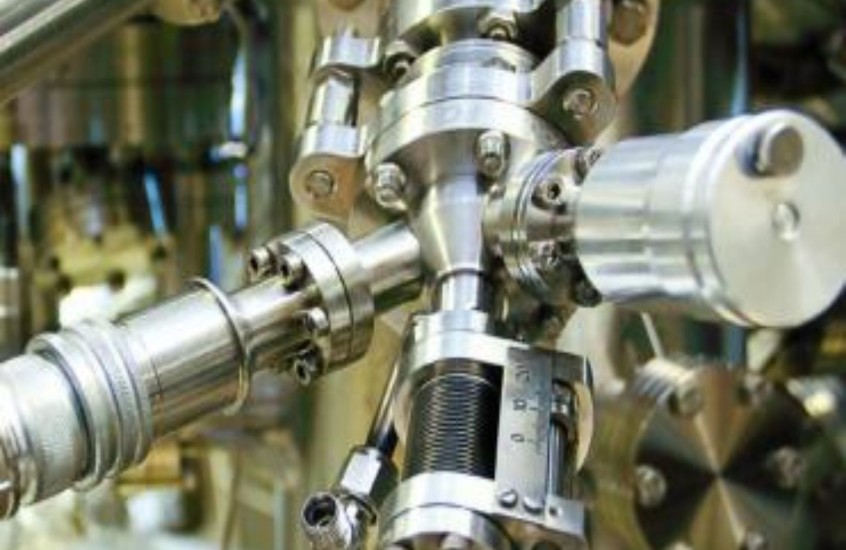
Figure 1. Semiconductor.
Unlocking a Critical Material
Gallium plays a vital role in modern electronics, yet the United States currently lacks domestic production and relies heavily on foreign suppliers. Rather than mining gallium directly, producers typically recover it as a byproduct of aluminum refining. Figure 1 shows semiconductor.
During the Bayer process, which converts bauxite ore into alumina, small amounts of gallium remain trapped in the waste stream. Although concentrations are extremely low—around 100 parts per million—researchers believe these overlooked materials could provide a significant domestic resource if extraction methods become more efficient.
The new project will focus on recovering gallium from these industrial waste streams using advanced liquid-processing techniques and specially engineered resin materials capable of selectively capturing the metal.
Using AI to Accelerate Discovery
Traditionally, developing new industrial materials can take anywhere from 10 to 20 years. Researchers at Ames National Laboratory hope to dramatically shorten that timeline through the use of robotic laboratories and artificial intelligence.
Automated systems can perform hundreds of experiments in rapid succession, generating large volumes of high-quality data. AI models then analyze the results, identify promising patterns, and recommend the next generation of material designs.
According to the research team, this data-driven approach could reduce development cycles from decades to as little as two or three years, enabling faster deployment of commercial-scale solutions.
Designing the Next Generation of Extraction Materials
A key objective of the collaboration is the development of highly selective, heat-resistant resin materials capable of efficiently separating gallium from complex industrial solutions.
These specialized polymers act like molecular filters, concentrating valuable metals while leaving unwanted materials behind. By improving both selectivity and durability, researchers hope to create a process that is practical for large-scale industrial use.
The project combines Ames Lab’s expertise in chemical separations, catalysis, automation, and AI with Indium Corporation’s deep experience in materials manufacturing and commercialization.
Building a Domestic Gallium Supply Chain
The initiative will be conducted under a Cooperative Research and Development Agreement (CRADA). Indium Corporation will provide industrial testing platforms and economic modeling tools to evaluate commercial viability, while Ames Lab will develop and produce candidate materials for testing [1]. Initial production will occur at laboratory scale, with future expansion planned toward kilogram- and eventually ton-scale manufacturing.
Beyond supplying critical materials for semiconductor production, the project could create new value from existing industrial waste streams while strengthening U.S. technological independence.
As demand for advanced electronics continues to grow, the partnership represents a strategic effort to transform an overlooked byproduct of aluminum refining into a reliable domestic source of one of the world's most important semiconductor materials.
References
- https://interestingengineering.com/innovation/us-to-extract-critical-semiconductor-materials
Cite this article:
Keerthana S (2026), Recycling for Technology: New Partnership Extracts Semiconductor Resources from Aluminum Scrap, AnaTechMaz, pp.399
Recent Post
-
Grain-Sized Crystal Challenges Conventional Physics with Magnetic Field Breakthrough
Scientists at Institute of Science and Technology Austria have....
-

Ultra-Fast Flexible Transistors Reach 100 GHz Milestone
Researchers have achieved a major breakthrough in flexible electronics by developing carbon....
-

Ancient Chemical Method Inspires Breakthrough in Advanced Glass Engineering
Scientists have revived a centuries-old glassmaking principle to...
-
Cracking the Code of High-Temperature Superconductors
For decades, the mystery of high-temperature superconductivity has challenged some of the..
-

Unlocking the Atomic Secrets of Record-Breaking Superconductors
The quest for lossless electricity transmission has taken a major step forward. An international...
-
New Artificial Leaf Uses Sunlight to Turn CO₂ into Clean Methanol
Researchers at Yale University have developed a solar-powered artificial leaf capable of converting carbon ...
-
Solidion Unveils Extreme-Climate Battery Platform for Future Space Missions
Battery manufacturer Solidion Technology has introduced a...
-
Revolutionary Mass Spectrometry System Detects Billions of Molecules at Once
Mass spectrometry has long been one of the most important tools...
-
Recycling for Technology: New Partnership Extracts Semiconductor Resources from Aluminum Scrap
A new partnership between ...
-

Smart Thermal Tags Offer a Breakthrough in Plastic Waste Sorting
Plastic waste remains one of the world's most pressing...
-

Physicists Detect Unusual Quantum Rotation Phenomenon That Challenges Intuition
Researchers have found that atomic-scale rotations inside a crystal....
-

Scientists Discover Low-Cost Route to Clean Hydrogen Production
Researchers at the University of Birmingham have developed a new technique for producing hydrogen...
-
Scientists Harvest Electricity from Moisture in the Air Using Common Materials
A study published in Nano Energy reports the development of a....
-

Scientists Solve Long-Standing Mystery of High-Temperature Superconductors
New experimental measurements of nickelate superconductors...
-

Breakthrough Discovery Unveils Previously Hidden State of Matter
Scientists have achieved a major breakthrough by capturing a long-theorized hidden state of....