

Ultra-Fast Flexible Transistors Reach 100 GHz Milestone
Researchers have achieved a major breakthrough in flexible electronics by developing carbon nanotube-based radio-frequency transistors capable of operating above 100 GHz. The advance could play a key role in enabling future 6G wireless communication systems, which require ultrafast, energy-efficient, and flexible electronic components.
Traditional flexible transistors have struggled to reach extremely high frequencies because flexible materials often trap heat, limiting performance and efficiency. To overcome this challenge, scientists designed transistors using carefully aligned carbon nanotube (CNT) arrays on flexible substrates. Carbon nanotubes are known for their exceptional electrical conductivity, thermal performance, and mechanical flexibility, making them ideal for next-generation electronics.

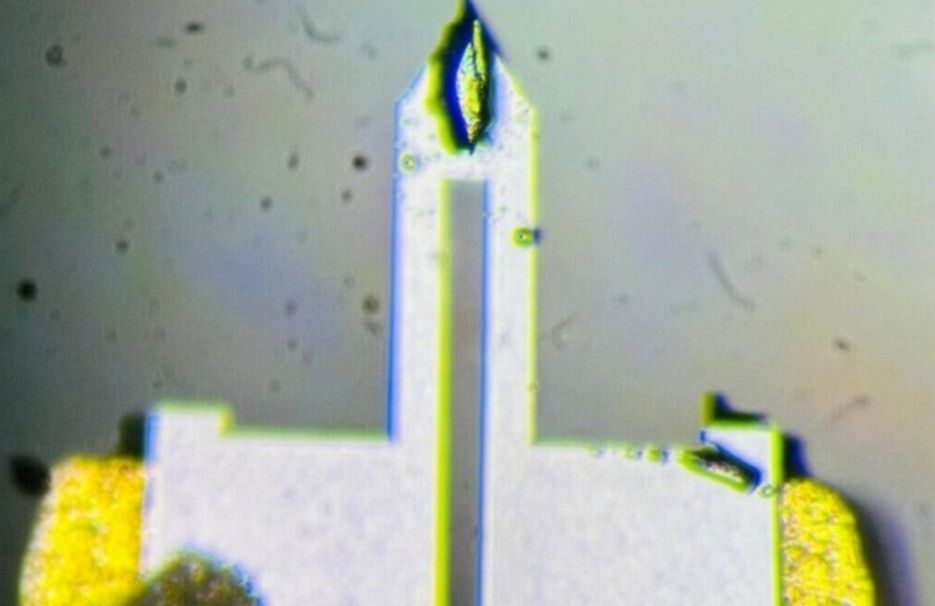
Figure 1. Transistors.
The research team also introduced an advanced electrothermal co-design approach that improves heat dissipation while maintaining strong radio-frequency performance. This strategy allowed the flexible transistors to achieve remarkable speeds without excessive power consumption. Figure 1 shows transistors.
The devices demonstrated an impressive current-gain cut-off frequency of 152 GHz and a power-gain cut-off frequency exceeding 100 GHz, setting a new benchmark for flexible electronics. Despite their high performance, the transistors maintained low power usage, an essential feature for wearable devices and portable communication technologies.
To showcase practical applications, the researchers built flexible radio-frequency amplifiers using the new transistors [1]. These amplifiers delivered strong output power and stable signal amplification in the K band, an important frequency range for wireless communications.
The breakthrough opens the door for future flexible 6G technologies, including smart wearables, flexible IoT devices, advanced medical sensors, and lightweight communication systems. The technology could also support applications in radar, imaging, and high-speed data processing.
While challenges such as large-scale manufacturing and system integration remain, the study demonstrates that carbon nanotube electronics could transform the future of flexible, ultrafast wireless devices.
References
- https://bioengineer.org/flexible-carbon-nanotube-transistors-surpass-100-ghz/
Cite this article:
Keerthana S (2026), Ultra-Fast Flexible Transistors Reach 100 GHz Milestone, AnaTechMaz, pp.392
Recent Post
-
Grain-Sized Crystal Challenges Conventional Physics with Magnetic Field Breakthrough
Scientists at Institute of Science and Technology Austria have....
-
Ultra-Fast Flexible Transistors Reach 100 GHz Milestone
Researchers have achieved a major breakthrough in flexible electronics by developing carbon....
-

Ancient Chemical Method Inspires Breakthrough in Advanced Glass Engineering
Scientists have revived a centuries-old glassmaking principle to...
-

Cracking the Code of High-Temperature Superconductors
For decades, the mystery of high-temperature superconductivity has challenged some of the..
-

Unlocking the Atomic Secrets of Record-Breaking Superconductors
The quest for lossless electricity transmission has taken a major step forward. An international...
-
New Artificial Leaf Uses Sunlight to Turn CO₂ into Clean Methanol
Researchers at Yale University have developed a solar-powered artificial leaf capable of converting carbon ...
-

Solidion Unveils Extreme-Climate Battery Platform for Future Space Missions
Battery manufacturer Solidion Technology has introduced a...
-

Revolutionary Mass Spectrometry System Detects Billions of Molecules at Once
Mass spectrometry has long been one of the most important tools...
-

Recycling for Technology: New Partnership Extracts Semiconductor Resources from Aluminum Scrap
A new partnership between ...
-

Smart Thermal Tags Offer a Breakthrough in Plastic Waste Sorting
Plastic waste remains one of the world's most pressing...
-

Physicists Detect Unusual Quantum Rotation Phenomenon That Challenges Intuition
Researchers have found that atomic-scale rotations inside a crystal....
-

Scientists Discover Low-Cost Route to Clean Hydrogen Production
Researchers at the University of Birmingham have developed a new technique for producing hydrogen...
-

Scientists Harvest Electricity from Moisture in the Air Using Common Materials
A study published in Nano Energy reports the development of a....
-

Scientists Solve Long-Standing Mystery of High-Temperature Superconductors
New experimental measurements of nickelate superconductors...
-

Breakthrough Discovery Unveils Previously Hidden State of Matter
Scientists have achieved a major breakthrough by capturing a long-theorized hidden state of....