

Chemists Create Next-Gen Rocket Fuel Compound that Packs 150% More Energy
Manganese diboride belongs to a class of chemical compounds that scientists have long believed to possess extraordinary properties. However, research on them has been slow due to the difficulty of producing these materials.
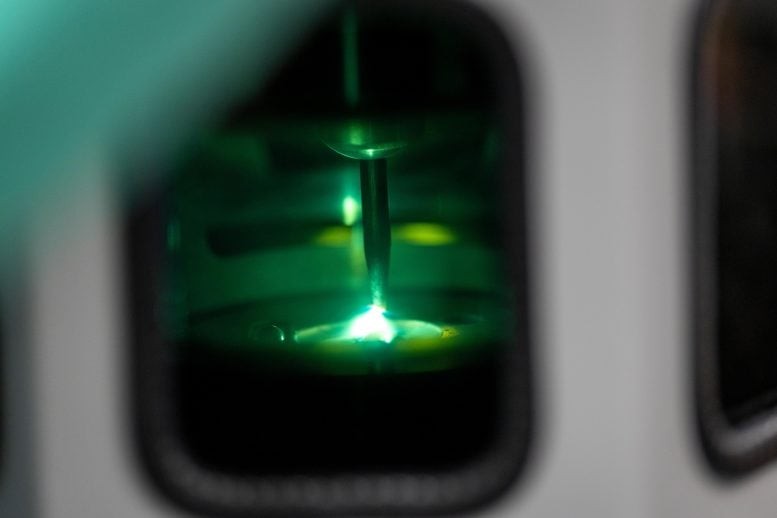
Figure 1. Next-Gen Rocket Fuel: 150% More Energy.
“Diborides first drew interest back in the 1960s,” explained UAlbany PhD student Joseph Doane, a member of Yeung’s research group. “Now, with advances in technology, we’re finally able to synthesize chemical compounds that were once only theoretical.” Figure 1 shows Next-Gen Rocket Fuel: 150% More Energy.
“Based on what we know about the elements in the periodic table, we anticipated that manganese diboride would be structurally asymmetrical and unstable — characteristics that make it highly energetic,” Doane explained. “But until recently, testing this was impossible because the compound couldn’t be synthesized. Successfully creating pure manganese diboride is a major milestone on its own. Now, we can finally study it experimentally and explore potential applications.”
Producing manganese diboride demands extremely high temperatures, achieved using a device called an arc melter. The process begins with manganese and boron powders compressed into a pellet and placed inside a reinforced glass chamber. A focused electrical current then heats the pellet to nearly 3,000°C (over 5,000°F). The molten material is quickly cooled to preserve its atomic arrangement. On a microscopic level, this forces the central manganese atom to bond with more atoms than usual, creating a densely packed structure — tightly coiled like a spring.
Unlocking the Structure Through Deformation
In studying new chemical compounds, successfully synthesizing the material is only the first step — understanding its molecular structure is just as crucial to uncovering why it behaves the way it does.
“Think of a flat trampoline — when it’s flat there’s no stored energy,” Yeung said. “Drop a massive weight into the center and the fabric stretches; that stretch is energy stored by the trampoline, which snaps back when the weight is removed. When our compound ignites, it’s like removing that weight — the stored energy is suddenly released.”
New Materials Need New Compounds
“There’s a widespread belief among chemists that boron-based compounds will show unusual behaviors not seen in other materials,” said Associate Professor Alan Chen. “Chemists are on a continuous search to identify those properties. That search drives materials chemistry: to make harder, stronger, or more extreme materials we must invent entirely new chemicals. That’s exactly what the Yeung lab is doing — work that could lead to better rocket propellants, improved catalytic converters, and new methods for recycling plastics.”
Yeung’s fascination with boron compounds began during his graduate studies at the University of California, Los Angeles, where he was part of a project searching for materials harder than diamond.
“I clearly remember the first time I created a compound related to manganese diboride,” Yeung recalled. “I was holding this material that was supposed to be extremely hard, but instead it began to heat up and turned a bright orange. I thought, ‘Why is it orange? Why is it glowing? It shouldn’t be glowing!’ That moment made me realize just how energetic boron compounds could be. I made a note to revisit the idea — and that’s exactly what we’re exploring today.”
Source:SciTECHDaily
Cite this article:
Priyadharshini S (2025), Chemists Create Next-Gen Rocket Fuel Compound that Packs 150% More Energy, AnaTechMaz, pp. 285
Recent Post
-
Tech That Tackles Fatbergs Could Save Cities Billions in Sewer Maintenance
Fatbergs are massive, concrete-like clumps of cooking oil, greases....
-

Review Links High-Potency Cannabis to Schizophrenia, Psychosis and Other Risks
High-concentration cannabis products were defined as those....
-
Breaking Chemical Rules: Scientists Accidentally Discover a Novel Gold Compound
It was unexpected because gold is usually chemically inert....
-

AI-Designed Super-Adhesive Underwater Hydrogels
Material design is shifting toward data-driven methods, where discovery increasingly relies on....
-
Record-Breaking Atom Images Uncover New Vibrational Modes
US researchers have directly visualized moiré phasons—ultra-low-energy atomic vibrations—for the first....
-
Quantum Mystery Solved: Graphene Electrons Defy Fundamental Physics Law
For decades, quantum physicists have debated whether electrons can.....
-
America’s Strongest Laser Achieves First 2-Petawatt Pulse
The ZEUS laser facility at the University of Michigan has completed its first official experiment at 2.....
-

Low-Cost Liquid Battery Could Rival $10,000 Lithium Systems
Engineers have developed a new water-based “flow battery” aimed at making rooftop solar storage....
-
Perovskite-Silicon Tandem Solar Cells Hit 33.1% Efficiency
An international team of photovoltaics researchers has made a significant step toward large-scale industrial....
-

Harvard Develops Chemical-Free Way to Recycle Hair
Each year, textile and meat-processing industries produce billions of tons of feathers, wool, and hair, all....
-
Scientists Uncover a “Giant” Twist on a 140-Year-Old Physics Effect
For the first time, researchers in Japan have observed a giant anomalous Hall effect (AHE) in a nonmagnetic....
-
The Next-Gen Storage Breakthrough: Terahertz Light Paves the Way for Ultra-Fast, Non-Volatile Memory
Modern life runs on.....
-
Researchers Engineer Graphene Defects to Unlock Novel Capabilities
“Defects in materials are usually seen as problems that.....
-
Scientists Discover Novel Method to Manipulate Exotic Light Waves In 2D Materials
DPPs provide a promising solution. By confining and guiding....
-
Chemists Create Next-Gen Rocket Fuel Compound that Packs 150% More Energy
Manganese diboride belongs to a class of chemical compounds....