

Low-Cost Liquid Battery Could Rival $10,000 Lithium Systems
Monash researchers have developed a fast and safe liquid battery for home solar use, with the potential to outperform costly lithium-ion systems.
Engineers have developed a new water-based “flow battery” aimed at making rooftop solar storage in Australian homes safer, more efficient, and more affordable. This next-generation system offers compact, high-performance energy storage at a fraction of the cost of current lithium-ion setups, which typically run around $10,000.

Figure 1. New Water-Based Flow Battery for Home Solar
Innovative Membrane Design
While flow batteries have been around for decades, their size and slow charging times have limited them to large-scale energy storage. Wanqiao Liang, the study’s lead author and a PhD candidate in the Department of Materials Science and Engineering, noted that the team’s redesigned membrane overcomes these speed limitations, making flow batteries practical for home use and competitive in the renewable energy market. Figure 1 shows New Water-Based Flow Battery for Home Solar.
“We’ve taken a safe, affordable chemistry and made it fast enough to store rooftop solar in real time,” said Ms. Liang. “By engineering a new membrane, we’ve made organic flow batteries competitive for residential and mid-scale storage, enabling systems that are not only cheaper but also safer and easier to scale.”
Exceeding Industry Benchmarks
While several companies produce flow batteries, the Monash design stands out by combining safety, affordability, and high-speed performance—an achievement few systems worldwide have matched. “The key was enhancing ion selectivity: allowing the desired ions to pass quickly while blocking unwanted ones. Our new membrane achieves this balance, enabling fast and stable operation even at high current densities,” said Ms. Liang.
“We exceeded the performance of the industry-standard Nafion membrane in both speed and stability, completing 600 high-current cycles with almost no capacity loss—a significant advancement for this type of battery.”
Wanqiao Liang emphasized that achieving the right balance was key to making these batteries suitable for home solar [1]. “This is the kind of battery you’d want in your garage,” she said. “It’s non-toxic, non-flammable, and made from abundant materials, while still keeping pace with solar output on a sunny day.” The team is now 3D printing prototype systems and testing them in real-world conditions. “If the prototypes perform as expected, these batteries could reach the market within a few years,” Liang added.
Mechanism of Flow Batteries
Dr. Cara Doherty, a co-author from CSIRO, explained that flow batteries store energy in liquids rather than the solid materials used in lithium-ion batteries, making them cheaper, safer, and easier to scale. “Flow batteries work like two fish tanks separated by a membrane that allows ions to pass, storing and releasing energy,” she said. “Our new membrane improves this flow, like adding lanes to a highway, enabling faster charging, longer life, and better performance.”
In 2018, Monash installed a 1 MWh redT (now Invinity Energy) system—the largest behind-the-meter commercial setup in Australia and the first of its kind globally—forming the core of its Clayton campus microgrid. This microgrid is central to Monash’s goal of 100% energy self-sufficiency and achieving Net Zero emissions by 2030. Now, the university is taking the next major step in clean energy storage.
References:
- https://scitechdaily.com/inexpensive-new-liquid-battery-could-replace-10000-lithium-systems/
Cite this article:
Janani R (2025), Low-Cost Liquid Battery Could Rival $10,000 Lithium Systems, AnaTechMaz, pp. 278
Recent Post
-
Tech That Tackles Fatbergs Could Save Cities Billions in Sewer Maintenance
Fatbergs are massive, concrete-like clumps of cooking oil, greases....
-

Review Links High-Potency Cannabis to Schizophrenia, Psychosis and Other Risks
High-concentration cannabis products were defined as those....
-

Breaking Chemical Rules: Scientists Accidentally Discover a Novel Gold Compound
It was unexpected because gold is usually chemically inert....
-

AI-Designed Super-Adhesive Underwater Hydrogels
Material design is shifting toward data-driven methods, where discovery increasingly relies on....
-
Record-Breaking Atom Images Uncover New Vibrational Modes
US researchers have directly visualized moiré phasons—ultra-low-energy atomic vibrations—for the first....
-
Quantum Mystery Solved: Graphene Electrons Defy Fundamental Physics Law
For decades, quantum physicists have debated whether electrons can.....
-
America’s Strongest Laser Achieves First 2-Petawatt Pulse
The ZEUS laser facility at the University of Michigan has completed its first official experiment at 2.....
-
Low-Cost Liquid Battery Could Rival $10,000 Lithium Systems
Engineers have developed a new water-based “flow battery” aimed at making rooftop solar storage....
-
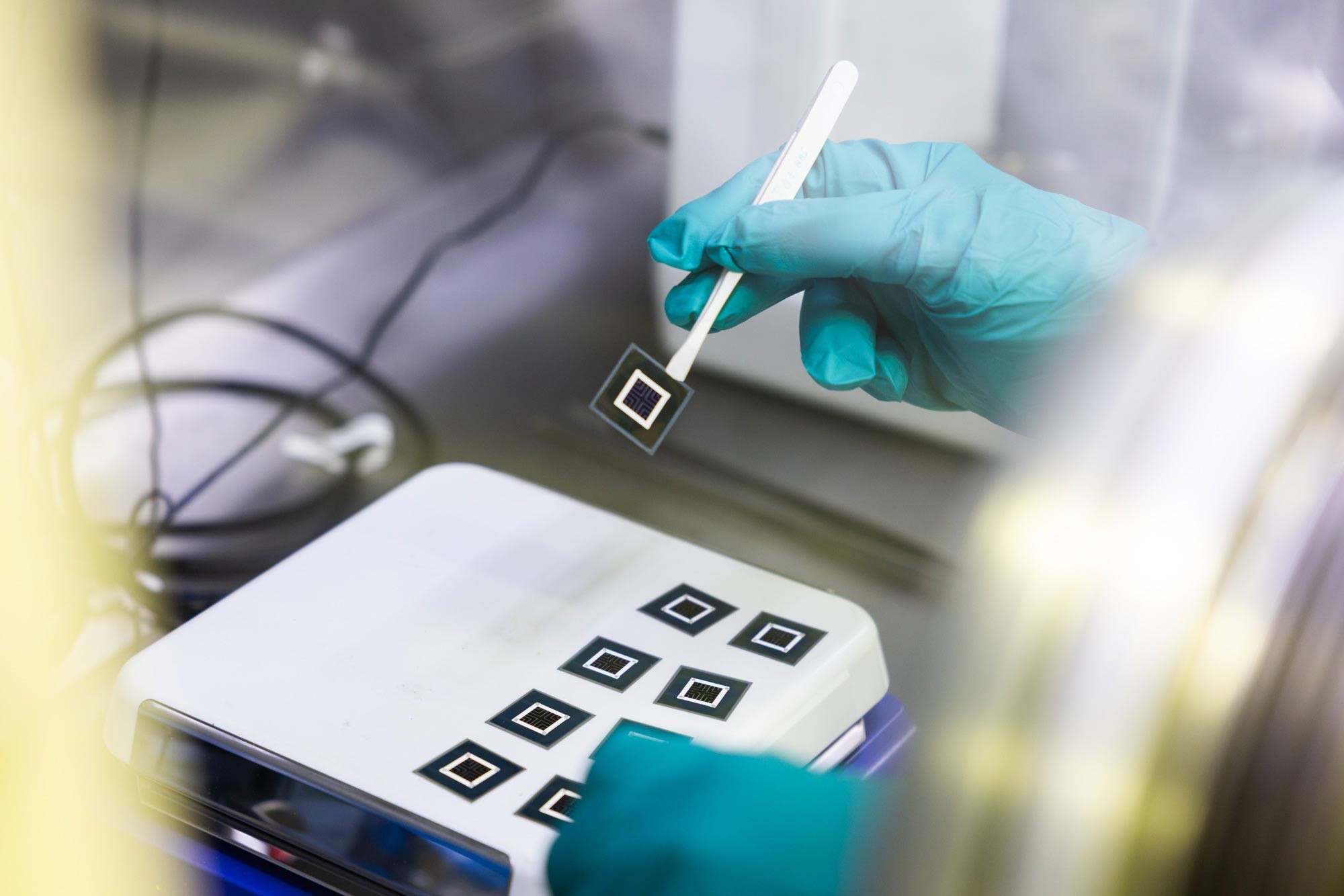
Perovskite-Silicon Tandem Solar Cells Hit 33.1% Efficiency
An international team of photovoltaics researchers has made a significant step toward large-scale industrial....
-

Harvard Develops Chemical-Free Way to Recycle Hair
Each year, textile and meat-processing industries produce billions of tons of feathers, wool, and hair, all....
-
Scientists Uncover a “Giant” Twist on a 140-Year-Old Physics Effect
For the first time, researchers in Japan have observed a giant anomalous Hall effect (AHE) in a nonmagnetic....
-
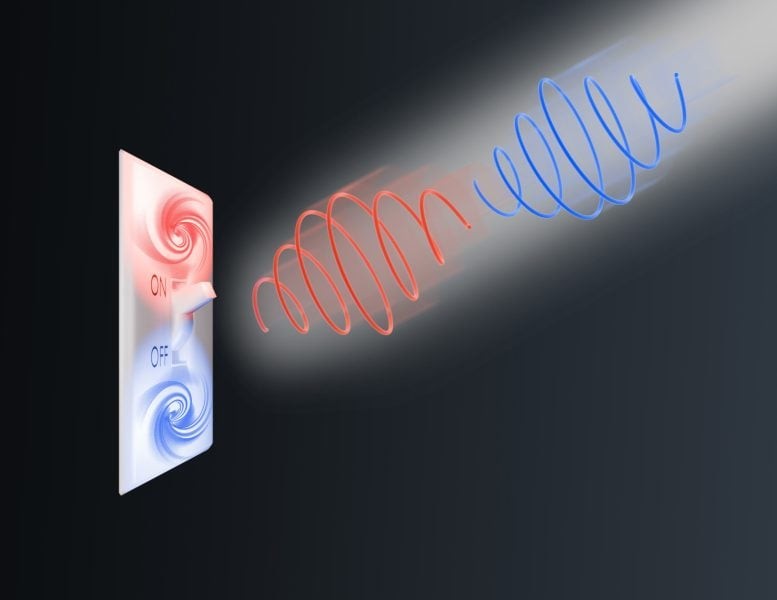
The Next-Gen Storage Breakthrough: Terahertz Light Paves the Way for Ultra-Fast, Non-Volatile Memory
Modern life runs on.....
-
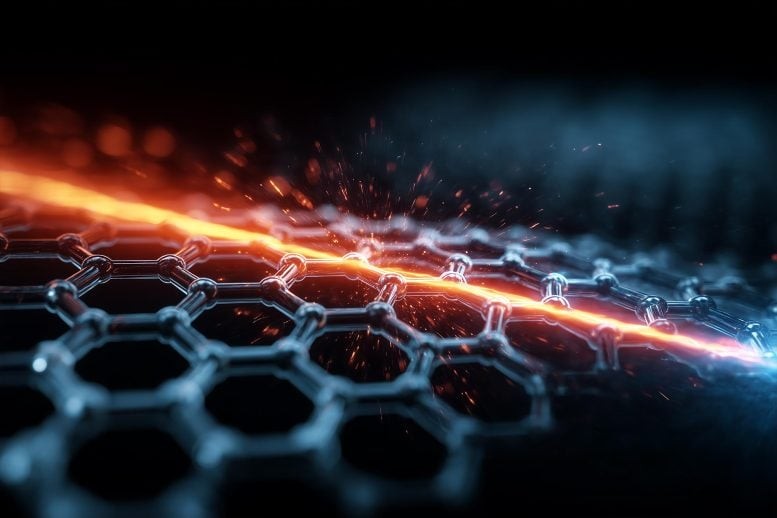
Researchers Engineer Graphene Defects to Unlock Novel Capabilities
“Defects in materials are usually seen as problems that.....
-
Scientists Discover Novel Method to Manipulate Exotic Light Waves In 2D Materials
DPPs provide a promising solution. By confining and guiding....
-
Chemists Create Next-Gen Rocket Fuel Compound that Packs 150% More Energy
Manganese diboride belongs to a class of chemical compounds....