

America’s Strongest Laser Achieves First 2-Petawatt Pulse
ZEUS Laser Achieves 2 Petawatts, Enabling Advanced Research
The ZEUS laser facility at the University of Michigan has completed its first official experiment at 2 petawatts (2 quadrillion watts), nearly twice the peak power of any other operating laser in the United States.
This extraordinary burst of power—over 100 times the total electricity generated worldwide—lasts for an incredibly brief 25 quintillionths of a second, confined to the duration of a single laser pulse.
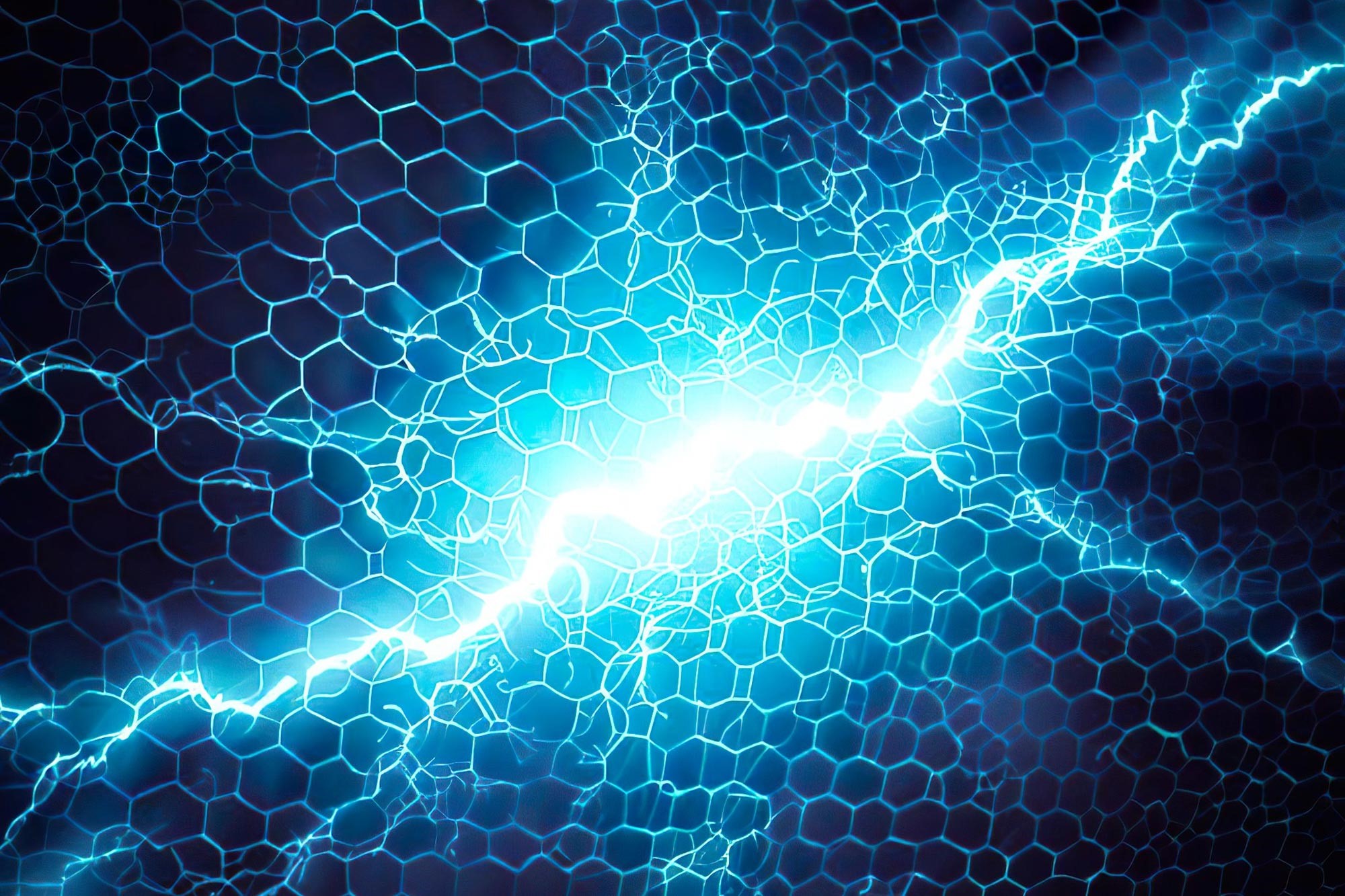
Figure 1. ZEUS Laser Powered by Titanium-Sapphire Crystal
“This achievement ushers in a new era of experiments venturing into uncharted territory for American high-field science,” said Karl Krushelnick, director of the Gérard Mourou Center for Ultrafast Optical Science, home to ZEUS. Figure 1 shows ZEUS Laser Powered by Titanium-Sapphire Crystal.
Broad Scientific and Societal Applications
Research at ZEUS promises applications across medicine, national security, materials science, astrophysics, as well as plasma and quantum physics. Funded by the U.S. National Science Foundation, ZEUS operates as a user facility, allowing research teams from across the U.S. and internationally to submit experiment proposals for independent review and selection.
“One of the remarkable features of ZEUS is that its light can be split into multiple beams, not just a single high-power pulse,” said Franklin Dollar, professor of physics and astronomy at the University of California, Irvine, whose team conducted the first 2-petawatt user experiment. “Having a national facility that allocates time to the most promising experiments is revitalizing high-intensity laser science in the U.S.”
Generating Beams Comparable to Particle Accelerators
Dollar’s team at the ZEUS facility aims to produce electron beams with energies comparable to those generated by particle accelerators spanning hundreds of meters. These beams would deliver 5 to 10 times more energy than any previously achieved at ZEUS.
“We plan to achieve higher electron energies using two laser beams—one to create a guiding channel and the other to accelerate electrons within it,” said Anatoly Maksimchuk, a U-M research scientist in electrical and computer engineering, who oversees the development of the experimental areas.
A key part of this effort involves a redesigned target: an extended helium-filled gas cell through which the laser pulse is directed. As the pulse passes, it strips electrons from the atoms, creating plasma—a mix of free electrons and positively charged ions. These electrons are then accelerated in the wake of the laser pulse, similar to surfers riding waves behind a fast-moving boat, in a process called wakefield acceleration.
Since light slows down in plasma, electrons are able to catch up with the laser pulse. Using a longer, less dense target gives the electrons more time to accelerate before overtaking the pulse, enabling them to achieve much higher speeds.
Advancing to Zettawatt-Scale Laser Experiments
This demonstration of ZEUS’s capabilities paves the way for its landmark experiment later this year, where accelerated electrons will collide with counter-propagating laser pulses. From the electrons’ perspective, a 3-petawatt pulse will appear amplified to zettawatt scale—hence the facility’s full name: the “Zettawatt Equivalent Ultrashort laser pulse System.”
“The fundamental research conducted at the NSF ZEUS facility has numerous potential applications, from improved soft-tissue imaging to advancing technologies for treating cancer and other diseases,” said Vyacheslav Lukin, program director in the NSF Division of Physics, which oversees ZEUS. “By leveraging ZEUS’s unique capabilities, scientists will push the boundaries of human knowledge and create new opportunities for innovation and economic growth in the U.S.”
The ZEUS facility occupies a space roughly the size of a school gymnasium. In one corner, a laser generates the initial infrared pulse, which is stretched in time by optical diffraction gratings to prevent it from becoming so intense that it ionizes the air. At its largest, the pulse spans 12 inches across and several feet in length.
After four rounds of energy amplification from pump lasers, the pulse enters vacuum chambers, where another set of gratings compresses it into a 12-inch disk just 8 microns thick—about ten times thinner than a sheet of printer paper [1]. While even this size could turn air into plasma, the pulse is then focused to 0.8 microns wide to maximize intensity for experiments.
“As a midscale facility, we can operate more flexibly than larger installations like particle accelerators or the National Ignition Facility,” said John Nees, U-M research scientist in electrical and computer engineering and lead on ZEUS construction. “This flexibility attracts innovative ideas from a wide community of scientists.”
Technical Challenges in Achieving Maximum Laser Power
Reaching 2 petawatts at ZEUS has been a slow, careful process, with major challenges like sourcing a rare 7-inch titanium-sapphire crystal for the final amplifier. Initial runs at 1 petawatt caused carbon deposits on gratings, requiring careful management to avoid optics damage. Since its October 2023 opening, ZEUS has hosted 11 experiments with 58 researchers from 22 institutions, while upgrades continue toward full power.
References:
- https://scitechdaily.com/americas-most-powerful-laser-fires-its-first-2-petawatt-shot/
Cite this article:
Janani R (2025), America’s Strongest Laser Achieves First 2-Petawatt Pulse, AnaTechMaz, pp. 276
Recent Post
-
Tech That Tackles Fatbergs Could Save Cities Billions in Sewer Maintenance
Fatbergs are massive, concrete-like clumps of cooking oil, greases....
-

Review Links High-Potency Cannabis to Schizophrenia, Psychosis and Other Risks
High-concentration cannabis products were defined as those....
-

Breaking Chemical Rules: Scientists Accidentally Discover a Novel Gold Compound
It was unexpected because gold is usually chemically inert....
-

AI-Designed Super-Adhesive Underwater Hydrogels
Material design is shifting toward data-driven methods, where discovery increasingly relies on....
-
Record-Breaking Atom Images Uncover New Vibrational Modes
US researchers have directly visualized moiré phasons—ultra-low-energy atomic vibrations—for the first....
-
Quantum Mystery Solved: Graphene Electrons Defy Fundamental Physics Law
For decades, quantum physicists have debated whether electrons can.....
-
America’s Strongest Laser Achieves First 2-Petawatt Pulse
The ZEUS laser facility at the University of Michigan has completed its first official experiment at 2.....
-

Low-Cost Liquid Battery Could Rival $10,000 Lithium Systems
Engineers have developed a new water-based “flow battery” aimed at making rooftop solar storage....
-
Perovskite-Silicon Tandem Solar Cells Hit 33.1% Efficiency
An international team of photovoltaics researchers has made a significant step toward large-scale industrial....
-
Harvard Develops Chemical-Free Way to Recycle Hair
Each year, textile and meat-processing industries produce billions of tons of feathers, wool, and hair, all....
-
Scientists Uncover a “Giant” Twist on a 140-Year-Old Physics Effect
For the first time, researchers in Japan have observed a giant anomalous Hall effect (AHE) in a nonmagnetic....
-
The Next-Gen Storage Breakthrough: Terahertz Light Paves the Way for Ultra-Fast, Non-Volatile Memory
Modern life runs on.....
-

Researchers Engineer Graphene Defects to Unlock Novel Capabilities
“Defects in materials are usually seen as problems that.....
-
Scientists Discover Novel Method to Manipulate Exotic Light Waves In 2D Materials
DPPs provide a promising solution. By confining and guiding....
-
Chemists Create Next-Gen Rocket Fuel Compound that Packs 150% More Energy
Manganese diboride belongs to a class of chemical compounds....