

Record-Breaking Atom Images Uncover New Vibrational Modes
US researchers have directly visualized moiré phasons—ultra-low-energy atomic vibrations—for the first time, confirming that these vibrations are the primary mode of atomic motion in certain twisted 2D materials. These findings suggest that moiré phasons could significantly influence heat and charge transport, as well as the behavior of quantum phases in these materials.
“Until now, phasons existed only in theoretical predictions and had never been directly observed,” says Yichao Zhang of the University of Maryland, co-leading the study with Pinshane Huang of the University of Illinois. “This work provides a completely new perspective on lattice vibrations in 2D quantum materials.”
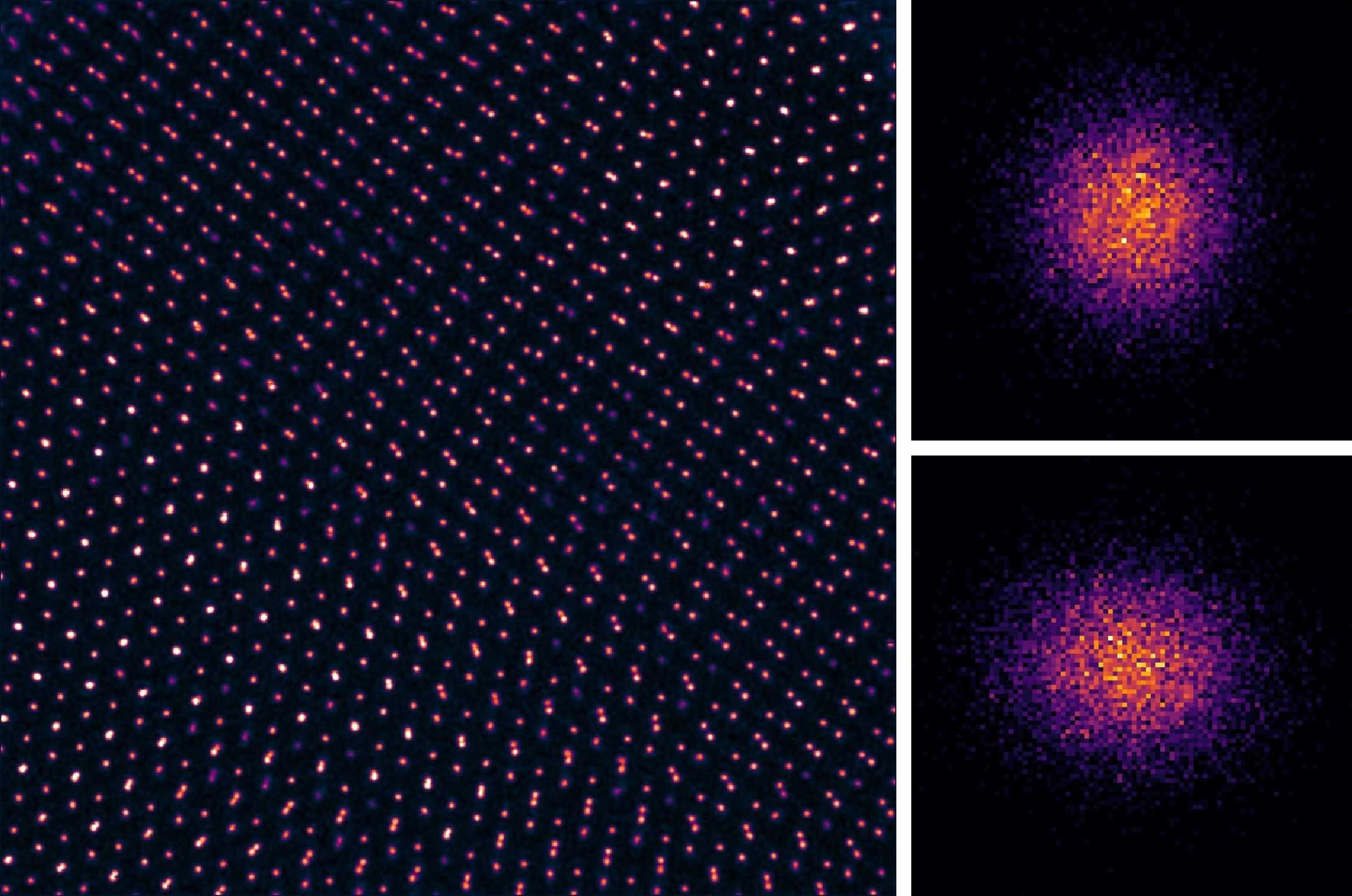
Figure 1. Record-Breaking Atom Images Reveal New Vibrations
Discovery of a Second Type of Moiré Phonons
When two 2D material layers are stacked and slightly twisted, their atoms form a moiré superlattice with quasi-periodic regions (AA or AB) separated by soliton networks. These materials exhibit unique lattice vibrations called moiré phonons, which depend on the twist angle and influence material properties. In addition, theory predicts a second type of vibration—phasons—which, until now, had never been directly observed experimentally. Figure 1 shows Record-Breaking Atom Images Reveal New Vibrations.
When two 2D material layers are stacked with a slight twist, their atoms create a moiré superlattice. This structure features quasi-periodic regions of rotational alignment (AA or AB) separated by networks of stacking faults known as solitons.
These materials exhibit unique vibrational modes called moiré phonons, originating from lattice vibrations. The characteristics of these modes depend on the twist angle between layers and can influence the materials’ physical properties.
Beyond moiré phonons, 2D moiré materials are predicted to support a second type of vibrational mode called phasons, which, until now, had never been directly observed in experiments.
Visualizing Phasons at the Picometre Scale
In their Science publication, the researchers used electron ptychography to achieve imaging at 15-picometre resolution, allowing them to detect subtle thermally driven atomic vibrations. Zhang explains that this precision enabled mapping of atomic motion across different regions of the moiré superlattice. The team observed that vibrations were not uniform: atoms exhibited larger amplitudes in AA-stacked regions and highly directional behavior at soliton boundaries, matching theoretical predictions for moiré phasons.
Zhang has long studied phonons with electron microscopy, but previous resolution limits confined her work to the nanometre scale. By applying electron ptychography, she realized atomic vibrations—including moiré phasons—could be observed at picometre resolution. The team focused on twisted 2D materials, which exhibit exotic electronic phenomena like superconductivity and correlated insulating states, yet whose lattice dynamics, particularly phasons, remain poorly understood [1]. Zhang notes that phasons are extremely low in energy and spatially non-uniform, making them nearly invisible to most experimental methods. To detect them, the researchers pushed electron ptychography to its limits and confirmed their findings with detailed modelling and simulations.
This research opens new avenues for understanding—and potentially controlling—vibrations in complex 2D materials. Zhang explains that phasons influence heat flow, electron transport, and the emergence of new phases, suggesting that harnessing them could enable materials with programmable thermal and electronic properties, benefiting low-power electronics, quantum computing, and nanoscale sensors. More broadly, electron ptychography offers a powerful method for probing lattice dynamics across advanced materials. The team is now investigating how defects, strain, and interfaces impact phason behavior, aiming to understand their response to external stimuli such as temperature changes or applied fields, and how they interact with electrons, excitons, and other collective excitations in quantum materials.
References:
- https://physicsworld.com/a/highest-resolution-images-ever-taken-of-a-single-atom-reveal-new-kind-of-vibrations/
Cite this article:
Janani R (2025), Record-Breaking Atom Images Uncover New Vibrational Modes, AnaTechMaz, pp. 275
Recent Post
-
Tech That Tackles Fatbergs Could Save Cities Billions in Sewer Maintenance
Fatbergs are massive, concrete-like clumps of cooking oil, greases....
-

Review Links High-Potency Cannabis to Schizophrenia, Psychosis and Other Risks
High-concentration cannabis products were defined as those....
-

Breaking Chemical Rules: Scientists Accidentally Discover a Novel Gold Compound
It was unexpected because gold is usually chemically inert....
-

AI-Designed Super-Adhesive Underwater Hydrogels
Material design is shifting toward data-driven methods, where discovery increasingly relies on....
-
Record-Breaking Atom Images Uncover New Vibrational Modes
US researchers have directly visualized moiré phasons—ultra-low-energy atomic vibrations—for the first....
-

Quantum Mystery Solved: Graphene Electrons Defy Fundamental Physics Law
For decades, quantum physicists have debated whether electrons can.....
-
America’s Strongest Laser Achieves First 2-Petawatt Pulse
The ZEUS laser facility at the University of Michigan has completed its first official experiment at 2.....
-

Low-Cost Liquid Battery Could Rival $10,000 Lithium Systems
Engineers have developed a new water-based “flow battery” aimed at making rooftop solar storage....
-

Perovskite-Silicon Tandem Solar Cells Hit 33.1% Efficiency
An international team of photovoltaics researchers has made a significant step toward large-scale industrial....
-

Harvard Develops Chemical-Free Way to Recycle Hair
Each year, textile and meat-processing industries produce billions of tons of feathers, wool, and hair, all....
-
Scientists Uncover a “Giant” Twist on a 140-Year-Old Physics Effect
For the first time, researchers in Japan have observed a giant anomalous Hall effect (AHE) in a nonmagnetic....
-
The Next-Gen Storage Breakthrough: Terahertz Light Paves the Way for Ultra-Fast, Non-Volatile Memory
Modern life runs on.....
-

Researchers Engineer Graphene Defects to Unlock Novel Capabilities
“Defects in materials are usually seen as problems that.....
-
Scientists Discover Novel Method to Manipulate Exotic Light Waves In 2D Materials
DPPs provide a promising solution. By confining and guiding....
-

Chemists Create Next-Gen Rocket Fuel Compound that Packs 150% More Energy
Manganese diboride belongs to a class of chemical compounds....