

Tech That Tackles Fatbergs Could Save Cities Billions in Sewer Maintenance
Fatbergs are massive, concrete-like clumps of cooking oil, grease, nappies, wet wipes, and other debris that accumulate in sewers, blocking the network. They’re notoriously difficult to break apart and can grow to staggering sizes. In 2017, London recorded a fatberg measuring 820 ft (250 m) long and weighing 130 tons (118 tonnes)—roughly equivalent to the weight of two Airbus A318 planes.
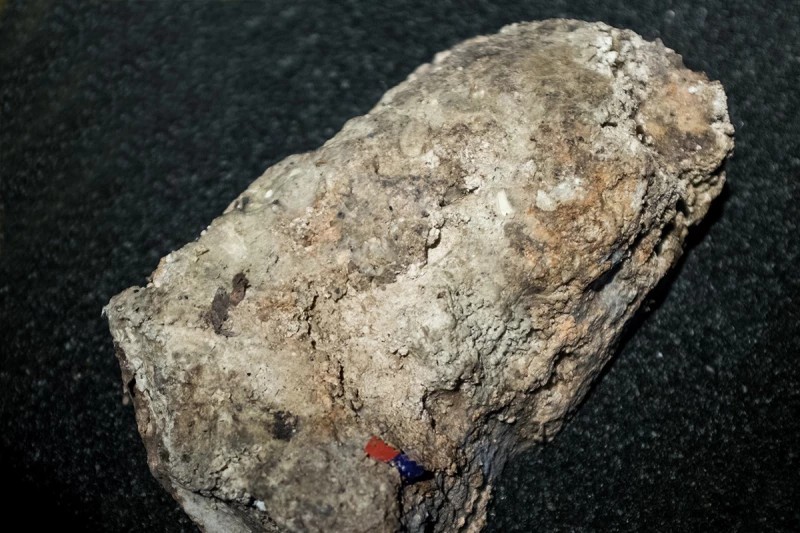
Figure 1. Fatberg-Fighting Tech Could Slash City Sewer Costs.
Clearing fatbergs before they cause sewage backups requires constant monitoring and manpower. In the U.S., it’s estimated that breaking them up and repairing the resulting damage costs up to US$25 billion annually. Figure 1 shows Fatberg-Fighting Tech Could Slash City Sewer Costs.
Engineers at Australia’s RMIT University are developing two innovative methods to reduce these buildups—solutions that could save cities billions of dollars worldwide each year.
But how do fatbergs form in the first place? Fat, oil, and grease (collectively known as FOG) combine with sewer water and calcium leached from concrete pipes, gradually solidifying over time. Most FOG originates from domestic and commercial kitchen wastewater. While plumbing devices called grease traps capture a large portion of FOG before it enters sewer lines, some still slips through, contributing to these massive sewer blockages.
Clearing fatbergs before they cause sewage backups requires constant monitoring and manpower. In the U.S., it’s estimated that breaking them up and repairing the resulting damage costs up to US$25 billion annually.
But how do fatbergs form in the first place? Fat, oil, and grease (collectively known as FOG) combine with sewer water and calcium leached from concrete pipes, gradually solidifying over time. Most FOG originates from domestic and commercial kitchen wastewater. While plumbing devices called grease traps capture a large portion of FOG before it enters sewer lines, some still slips through, contributing to these massive sewer blockages.
Stopping Grease in Its Tracks
To tackle FOG at its source, the RMIT team has developed an improved grease trap that captures more than twice as much fat as conventional systems. While it looks like a standard grease trap from the outside, its interior features a series of physical baffles that slow wastewater flow and separate larger fat particles. Afterward, alum—a common water treatment chemical—is added to clump together smaller, suspended fats, making them easier to remove.
The system isn’t perfect yet—the researchers are working to apply fluid dynamics principles to improve FOG removal without relying on chemicals, paving the way for commercial use that meets public infrastructure standards.
Better Pipes = Fewer Fatbergs
For the second part of their approach, engineers at RMIT developed a new coating for the interior walls of sewer pipes.
They first recreated fatberg formation in a controlled setting using concrete blocks (similar to sewer pipes) and synthetic FOG water over 30 days. This allowed them to compare fatberg growth on regular concrete blocks versus blocks treated with their new zinc-enhanced polyurethane coating.
Source:NEW ATLAS
Cite this article:
Priyadharshini S (2025), Tech That Tackles Fatbergs Could Save Cities Billions in Sewer Maintenance, AnaTechMaz, pp. 271
Recent Post
-
Tech That Tackles Fatbergs Could Save Cities Billions in Sewer Maintenance
Fatbergs are massive, concrete-like clumps of cooking oil, greases....
-

Review Links High-Potency Cannabis to Schizophrenia, Psychosis and Other Risks
High-concentration cannabis products were defined as those....
-
Breaking Chemical Rules: Scientists Accidentally Discover a Novel Gold Compound
It was unexpected because gold is usually chemically inert....
-
AI-Designed Super-Adhesive Underwater Hydrogels
Material design is shifting toward data-driven methods, where discovery increasingly relies on....
-
Record-Breaking Atom Images Uncover New Vibrational Modes
US researchers have directly visualized moiré phasons—ultra-low-energy atomic vibrations—for the first....
-
Quantum Mystery Solved: Graphene Electrons Defy Fundamental Physics Law
For decades, quantum physicists have debated whether electrons can.....
-
America’s Strongest Laser Achieves First 2-Petawatt Pulse
The ZEUS laser facility at the University of Michigan has completed its first official experiment at 2.....
-

Low-Cost Liquid Battery Could Rival $10,000 Lithium Systems
Engineers have developed a new water-based “flow battery” aimed at making rooftop solar storage....
-
Perovskite-Silicon Tandem Solar Cells Hit 33.1% Efficiency
An international team of photovoltaics researchers has made a significant step toward large-scale industrial....
-
Harvard Develops Chemical-Free Way to Recycle Hair
Each year, textile and meat-processing industries produce billions of tons of feathers, wool, and hair, all....
-
Scientists Uncover a “Giant” Twist on a 140-Year-Old Physics Effect
For the first time, researchers in Japan have observed a giant anomalous Hall effect (AHE) in a nonmagnetic....
-
The Next-Gen Storage Breakthrough: Terahertz Light Paves the Way for Ultra-Fast, Non-Volatile Memory
Modern life runs on.....
-

Researchers Engineer Graphene Defects to Unlock Novel Capabilities
“Defects in materials are usually seen as problems that.....
-
Scientists Discover Novel Method to Manipulate Exotic Light Waves In 2D Materials
DPPs provide a promising solution. By confining and guiding....
-
Chemists Create Next-Gen Rocket Fuel Compound that Packs 150% More Energy
Manganese diboride belongs to a class of chemical compounds....