

Harvard Develops Chemical-Free Way to Recycle Hair
A novel sustainable approach has been developed to degrade keratins, turning discarded wool and feathers into valuable materials.
Each year, textile and meat-processing industries produce billions of tons of feathers, wool, and hair, all rich in keratin, the resilient protein found in hair, skin, and nails. Turning this animal waste into valuable products—such as wound dressings, eco-friendly textiles, and health extracts—could support sustainability and foster new industries. The main challenge is protein upcycling: breaking down proteins typically requires harsh chemicals in large, polluting facilities, making cost-effective solutions difficult to achieve.
Researchers at Harvard SEAS have uncovered the basic chemistry behind how proteins like keratin unfold when exposed to specific salt compounds. This discovery could significantly advance protein recycling efforts.
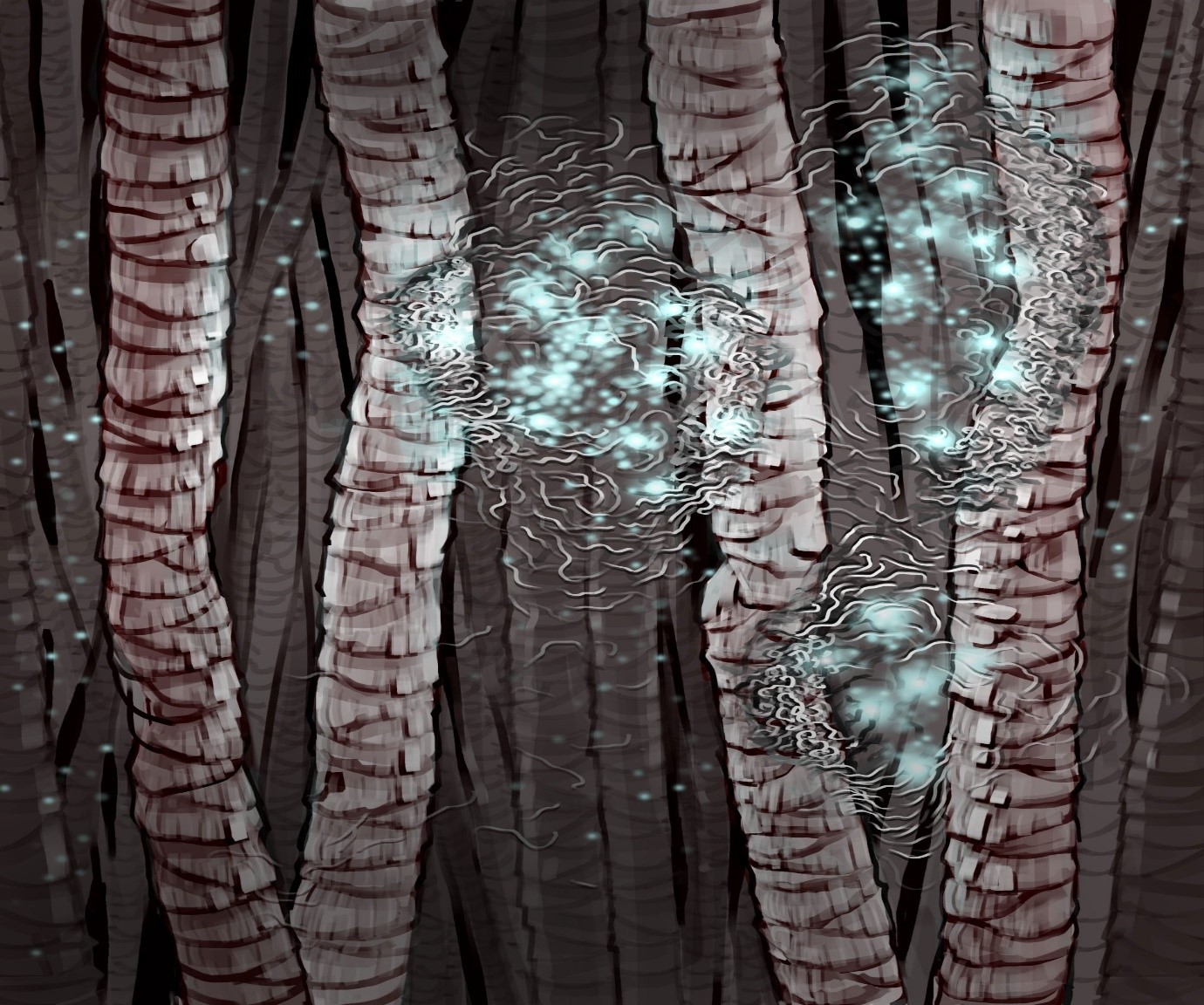
Figure 1. Keratin in Hair Unfolding in the Presence of Ions
Led by Kit Parker, the Tarr Family Professor of Bioengineering and Applied Physics at SEAS, the team used laboratory experiments and molecular simulations to investigate how salts induce protein unfolding. They discovered that concentrated lithium bromide—a salt known to break down keratin—works in an unexpected way: instead of binding directly to the proteins, it reshapes the structure of surrounding water molecules, creating conditions that promote spontaneous unfolding. Figure 1 shows Keratin in Hair Unfolding in the Presence of Ions.
This understanding enabled the researchers to develop a gentler, more sustainable method for extracting keratin, allowing the protein to be separated from solution without harsh chemicals. The process is also reversible using the same salt mixture, making it possible to recover and reuse the lithium bromide denaturants.
The study appears in Nature Communications and is highlighted in a Behind the Paper blog post.
Harnessing Keratin for Biomaterials
First author Yichong Wang, a chemistry graduate student in Parker’s lab, explained that the research builds on the team’s long-standing work on keratin biomaterials with shape-memory properties for biomedical applications. They had previously noticed that keratin extracted using lithium bromide forms thick, moldable gels that separate easily from the solution and solidify quickly when returned to water. While promising, this behavior seemed unusual, prompting the team to investigate further.
“We suspected a gap between the current understanding of protein denaturation and our observations,” Wang said. “This led us to explore the mechanism more closely, with the goal of optimizing our extraction process.”
Molecular Dynamics Uncovers Changes in Nearby Water
To explore further, the team collaborated with Professor Eugene Shakhnovich’s lab in the Department of Chemistry and Chemical Biology, which specializes in protein biophysics. Molecular dynamics simulations, led by co-author Junlang Liu, revealed that lithium bromide does not act directly on the proteins but instead affects the surrounding water.
The researchers found that lithium bromide ions divide water molecules into two groups: normal water and water trapped by the salt ions. As the proportion of normal water decreases, proteins unfold due to the resulting thermodynamic shift, rather than being forcibly broken apart as in traditional denaturation methods [1]. “Making the water less like water allows the protein to unfold itself,” Wang explained. Similar results with simpler proteins, such as fibronectin, suggest a general mechanism.
A deeper understanding of this process enables the development of protein extraction methods that are less energy-intensive and less polluting than conventional approaches, creating new opportunities for protein-upcycling industries. In the Parker lab, keratin-based tissue engineering is a key focus, and a reliable, sustainable extraction method would significantly support these efforts.
Moreover, this process could pave the way for a new biomaterials industry, transforming abundant waste streams such as hair and chicken feathers into low-cost, recycled materials that might serve as alternatives to conventional plastics.
References:
- https://scitechdaily.com/billion-ton-waste-problem-harvard-finds-a-way-to-recycle-hair-without-harsh-chemicals/
Cite this article:
Janani R (2025), Harvard Develops Chemical-Free Way to Recycle Hair, AnaTechMaz, pp. 280
Recent Post
-
Tech That Tackles Fatbergs Could Save Cities Billions in Sewer Maintenance
Fatbergs are massive, concrete-like clumps of cooking oil, greases....
-

Review Links High-Potency Cannabis to Schizophrenia, Psychosis and Other Risks
High-concentration cannabis products were defined as those....
-
Breaking Chemical Rules: Scientists Accidentally Discover a Novel Gold Compound
It was unexpected because gold is usually chemically inert....
-
AI-Designed Super-Adhesive Underwater Hydrogels
Material design is shifting toward data-driven methods, where discovery increasingly relies on....
-
Record-Breaking Atom Images Uncover New Vibrational Modes
US researchers have directly visualized moiré phasons—ultra-low-energy atomic vibrations—for the first....
-
Quantum Mystery Solved: Graphene Electrons Defy Fundamental Physics Law
For decades, quantum physicists have debated whether electrons can.....
-
America’s Strongest Laser Achieves First 2-Petawatt Pulse
The ZEUS laser facility at the University of Michigan has completed its first official experiment at 2.....
-

Low-Cost Liquid Battery Could Rival $10,000 Lithium Systems
Engineers have developed a new water-based “flow battery” aimed at making rooftop solar storage....
-
Perovskite-Silicon Tandem Solar Cells Hit 33.1% Efficiency
An international team of photovoltaics researchers has made a significant step toward large-scale industrial....
-
Harvard Develops Chemical-Free Way to Recycle Hair
Each year, textile and meat-processing industries produce billions of tons of feathers, wool, and hair, all....
-
Scientists Uncover a “Giant” Twist on a 140-Year-Old Physics Effect
For the first time, researchers in Japan have observed a giant anomalous Hall effect (AHE) in a nonmagnetic....
-
The Next-Gen Storage Breakthrough: Terahertz Light Paves the Way for Ultra-Fast, Non-Volatile Memory
Modern life runs on.....
-
Researchers Engineer Graphene Defects to Unlock Novel Capabilities
“Defects in materials are usually seen as problems that.....
-
Scientists Discover Novel Method to Manipulate Exotic Light Waves In 2D Materials
DPPs provide a promising solution. By confining and guiding....
-
Chemists Create Next-Gen Rocket Fuel Compound that Packs 150% More Energy
Manganese diboride belongs to a class of chemical compounds....