

AI-Designed Super-Adhesive Underwater Hydrogels
Material design is shifting toward data-driven methods, where discovery increasingly relies on computational insights. Developing soft materials remains especially challenging, requiring careful selection of molecular building blocks and precise optimization of their arrangement in molecular space.
Researchers at Hokkaido University have developed an ultra-sticky hydrogel for wet environments by combining artificial intelligence (AI) with data mining. Since the softness of hydrogels typically limits adhesion, designing such materials is challenging and often relies on costly trial-and-error experiments. The new AI-driven approach overcomes these hurdles, as detailed in their Nature publication.
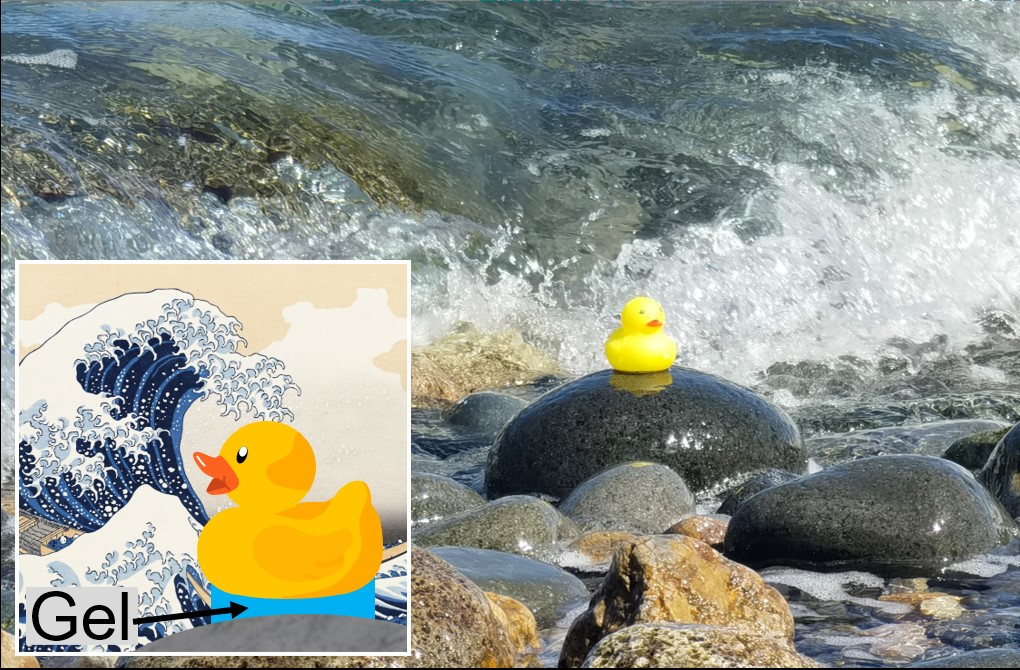
Figure 1. Ultra-Adhesive Underwater Hydrogels Created with Data Mining and AI
Designing Adhesive Hydrogels: Key Challenges
Hydrogels are water-filled polymer networks with tunable properties controlled by their chemical composition and structure. Computationally designing them for specific functions is challenging due to the vast diversity of polymer building blocks and the complexity of molecular arrangements and interactions, such as hydrogen bonding and van der Waals forces. Designing adhesive hydrogels for wet environments is even harder, as they swell in water, adding another layer of complexity to material optimisation. Figure 1 shows Ultra-Adhesive Underwater Hydrogels Created with Data Mining and AI.
Data-Driven Approaches Enable Breakthroughs
To create a hydrogel with strong, durable underwater adhesion, researchers mined the NCBI Protein database, which catalogs amino acid sequences responsible for adhesion in organisms such as bacteria, viruses, archaea, and eukaryotes. They synthetically adapted these sequences for hydrogel polymers, allowing systematic exploration of adhesive design. As co-lead author Hailong Fan explained, the goal was not just to mimic natural proteins but to use AI and data mining to uncover new design rules and push the limits of underwater adhesion.
Using the database insights, the team first designed and synthesized 180 bioinspired hydrogels, all showing superior adhesion compared to conventional versions. They then applied machine learning to optimize the designs, producing hydrogels with record-breaking underwater adhesion—instant and repeatable strengths above 1 MPa, about ten times greater than previous materials. These AI-designed hydrogels also worked across diverse surfaces in both fresh and saline water. As Fan noted, the breakthrough lies not only in the adhesive performance but in establishing a data-driven, AI-guided approach to material design beyond traditional biomimicry.
A Universal Adhesive
The team tested the top three hydrogels across diverse wet environments, showing long-lasting adhesion. One secured a rubber duck to a seaside rock, withstanding repeated wave impacts over multiple tide cycles. Another sealed a 20 mm hole in a pressurized water pipe, stopping the leak instantly and holding firm for five months. A third was implanted under the skin of mice, confirming its biocompatibility.
The hydrogels’ exceptional underwater adhesion opens opportunities in fields ranging from biomedical engineering—such as prosthetic coatings and wearable biosensors—to deep-sea exploration and marine farming. The researchers also emphasize that their data-driven strategy could be extended to designing other advanced soft materials [1]. Looking ahead, Fan notes the team plans to investigate the molecular mechanisms behind the adhesives and apply the approach to self-healing and biomedical hydrogels.
References:
- https://physicsworld.com/a/super-sticky-underwater-hydrogels-designed-using-data-mining-and-ai/
Cite this article:
Janani R (2025), AI-Designed Super-Adhesive Underwater Hydrogels, AnaTechMaz, pp. 274
Recent Post
-
Tech That Tackles Fatbergs Could Save Cities Billions in Sewer Maintenance
Fatbergs are massive, concrete-like clumps of cooking oil, greases....
-

Review Links High-Potency Cannabis to Schizophrenia, Psychosis and Other Risks
High-concentration cannabis products were defined as those....
-
Breaking Chemical Rules: Scientists Accidentally Discover a Novel Gold Compound
It was unexpected because gold is usually chemically inert....
-
AI-Designed Super-Adhesive Underwater Hydrogels
Material design is shifting toward data-driven methods, where discovery increasingly relies on....
-
Record-Breaking Atom Images Uncover New Vibrational Modes
US researchers have directly visualized moiré phasons—ultra-low-energy atomic vibrations—for the first....
-
Quantum Mystery Solved: Graphene Electrons Defy Fundamental Physics Law
For decades, quantum physicists have debated whether electrons can.....
-
America’s Strongest Laser Achieves First 2-Petawatt Pulse
The ZEUS laser facility at the University of Michigan has completed its first official experiment at 2.....
-
Low-Cost Liquid Battery Could Rival $10,000 Lithium Systems
Engineers have developed a new water-based “flow battery” aimed at making rooftop solar storage....
-
Perovskite-Silicon Tandem Solar Cells Hit 33.1% Efficiency
An international team of photovoltaics researchers has made a significant step toward large-scale industrial....
-
Harvard Develops Chemical-Free Way to Recycle Hair
Each year, textile and meat-processing industries produce billions of tons of feathers, wool, and hair, all....
-
Scientists Uncover a “Giant” Twist on a 140-Year-Old Physics Effect
For the first time, researchers in Japan have observed a giant anomalous Hall effect (AHE) in a nonmagnetic....
-
The Next-Gen Storage Breakthrough: Terahertz Light Paves the Way for Ultra-Fast, Non-Volatile Memory
Modern life runs on.....
-
Researchers Engineer Graphene Defects to Unlock Novel Capabilities
“Defects in materials are usually seen as problems that.....
-
Scientists Discover Novel Method to Manipulate Exotic Light Waves In 2D Materials
DPPs provide a promising solution. By confining and guiding....
-
Chemists Create Next-Gen Rocket Fuel Compound that Packs 150% More Energy
Manganese diboride belongs to a class of chemical compounds....