

Perovskite-Silicon Tandem Solar Cells Hit 33.1% Efficiency
Researchers have developed a novel passivation technique for perovskite-silicon tandem solar cells, reaching record efficiencies and paving the way for more advanced solar technology.
An international team of photovoltaics researchers has made a significant step toward large-scale industrial use of perovskite-silicon tandem solar cells. They demonstrated that the perovskite top cell can be effectively passivated when paired with textured silicon bottom cells featuring the large pyramidal structures common in today’s solar industry.
Their findings also show that passivation affects the entire perovskite layer, unlike in silicon cells where surface treatments only impact the uppermost layers, resulting in additional efficiency gains. Researchers from King Abdullah University of Science and Technology (KAUST), the University of Freiburg, and the Fraunhofer Institute for Solar Energy Systems ISE outlined these advancements in developing passivated perovskite top cells.

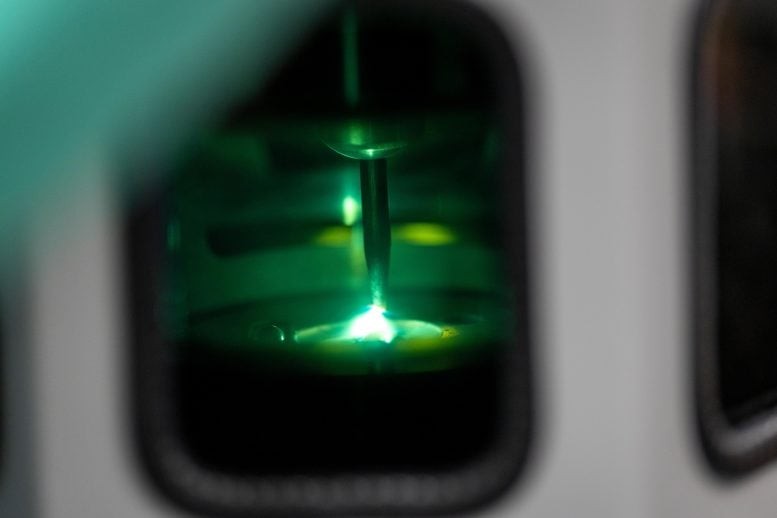
Figure 1. Perovskite-Silicon Tandem Solar Cell by Researchers
Perovskite-silicon tandem solar cells pair a perovskite top cell with a silicon bottom cell, marking the next major advance in photovoltaic technology. This approach is especially important as conventional silicon solar cells approach their theoretical efficiency limit of 29.4% for sunlight-to-electricity conversion. Figure 1 shows Perovskite-Silicon Tandem Solar Cell by Researchers.
For large-scale production of tandem solar cells, using standard silicon bottom cells is advantageous because their manufacturing processes are well established. These silicon cells are textured to increase surface area and boost efficiency, but this texturization makes it challenging to deposit the perovskite layer. Until now, achieving high-quality surface passivation of the perovskite top cell on the pyramid-like texture had not been accomplished.
Breakthrough Technique
“Until now, effective passivation on textured perovskite-silicon tandem solar cells had been limited, mostly working only on flat-front architectures. We have now achieved excellent passivation by applying 1,3-diaminopropane dihydroiodide to the uneven perovskite surface,” said Dr. Oussama Er-Raji, lead author and scientist at Fraunhofer ISE. The passivated tandem cells reached a conversion efficiency of 33.1% with an open-circuit voltage of 2.01 volts.
The researchers also found that passivating the perovskite top cell enhanced its conductivity and improved the fill factor. This effect arises from a deep field generated by the passivation. Unlike silicon solar cells, where passivation affects only the surface, in perovskite cells the treatment influences the entire absorber layer, boosting its bulk properties.
Laying the Groundwork for Future Studies
“This breakthrough provides a strong foundation for future research in this field,” said Prof. Stefaan De Wolf, KAUST, noting that it deepens understanding of the top cell’s light-to-electricity processes and helps guide the development of improved tandem solar cells.
“Surface passivation isn’t just a desirable feature—it’s essential for boosting efficiency and stability,” added Prof. Stefan Glunz, University of Freiburg and Fraunhofer ISE. “Just as passivation was key to achieving high efficiencies in industrial silicon solar cells, these advances will similarly benefit the photovoltaic industry for perovskite-silicon tandem cells.”
References:
- https://scitechdaily.com/perovskite-silicon-tandem-solar-cells-achieve-record-breaking-33-1-efficiency/
Cite this article:
Janani R (2025), Perovskite-Silicon Tandem Solar Cells Hit 33.1% Efficiency, AnaTechMaz, pp. 279
Recent Post
-
Tech That Tackles Fatbergs Could Save Cities Billions in Sewer Maintenance
Fatbergs are massive, concrete-like clumps of cooking oil, greases....
-

Review Links High-Potency Cannabis to Schizophrenia, Psychosis and Other Risks
High-concentration cannabis products were defined as those....
-

Breaking Chemical Rules: Scientists Accidentally Discover a Novel Gold Compound
It was unexpected because gold is usually chemically inert....
-

AI-Designed Super-Adhesive Underwater Hydrogels
Material design is shifting toward data-driven methods, where discovery increasingly relies on....
-
Record-Breaking Atom Images Uncover New Vibrational Modes
US researchers have directly visualized moiré phasons—ultra-low-energy atomic vibrations—for the first....
-
Quantum Mystery Solved: Graphene Electrons Defy Fundamental Physics Law
For decades, quantum physicists have debated whether electrons can.....
-
America’s Strongest Laser Achieves First 2-Petawatt Pulse
The ZEUS laser facility at the University of Michigan has completed its first official experiment at 2.....
-

Low-Cost Liquid Battery Could Rival $10,000 Lithium Systems
Engineers have developed a new water-based “flow battery” aimed at making rooftop solar storage....
-
Perovskite-Silicon Tandem Solar Cells Hit 33.1% Efficiency
An international team of photovoltaics researchers has made a significant step toward large-scale industrial....
-

Harvard Develops Chemical-Free Way to Recycle Hair
Each year, textile and meat-processing industries produce billions of tons of feathers, wool, and hair, all....
-
Scientists Uncover a “Giant” Twist on a 140-Year-Old Physics Effect
For the first time, researchers in Japan have observed a giant anomalous Hall effect (AHE) in a nonmagnetic....
-
The Next-Gen Storage Breakthrough: Terahertz Light Paves the Way for Ultra-Fast, Non-Volatile Memory
Modern life runs on.....
-
Researchers Engineer Graphene Defects to Unlock Novel Capabilities
“Defects in materials are usually seen as problems that.....
-
Scientists Discover Novel Method to Manipulate Exotic Light Waves In 2D Materials
DPPs provide a promising solution. By confining and guiding....
-
Chemists Create Next-Gen Rocket Fuel Compound that Packs 150% More Energy
Manganese diboride belongs to a class of chemical compounds....