

Breaking Chemical Rules: Scientists Accidentally Discover a Novel Gold Compound
“It was unexpected because gold is usually chemically inert and unreactive—that’s why we typically use it as an X-ray absorber in these experiments,” said Mungo Frost, staff scientist at SLAC and lead author of the study. “These results suggest that under extreme conditions, where temperature and pressure compete with conventional chemistry, entirely new and exotic compounds may emerge.”

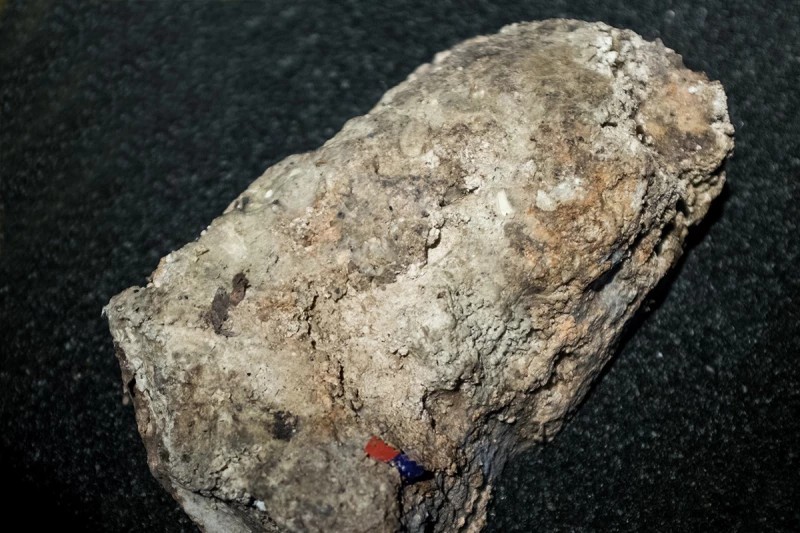
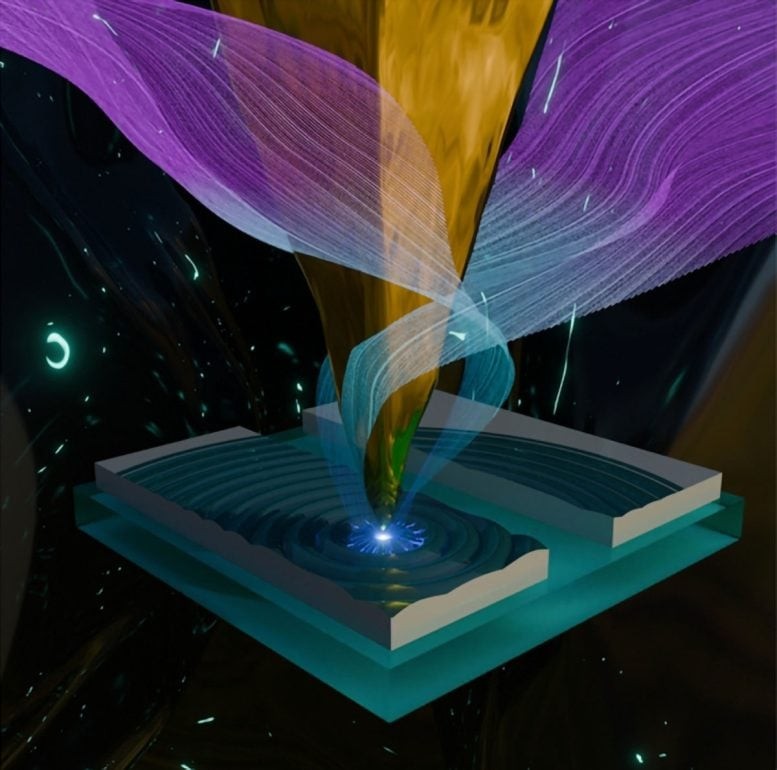
Figure 1. Accidental Discovery: Unprecedented Gold Compound.
Probing dense hydrogen
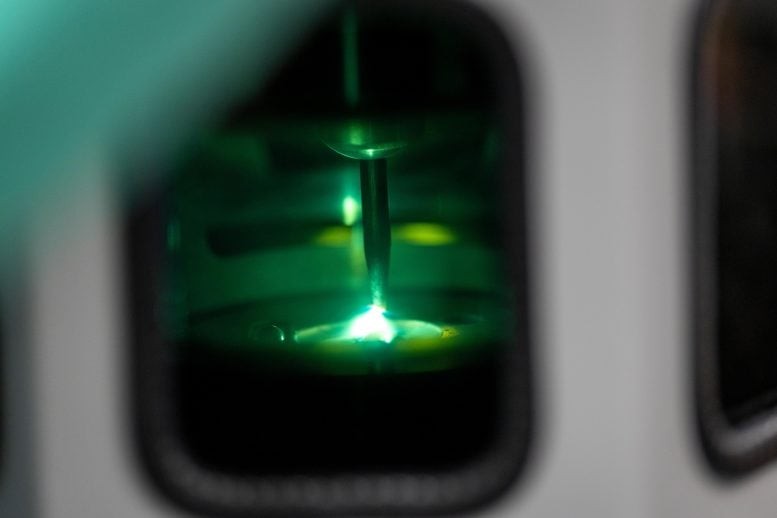
To uncover this phenomenon, the researchers compressed hydrocarbon samples to pressures greater than those within Earth’s mantle using a diamond anvil cell. They then heated the samples to more than 3,500 degrees Fahrenheit with bursts of X-ray pulses from the European XFEL. By analyzing the scattering patterns of the X-rays, the team was able to track the structural changes unfolding in real time. Figure 1 shows Accidental Discovery: Unprecedented Gold Compound.
As expected, the data confirmed that carbon atoms had formed a diamond lattice. But alongside this, the researchers detected an unexpected signal: hydrogen atoms had reacted with the gold foil to produce gold hydride.
Under the extreme conditions of the experiment, hydrogen entered a dense “superionic” state, in which its atoms moved freely within the rigid gold lattice. This unusual behavior significantly enhanced the compound’s conductivity, providing fresh insight into how materials behave under extreme pressures and temperatures.
Hydrogen, the lightest element in the periodic table, is notoriously difficult to study with X-rays because it scatters them only weakly. In this experiment, however, the superionic hydrogen interacted with much heavier gold atoms, allowing the researchers to detect hydrogen’s influence through changes in how the gold lattice scattered X-rays. “We can use the gold lattice as a witness for what the hydrogen is doing,” explained Mungo Frost.
This discovery positions gold hydride as a valuable proxy for studying dense atomic hydrogen under extreme conditions that are otherwise inaccessible in the lab. Such conditions mirror those inside giant planets, offering a window into their hidden interiors. They also shed light on nuclear fusion processes occurring in stars like our Sun—and could even inform the development of fusion energy technologies on Earth.
Exploring new chemistry
Beyond advancing hydrogen research, the findings open the door to new realms of chemistry. Gold—long considered an inert, unreactive metal—was shown to form a stable hydride at extremely high pressures and temperatures. Remarkably, the compound exists only under these extreme conditions; once cooled, the gold and hydrogen separate. Simulations further revealed that higher pressures allow even more hydrogen to fit within the gold lattice.
The simulation framework itself may prove just as important as the discovery. “It’s important that we can experimentally produce and model these states under extreme conditions,” said Siegfried Glenzer, director of the High Energy Density Division and professor of photon science at SLAC, and the study’s principal investigator. “These simulation tools could be applied to model other exotic material properties under similar extremes.”
Source:SciTECHDaily
Cite this article:
Priyadharshini S (2025), Breaking Chemical Rules: Scientists Accidentally Discover a Novel Gold Compound, AnaTechMaz, pp. 273
Recent Post
-
Tech That Tackles Fatbergs Could Save Cities Billions in Sewer Maintenance
Fatbergs are massive, concrete-like clumps of cooking oil, greases....
-

Review Links High-Potency Cannabis to Schizophrenia, Psychosis and Other Risks
High-concentration cannabis products were defined as those....
-
Breaking Chemical Rules: Scientists Accidentally Discover a Novel Gold Compound
It was unexpected because gold is usually chemically inert....
-

AI-Designed Super-Adhesive Underwater Hydrogels
Material design is shifting toward data-driven methods, where discovery increasingly relies on....
-
Record-Breaking Atom Images Uncover New Vibrational Modes
US researchers have directly visualized moiré phasons—ultra-low-energy atomic vibrations—for the first....
-

Quantum Mystery Solved: Graphene Electrons Defy Fundamental Physics Law
For decades, quantum physicists have debated whether electrons can.....
-
America’s Strongest Laser Achieves First 2-Petawatt Pulse
The ZEUS laser facility at the University of Michigan has completed its first official experiment at 2.....
-

Low-Cost Liquid Battery Could Rival $10,000 Lithium Systems
Engineers have developed a new water-based “flow battery” aimed at making rooftop solar storage....
-

Perovskite-Silicon Tandem Solar Cells Hit 33.1% Efficiency
An international team of photovoltaics researchers has made a significant step toward large-scale industrial....
-

Harvard Develops Chemical-Free Way to Recycle Hair
Each year, textile and meat-processing industries produce billions of tons of feathers, wool, and hair, all....
-
Scientists Uncover a “Giant” Twist on a 140-Year-Old Physics Effect
For the first time, researchers in Japan have observed a giant anomalous Hall effect (AHE) in a nonmagnetic....
-

The Next-Gen Storage Breakthrough: Terahertz Light Paves the Way for Ultra-Fast, Non-Volatile Memory
Modern life runs on.....
-

Researchers Engineer Graphene Defects to Unlock Novel Capabilities
“Defects in materials are usually seen as problems that.....
-
Scientists Discover Novel Method to Manipulate Exotic Light Waves In 2D Materials
DPPs provide a promising solution. By confining and guiding....
-
Chemists Create Next-Gen Rocket Fuel Compound that Packs 150% More Energy
Manganese diboride belongs to a class of chemical compounds....